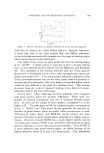
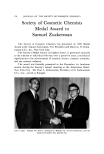
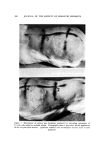
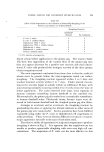
178 JOURNAL OF THE SOCIETY OF COSMETIC CHEMISTS Society of Cosmetic Chemists Medal Award to Samuel Zuckerman The Society of Cosmetic Chemists has presented its 1970 Medal Award to Dr. Samuel Zuckerman, Vice President and Director, H. Kohn- stamm g: Co., Inc., New York City. The Society's Medal Award, its highest honor, is presented annually to the scientist or individual who has, over a period of years, contributed significantly to the advancement of cosmetic science, cosmetic scientists, and the cosmetic industry. The award was formally presented at the December 1st luncheon session during the Society's annual meeting at the Americana Hotel, New York City. Mr. Paul I.. Kohnstamm, President of H. Kohnstamm g: Co., Inc., served as Eulogist. LeIt to right: Eulogist Mr. Paul L. Kohnstamm Medalist Dr. Samuel Zuckennan and the Society's President, Mr. Charles Fox

J. Soc. Cosmet. Chem., 22, 179-186 (March 4, 1971) Reactions of Metal Salts Human Hair Containing Synthetic Polymer with GIUSEPPE ANZUINO, Ph.D.,* and CLARENCE ROBBINS, Ph.D.* Synopsis--Human HAIR FIBERS containing synthetic POLYMER with functional groups capable of acting as donor groups in coordination complexes were reacted with METAL SALTS (acceptor groups) and examined for changes in the wet load exter•sion properties. Mercury(II), a particularly effective "acceptor group" in this system, was found to produce cxtremely large increases in the wet load EXTENSION PROPERTIES of hair fibers con- taining either a tertiary amine polymer, an alcohol polymer, or a nitrile polymer. INTRODUCTION Harris and Brown (1) in 1946 showed that the disulfide bonds of wool fibers play an important role in the wet strength properties which increase almost linearly with the cystine content. Evidence for their contribution was obtained by reducing and methylating wool fibers to different extents and determining both the wet and dry load extension properties. This work also showed that the dry strength of wool fiber, through 30% extension, is not appreciably affected through a 60% de- crease in the cystine content. In 1951, Alexander et al. (2) indicated similar results from the oxidation of wool fiber with peracetic acid. Re- lated results have been obtained in our laboratories for hair fibers that have been bleached with home commercial bleaching products (3). Since the wet tensile properties of human hair are adversely affected by two frequently used chemical treatments [permanent waving (reduc- * Chatilion S.p.A., Largo Chatilion, Vercelli, Italy. ? Colgate-Palmolive Research Center, 909 River Road, Piscataway, N.J. 08854. This work was conducted at the Colgate-Palmolive Research Center where all correspondence should be addressed. 179
Purchased for the exclusive use of nofirst nolast (unknown)
From: SCC Media Library & Resource Center (library.scconline.org)