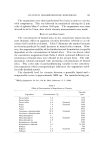
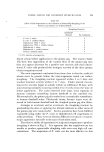
180 JOURNAL OF THE SOCIETY OF COSMETIC CHEMISTS tion-oxidation) and bleaching (oxidation)], and since the wet tensile properties are altered more by these treatments than the dry properties, the objective selected was to explore means for increasing the wet load extension properties of keratin fibers through mild conditions (room temperature, aqueous media, and short reaction times) of reaction. Our approach involved polymerizing vinyl monomers within the kera- tin fibers (4-8) to alter their chemical reactivity (9) and subsequently reacting the polymer-containing fibers with metal salts. It was believed that these reactions might increase the cross-link density and/or decrease the saturation water content of the fibers, methods which have been suggested (10) to be effective for increasing the wet load extension properties of wool fibers containing no synthetic polymer. EXPERIMENTAL The keratin fibers used in this investigation were frown brown Cau- casian human hair.* The monomers were purified in the usual manner followed by distillation. Other chemicals were of reagent grade or of the highest purity available. For polymerizing in hair, single fibers were immersed in 20 ml of 6% ammonium thioglycolate (pH • 9) for 3 rain, washed with deionized water, and then immersed in 20 ml of water-alcohol mixtures of vinyl monomer (10,%) and cumene hydroperoxide (4%) for 60 rain at room temperature. Enough alcohol was added to the system to completely solubilize the hydroperoxide and/or monomer. The amount of poly- mer within the fibers was estimated by weight pickup as determined at 55% RH. Treatment with metals involved immersion of fibers in metal salt solutions at times and concentrations indicated in the text. Unless stated otherwise, the following procedure was used for de- termining the changes to the stress-strain properties of the fibers. After being mounted 5 cm apart on tabs, the fibers were placed in deionized water at 24øC for at least 1 hour and stretched to 20% of their initial length on an Instron tensile tester,* at a rate of extension of 0.25 cm/min. The fibers were then relaxed in water, overnight, dried at room tempera- ture, and treated and stretched again under the same conditions. In this manner, before and after measurements were made on 3 to 10 fibers per treatment. Changes in the mechanical properties are expressed as the percentage change in the work to 20% extension (WE), the elastic * Purchased from De Meo Brothers, New York, N.Y. * Instron Corporation, 2500 Washington St., Canton, Mass. 02021.

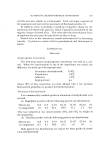
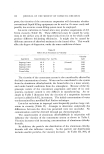
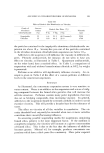
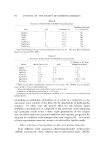
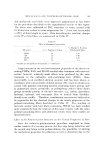
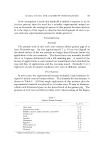
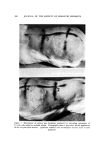
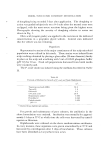
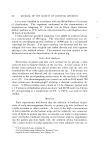
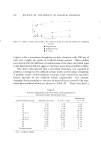
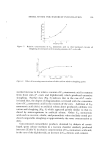
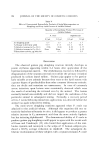
i\IE•I'AL SAI.TS AND POLYMER-C()NTAINING HAIR 181 limit (E,,), and the force to 20% extension (F..,0). The statistical results were calculated using the method of paired differences. RF. SUI I'S AND DISCUSSION Reactions of Metal Salts with Polymer-Containing Keratin Fibers In the initial experiments, polycarboxylic acid-containing hair [poly- (methacrylic acid), (PMA)] and polyalcohol-containing hair [poly(ethyl- ene glycol monomethacrylate), (PEGM)] were reacted with salts of mag- nesium and calcium. For the PMA-containing fibers the possibility for salt link formation existed as well as the possibility for coordination. Results from these experiments (Table I) show no encouraging positive changes in the work of elongation (W•) [or these treatments. The fail- ure of these treatments to produce increases in the load extension prop- erties of the fibers is presumably due to a [ailnre to complex, which is probably a result of the poor complexing capabilities of these two metals (11). Therefore, stronger complexing metals were selected for examina- tion. Salt Table I Reaction of Grafted Keratin Fibers with Calcium and Magnesium Significant Beyond % Change •x = 0.05 Polymer in Fibers pH W•, Level CaC1.0 PMA (19.8%) 10 --5.5 Yes Ca(NOa).2 PMA (19.8%) 2 -- 1.5 Yes MgCi• PEGM (21%) 10 -3-1.8 No CaCI,, PEGM (21%) 7 +0.12 No CaC1.0 PEGM (21%) 10 q-1.4 Yes Several transition metal salts, including salts of manganese(II), iron(II), cobalt(II), nickel(II), copper(II), mercury(II), and zinc(II) were each reacted with hair fibers containing PMA. The results from these experiments are summarized in Table II. The treatments with nickelous chloride, cuprio acetate, and mereuric acetate were all en- couraging in producing increases in the work to 20% extension. Some of these same metals were also examined for their reaction with hair containing [poly(N,N-dimethylaminoethyl methacrylate), (PDEM)], Table III. For the tertiary amine-containing hair, these data show a positive increase in the W• only for the mereuric acetate treatment. This increase is 16%. These restilts may be interpreted in terms of a
Purchased for the exclusive use of nofirst nolast (unknown)
From: SCC Media Library & Resource Center (library.scconline.org)