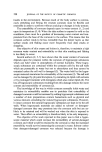
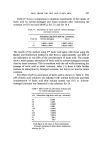
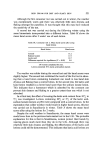
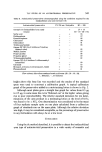
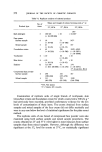
526 JOURNAL OF THE SOCIETY OF COSMETIC CHEMISTS Adsorption studies The results given above indicate that any beneficial effect of most humectants will only be temporary and that the effect will be lost when the skin is immersed in water. A more effective humectant would be one which is adsorbed by the corneum so that it is not easily rinsed out. The adsorption of glycerol, sorbitol and sodium lactate on to solvent- damaged corneum was studied by determining the reduction in concentra- tion of the humectant in an aqueous solution in contact with corneum. No reduction in the concentration of these three humectants could be detected, indicating that there was no adsorption to the corneum. This observation was consistent with the loss of effect on water holding and extensibility after rinsing corneum treated with the three humectants. In the next series of experiments the adsorption of aromatic carboxylic acids was investigated in the same manner. Carboxylic acids have been shown to adsorb to hair keratin (15) and aromatic compounds were selected as examples of carb- oxylic acids because of the ease of estimating their concentration in aqueous solution by ultra-violet absorption. Table III shows the adsorption of three aromatic carboxylic acids after immersing the corneum in an aqueous solution of the acid for 4 h at a concentration which gave a convenient reading on the spectrophotometer. Table III. Adsorption of aromatic carboxylic acids by solvent-damaged corneum Concentration Wavelength Adsorption Acid (mmol) (nm) (mg acid mg -• dry corneum) Phthalic 0.5 278.5 0.0041 Salicylic 0.2 295 0.0089 Mandelic 3.0 256 0.0021 The results showed that there was some adsorption of carboxylic acids. The acids investigated were not hygroscopic. Further experiments were therefore carried out with a hygroscopic acid, lactic acid. In preliminary experiments using Barker and Summerson's method (11) for determining lactic acid, an average adsorption of 0.056 mg lactic acid mg -• corneum was obtained after immersing corneum in 0.5• lactic acid solution for 2 h. The adsorption was investigated in more detail using C •4 labelled lactate which allowed a simpler and more accurate analytical deter- mination of lactate and lactic acid.

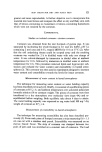
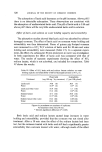
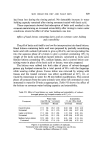
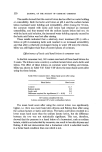
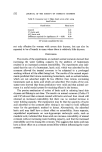
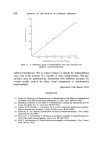
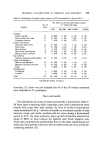
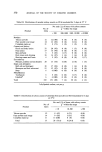
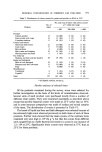
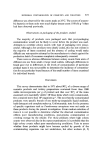
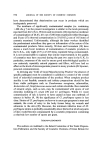
SKIN CREAM FOR DRY AND FLAKY SKIN 527 Table IV shows a comparison in duplicate experiments of the uptake of lactic acid by solvent-damaged and intact corneum after immersing the corneum in 0.01 mol acid (0.09•o) for 2 h and for 24 h. Table IV. Adsorption of lactic acid by solvent-damaged and intact corneum Adsorption (mg lactic acid mg -• corneum) Time (h) Solvent-damaged Intact 2 0.0089, 0.0089 0.0007, 0.0012 24 0.0094, 0.0093 0.0016, 0.0021 The results of the method using C x4 lactic acid agree with those using the Barker and Summerson method in that there is approximately one fifth of the adsorption at one fifth of the concentration of lactic acid. The results show a much greater adsorption of lactic acid by solvent-damaged corneum than by intact corneum. This is consistent with the cell walls preventing the passage of lactic acid in intact corneum. After 2 h there is little further increase in adsorption by damaged corneum, but this is not true for intact corneum. The effect of pH on adsorption of lactic acid is shown in Table V. The pH of lactic acid solutions was adjusted with sodium hydroxide and final concentration of lactic acid plus sodium lactate was 0.01 M. Solvent- damaged corneum was immersed in the solutions for 2h. Table V. Effect of pH on adsorption of lactic acid by solvent-damaged corneum pH Adsorption (mg lactic acid mg -• corneum) 2.9 0.009 3.0 0.009 3.4 0.0085 3.8 0.006 3.95 0.0045 4.2 0.0034 4.55 0.0020 4.85 0.0036 5.1 Zero 6.2 Zero Each figure is the mean of three experiments. Corneum immersed in 0.01M lactic acid/lactate solution for 2 h.
Purchased for the exclusive use of nofirst nolast (unknown)
From: SCC Media Library & Resource Center (library.scconline.org)