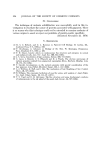
9.54 JOURNAL OF THE SOCIETY OF COSMETIC CHEMISTS IV. CONCLUSION The technique of melanin solubilization was successfully used in this in- vestigation to elucidate the nature of proteins associated with pigments. There is no reason why this technique could not be extended to examine melanins of various origins to assert or reject our postulate of protein-matrix specificity. (Received November 15, 1974) V. ]•EFERENCES (1) M. S.C. Birbeck, and N. A. Barnicot, in Pigment Cell Biology, M. Gordon, Ed., Academic Press, N.Y., 1959, p. 549. (2) P. Drochmans, in Advances in Biology of the Skin, W. Montagna, Pergammon Press, Elmsford, N.Y., 1967, p. 169. (3) F. H. Moyer, Genetic effects on melanosomes fine structure and ontogeny in normal and malignant cells, Ann. N.Y. Acad. Sci., 100, 584 (1963). (4) J. A. Serra, Constitution of hair melanins, Nature, 157, 771 (1946). (5) G. Laxer, J. Sikorski, C. S. Whewell, and H. J. Woods, The electron microscopy of melanin granules isolated from pigmented mammalian fibres, Biochem. Bioph[ts, Acta, 15, 174-85, (1954). (6) F. Gjesdal, Investigations on the melanin granules with special consideration of the hair pigment, Acta, Pathol. Microbiol. Suppl., 133, 1-112 (1959). (7) L. J. Wolfram, K. Hall, and I. Hui, The mechanism of hair bleaching, J. Soc. Cosmet. Chem., 21, 875 (1970). (8) B. Milligan, The enzymatic hydrolysis of wool for amino acid analysis, J. Appl. Polltin. Sci., Appl. Polttm. Sitrap., 18, 113-25 (,1971). (9) F. S. Vogel and D. H. McGregor, The fine structure and some biochemical correlates of melanogenesis in the ink gland of the squid, Lab. Invest., 13, 767 (1964).

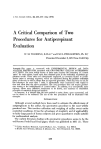
J. Soc. Cosmet. Chem., 26, 255-275 (May 1975) A Critical Comparison of Two Procedures for Antiperspirant Evaluation W. M. WOODING, B.Ch.E.* and PAUL FINKLESTEIN, Ph. D.t Presented December 2, 1974 New York City Synopsis-This paper is concerned with EXPERIMENTAL DESIGN and DATA ANALYSIS PROCEDURES associated with GRAVIMETRIC AXILLAR ANTIPERSPIR- ANT TESTS. The most widely known of these tests requires the estimation of "control ratios" for each subject, based upon data obtained prior to the evaluation of product ap- plication results. These ratios are subsequently employed as correction factors to modify similar ratios in sweating responses, which are calculated during the product evaluation phase of the test. It will be shown that an improved procedure, which has been in use by this laboratory for more than 7 years, is substantially more economical with regard to time and effort than the above procedure. The new procedure does not require prelimi- nary testing or the establishment of "control ratios." In addition, it is conceptually more rigorous, allows more definitive conclusions to be drawn, and conforms to established principles of statistical design and analysis. In summary, it is claimed that the new method is easier, faster, more economical, and can be shown to be unbiased. The use of the two procedures will be illustrated with examples. INTRODUCTION Although several methods have been used to estimate the effectiveness of antiperspirants in the axillae, the gravimetric procedure is the most widely practiced one. This involves collection and weighing of axillar sweat under controlled conditions. It has the advantages of simplicity and of applicability to fairly large panels of human subjects and gives quantitative results suitable for mathematical analysis. The earliest literature dealing with gravimetric procedures seems to be the well-known Fredell and Read paper, which was published in 1951 (1). These * Carter Products Research, Carter-Wallace, Inc., Cranbury, N.J. 08512. •' Health Care Division, Johnson & Johnson, Inc., New Brunswick, N.J. 08901. 255
Purchased for the exclusive use of nofirst nolast (unknown)
From: SCC Media Library & Resource Center (library.scconline.org)