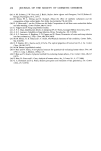
ACID-BASE CHARACTERISTICS OF HUMAN HAIR 405 (6) L.J. Wolfram, K. Hall and I. Hui, The mechanism of hair bleaching, J. Soc. Cosmet. Chem., 21, 875-900 (1970). (7) Y. K. Kamath, c.J. Dansizer and H. D. Weigmann, Wettability of keratin fiber surface, J. Soc. Cosmet. Chem., 28, 273-284 (1977). (8) A. W. Homes, Some aspects of diffusion ihto human hair, Proc. 3rd Int. [Vool Textile Res. Conf (Paris), 3, 79-86 (1965). (9) C. R. Robbins, Chemical and Physical Behavior of Human Hair, (Van Nostrand, New York, 1979) pp. 92 -95. (10) P. Alexander, R. F. Hudson and C. Earland, [Vool, Its Chemistry and Physics, 2nd ed. (Franklin Publishing Co., NJ, 1963) p. 191. (11) T. Vickerstaff, The Physical Chemistry of Dyeing (Oliver and Boyd, London, 1950). (12) M. M. Breuer and D. M. Prichard, The behavior of hair at low pH values,J. Soc. Cosmet. Chem., 18, 643-650 (1967). (13) J. Sagal, Acid- and base-binding behavior of white and pigmented human hair, Textile Res. J., 35, 672-673 (1965). (14) R. D. B. Fraser and T. P. MacRae, Molecular organization in keratins, Textile Res. J, Part I, 27, 379 (1957) Part II 27,384 (1957) and Part III, 27,867 (1957). (15) R. W. Moncreiff, [Vool Shrinkage and Its Prevention, (Chemical Publishing Co., New York, 1954). (16) A. C. Lunn and R. E. Evans, The electrostatic properties of human hair, J. Soc. Cosmet. Chem., 28, 549-569 (1977). (17) S. P. Hersh, Resistivity and Static Behavior of Textile Surfaces, Ch. 6 in Surface Characteristics of Fibers and Textiles, Part I, M.J. Schick, Ed. (Marcel Dekker, New York, 1975). (18) J. A. Medley, Frictional electrification of polar polymers, Nature, 171, 1077, 1953. (19) WIRA, Electric Properties of Wool, Ch. 7 in [Vool Research, Physical Properties of [Vool Fibers and Fabrics, Vol. 2, (WIRA, Leeds, England, 1958), pp. 143-144. (20) W. E. Morton and J. W. S. Hearle, Physical Properties of Textile Fibers, (Butterworth, London, 1962), pp. 505-506. (21) M. Hollander and D. A. Wolfe, Nonparametric Statistical Methods, (Wiley, New York, 1973), pp. 138-140.

j. Soc. Cosmet. Chem., 32,407-419 (December 1981) In vivo evaluation of skin lotions by electrical capacitance: I. The effect of several lotions on the progression of damage and healing after repeated insult with sodium lauryl sulfate G. P. SERBAN, S. M. HENRY, V. F. COTTY and A.D. MARCUS, Bristol-Myers Products, 225 Long Ave., Hillside, NJ 07207. Received May 22, 1981. Synopsis Circular areas of skin on the forearms of human volunteers were exposed daily for one half hour to a solution of SODIUM LAURYL SULFATE (SLS). This regimen resulted in a gradual loss of barrier properties of STRATUM CORNEUM (SC) a fact reflected in a dramatic increase in electrical conductance and visible signs of damage ranging from dryness, chapping and scaliness to severe erythema. Skin areas treated after each exposure to SLS with SKIN LOTIONS displayed considerably less damage as determined by ELECTRICAL CONDUCTANCE measurements and subjective evaluation of erythema. The beneficial effects of lotions in these studies appear to be due to protection and possibly hastening of healing. Changes in electrical conductance and capacitance in SLS exposed skin occurred well in advance of visible signs of irritation. This suggests that such parameters might be used as sensitive monitors of the effect of various types of skin irritants. Reduced capacitance values were obtained when readings were taken near the end of exposure of moderate to severely damaged skiff to SLS. This is probably caused by the action of the detergent on cells below the SC. INTRODUCTION Repeated exposures of human skin to sodium lauryl sufate (SLS) and other anionic detergents are known to cause, under certain conditions, skin roughness, dryness and erythema. These symptoms are associated with a temporary diminution of the barrier properties of stratum comeurn resulting in the increased loss of cutaneous carbon dioxide and water and a decrease in electrical impedance (1). Measurements of transepidermal water loss and electrical parameters have been used to study the regeneration of barrier function of stratum comeurn after tape-stripping (2) or exposure to depilatory agents (3). The present study was undertaken in an attempt to determine, by means of measurement of changes in electrical conductance and capacitance and subjective scoring of erythema, the effect of skin lotions on the progression of damage, and healing occurring in human skin as a result of repeated insults with SLS. 407
Purchased for the exclusive use of nofirst nolast (unknown)
From: SCC Media Library & Resource Center (library.scconline.org)