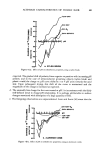
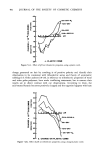
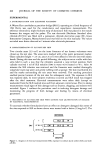
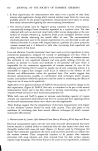
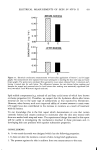
416 JOURNAL OF THE SOCIETY OF COSMETIC CHEMISTS SUBJECT 1 SUBJECT 2 SUBJECT - I nl n n 3:: / TREATED :2 / II I • UNTREATED II 500 II • 600 ._• E z ::3 O0 z 0 i 2 • 4. 0 1 2 • 4. 0 1 2 1'5 DAYS Figure 9. Effects of a lotion containing Aloe vera extract on the electrical conductance of skin in three subjects. Arrows indicated detergent insult. 3. Collagen solution Treatment with a commercial preparation of a 1% collagen hydrolyzate exacerbated SLS induced skin damage (Figure 10). The preparation utilized in these studies had a rather low pH (4.5) and may have contained active proteolytic enzymes. Either might potentlate the SLS effect without the presence of collagen. Hence, while this work demonstrates a deleterious effect under these conditions it may not accurately reflect the potential contribution of collagen in skin lotions. o E z z o 1600 800 COLLAGEN (1% AQUEOUS) •, TREATED [•1 UNTREATED DAY S Figure 10. Exacerbation of detergent damage by aqueous 1% collagen solution. Conductance values are the arithmetic means of six subjects. Arrows indicate exposure to detergent.

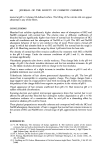
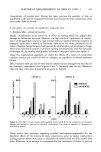
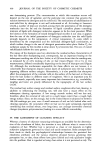
ELECTRICAL MEASUREMENTS OF SKIN IN VIVO.' I 417 4. Untoward responses An unusual response was observed in the SLS exposed sites of two subjects during the second week of treatment with two of the lotions used in the above tests. As healing showed a gradual progression, characteristic for the period following cessation of SLS insult, an abrupt and pronounced increase in conductance was noticed (Figure 11). In LOTION A LOTION B 1400 600 , 7OO $00 ,,,, 123 6789 1 234 6789 DAYS Figure 11. Unusual conductance responses in subjects during recovery from detergent damage. Left: Control site (subject VK) on which Lotion A was applied and immediately washed off prior to taking readings. Right: Control site (subject VF) briefly exposed to Lotion B. Arrows indicate SLS exposure. one of the subjects the increase was associated with palpable swelling in the test area indicating an inflammatory reaction. The increased conductance occurred on the treated sites and on control site which had only the briefest exposure to lotion prior to removal by washing. In the other subject no morphological changes were noticed and the increase occurred only on the control sites which were briefly treated with the lotions and had greater detergent damage. Since both of these persons had a history of hypersensitivity we concluded that the sudden increase in conductance probably involved an immediate or a cell mediated response. While this observation is trivial in itself the fact that we were able to detect an effect, without seeing visual changes on the surface of the skin, suggests that electrical measurements might be useful in detecting early manifestations of inflammatory reaction.
Purchased for the exclusive use of nofirst nolast (unknown)
From: SCC Media Library & Resource Center (library.scconline.org)