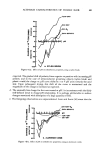
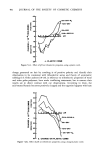
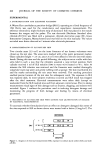
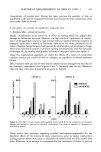
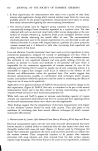
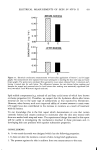
ELECTRICAL MEASUREMENTS OF SKIN IN VIVO.' II 431 z 0.40 0.28 0.16 0.04 0.00 -0.08 UREA (10% IN WATER I I I . -0.20(• 4 6 8 I I I I I I !0 12 14 16 18 20 22 HOURS Figure 9. Capacitance measurements in skin after application of an aqueous solution of urea (10%). The values were obtained from three subjects each having three treated (T) sites on one forearm. Corresponding adjacent area were used as the untreated (U) control sites. 0.27J] o.o, Lili o i --., 0.00 -I-- • • •,, 0 4 8 12 16 z 20 24 0'46 t LOTION E 0-$6 I 0.27• I111 '0.07 0.00 -0 4 8 1 2 16 20 24 HOURS Figure 10. Capacitance measurements in skin after applying a lotion with and without added urea (10% v/v). The points on the graph represent log T/U where T = capacitance in the treated sites and U = capacitance in adjacent untreated sites.

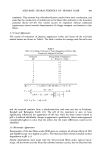
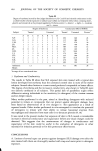
432 JOURNAL OF THE SOCIETY OF COSMETIC CHEMISTS 1. In their experiments, the measurements were taken over a period of only thirty minutes after application during which interval residual water from the cream was probably present. In the present experiments, measurements were taken no sooner than ninety minutes after applying the urea-containing formulations. 2. The electrical probe used by Tagami's group consisted of two closely-spaced, concentrically-arranged brass electrodes separated by a synthetic resin. The data collected with such an electrode most likely reflect events taking place at the very surface of stratum corneum (e.g.: hydration levels at the interphase between crearn and skin) thereby obscuring the overall effect of urea. The unconventional electrode placement used in the present experirnents (viz., test electrode on site and reference electrode in contact with tongue) ensures a pathway of current across the stratum corneum and it is believed to yield data concerning both superficial and deeper layers of this tissue. Urea and allantoin (5-ureido-hydantoin) have been used as active ingredients in many commercial preparations designed for normal or pathological (21) skin. There is growing evidence that events taking place at the external surface of stratum corneum, like occlusion or very superficial abrasion and even gentle rubbing (22,23,24), can produce an increase in nucleic acid synthesis in the gerrninal cell layer which is responsible for the continuous regeneration of stratum corneum. In view of the softening and thinning (20,21) caused by regular use of urea containing lotions, it is reasonable to suspect that changes could occur in relation to the kinetics of cell division and differentiation within the germinal layer. Our results suggest that electrical measurements, possibly in combination with techniques which rneasure nucleic acid systhesis within the epidermis could be useful in monitoring the effects of long term use of urea on the epidermis. Application of an aqueous solution of NaPCA (2%) produced a positive change in the skin capacitance, (Figure 8). NaPCA, like urea, is considered to be part of the natural moisturization factor and it has been shown to increase water-binding capacity of stratum corneum (25) and to have hurnectant properties (16). While both urea and NaPCA appear to increase water-binding capacity of stratum corneum, our experirnents demonstrate that the two cornpounds have opposing effects on electrical measurements taken over a short time after application. These findings suggest that the interpretation of electrical measurernents with respect to skin moisture content should be made with caution. They also point to the usefulness of correlating data frorn several different techniques (6) which measure rnoisturizer effectiveness. 3. Moisturization by Lotions Aj•er Removal From Skin by IVashing IVith Soap and IVater Electrical measurements taken with the wire-rnesh electrode demonstrated that sorne lotions retained a marked ability to moisturize after the sites treated with thern were throughly washed with soap and water (Figure 11). Recent work by Christensen (26) shows that moisturizer ingredients like fatty acids and fatty alcohols can diffuse into the stratum corneum. These compounds continue to be present after extensive extraction with soap solution and, their removal from the skin surface requires repeated tape-strippings. The lotions found to be active in our experiments, contained
Purchased for the exclusive use of nofirst nolast (unknown)
From: SCC Media Library & Resource Center (library.scconline.org)