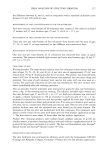
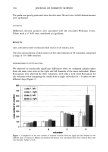
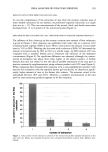
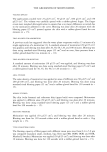
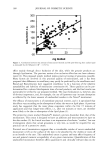
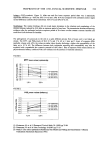
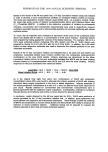
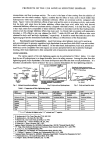
UREA ANALYSIS OF STRATUM CORNEUM 159 REPEATED EXTRACTION FROM THE SAME SKIN AREA To test the completeness of the extraction of urea from the stratum corneum pool of water-soluble substances by our method, we performed repeated extractions at a single skin area (n -- 15). The urea concentrations of the second, third, and fourth extractions decreased from 15 to 8 percent of the initial extraction (Figure 2). INFLUENCE OF SKIN CLEANSING ON UREA CONCENTRATION IN STRATUM CORNEUM EXTRACTS The influence of skin cleansing on the stratum corneum urea amount of four volunteers is given in Figure 3. Skin cleansing was performed with water only or a solution (4%) of sodium lauryl sulphate (SDS) in water. Water only reduced the amount of extractable urea by 76% to 90%. Washing the skin area with a solution of SDS (4%) decreased the amount of extracted urea by 60% to 94% in a similar range. An SDS solution (4%) was compared with a standard shower gel to determine the influence of the detergent concentration (Figure 4). No significant difference was observed, although the concen- tration of detergents was about three times higher in the shower product. A further forearm skin area was treated to test the idea of possible restoration of the urea pool in stratum corneum by supplementation, using a shower product with 10% urea (Figure 4). When comparing data obtained after cleansing with a urea-supplemented product with data for skin treatment with the standard shower gel (see above), we observed a signifi- cantly higher amount of urea in the former skin extracts. The amounts varied in the individuals between 18% and 103%. However, a complete reconstitution of the urea pool by urea-containing products appears to be the exception. lOO 90 80 70 60 50 40 30 20 ..... : ................... 2 3 number of extraction I....7.7.' .... 4 Figure 2. Urea content of skin extracts (in percent of the initial extract) after repeated extractions at the same skin site. Means and standard deviations were calculated from fifteen extracts from different indi- viduals.

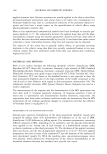
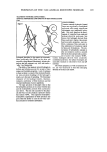
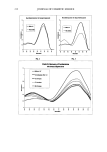
160 JOURNAL OF COSMETIC SCIENCE 350 300 250 200 150 100 [] volunteer 1 B volunteer 2 - [] volunteer 3 [] volunteer 4 control water SDS 4% Figure 3. Urea content of stratum corneum skin extracts (nmol/ml) after washing procedure with water and with a 4% sodium lauryl sulphate solution in comparison with an unwashed skin area. EFFECTS OF UREA-CONTAINING SKIN CARE FORMULATIONS The skin care and stratum corneum urea-content-influencing effect of prolonged appli- cation of the urea-containing cream Laceran © Spezial Creme 5% Urea and of the cream Laceran © Spezial Creme without urea as a control were compared. The skin care efficacy of both products was inferred from measurements of skin hydration. Treatment with both care products apparently caused a significant increase of skin hydration (Figure 5a). The skin hydration efficacy indicated for Laceran © Spezial Creme 5% Urea is signifi- cantly higher than that indicated for Laceran © Spezial Creme. An only slightly decreased amount of urea in skin extracts after treatment with Laceran © Spezial Creme was detected. The urea content of stratum corneum after a one-week application of Laceran © Spezial Creme 5% Urea is significantly higher than that fol- lowing the application of Laceran © Spezial Creme and that of the untreated area (Figure 5b). DISCUSSION Because of the high relevance of urea for skin physiology, a rapid method of urea determination is of great value. Therefore, we established a noninvasive method for determination of the urea content of stratum corneum. The concentration of urea in skin extracts was measured by a rapid enzymatic assay. This method allows the simultaneous determination of up to 20 skin extracts by using 96-well microtiter plates. Our extrac- tion method has no obvious influence on stratum corneum integrity, in contrast to the
Purchased for the exclusive use of nofirst nolast (unknown)
From: SCC Media Library & Resource Center (library.scconline.org)