243
J. Cosmet. Sci., 75.4, 243–262 (July/August 2024)
*Address all correspondence to Inês Rabelo de Moraes, Ines.RabeloDeMoraes@kao.com
Internal Damage Analysis of Caucasian Hair Induced by
Bleaching Treatments: A Comprehensive Comparison via
Different Analytical Techniques
INÊS RABELO DE MORAES, STEVEN BREAKSPEAR, ANNA NEU, PETER BAUER,
CLARISSA LIPINSKI AND BERND NOECKER
Kao European Research Laboratories, KAO Germany GmbH, Darmstadt, Germany (I.R.D.M., S.B.,
A.N., P.B., C.L., B.N.)
Accepted for publication May 31, 2024.
Synopsis
Repetitive oxidative bleaching of human hair has been investigated via various techniques. These include
wet tensile measurements, digital light microscopy, amino acid analysis, high-pressure differential scanning
calorimetry, and dynamic vapor sorption. The techniques can provide information about the mechanical
properties of bleaching, morphology, swelling, kinetics of water diffusion, permeability, amino acid
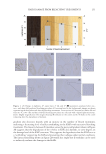
degradation, and fiber denaturation characteristics. Lightening data and hair cross-sectional images showed
that, while most melanin granules are destroyed and/or dissolved during the first bleaching procedure,
oxidative damage continues unabated throughout multiple bleachings. Astonishingly, all damage indicators
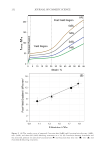
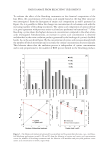
(such as decreases in E-modulus and post-yield gradient, enthalpy, and additional increases in both cysteic
acid and swelling) correlated linearly with an increasing number of bleaching treatments, which demonstrates
that the main cause of damage seems to be the opening of disulfide bonds and the production of cysteic
acid. Other factors, such as lipid or protein destruction, seem to play a negligible role. These results also
indicate that bleaching is a homogeneous process, occurring across the hair fiber. Moreover, this study has
deepened structural knowledge about the role of the disulfide bonds in the keratin-associated proteins to act
as scaffolding, which supports the crystalline keratin intermediate filaments and prevents their collapse.
INTRODUCTION
Changing hair color (natural or artificially colored) can give a fresh new look, improve
self-image, and/or promote self-esteem in consumers. In many cases, to achieve another
hair color, the color must be lifted, especially when changing from a brown or dark brown/
black to a lighter shade. Therefore, bleaching is widely used for whole-head coloring or
lightening as well as for partial treatments, such as highlights or balayage. The end-
consumer wants perfect and creative results whilst maintaining a natural look, and, most
importantly, not inflicting excessive damage on their hair. Since bleaching is based on the
oxidative destruction of natural melanin and dyes and is not selective to these structures
J. Cosmet. Sci., 75.4, 243–262 (July/August 2024)
*Address all correspondence to Inês Rabelo de Moraes, Ines.RabeloDeMoraes@kao.com
Internal Damage Analysis of Caucasian Hair Induced by
Bleaching Treatments: A Comprehensive Comparison via
Different Analytical Techniques
INÊS RABELO DE MORAES, STEVEN BREAKSPEAR, ANNA NEU, PETER BAUER,
CLARISSA LIPINSKI AND BERND NOECKER
Kao European Research Laboratories, KAO Germany GmbH, Darmstadt, Germany (I.R.D.M., S.B.,
A.N., P.B., C.L., B.N.)
Accepted for publication May 31, 2024.
Synopsis
Repetitive oxidative bleaching of human hair has been investigated via various techniques. These include
wet tensile measurements, digital light microscopy, amino acid analysis, high-pressure differential scanning
calorimetry, and dynamic vapor sorption. The techniques can provide information about the mechanical
properties of bleaching, morphology, swelling, kinetics of water diffusion, permeability, amino acid
degradation, and fiber denaturation characteristics. Lightening data and hair cross-sectional images showed
that, while most melanin granules are destroyed and/or dissolved during the first bleaching procedure,
oxidative damage continues unabated throughout multiple bleachings. Astonishingly, all damage indicators
(such as decreases in E-modulus and post-yield gradient, enthalpy, and additional increases in both cysteic
acid and swelling) correlated linearly with an increasing number of bleaching treatments, which demonstrates
that the main cause of damage seems to be the opening of disulfide bonds and the production of cysteic
acid. Other factors, such as lipid or protein destruction, seem to play a negligible role. These results also
indicate that bleaching is a homogeneous process, occurring across the hair fiber. Moreover, this study has
deepened structural knowledge about the role of the disulfide bonds in the keratin-associated proteins to act
as scaffolding, which supports the crystalline keratin intermediate filaments and prevents their collapse.
INTRODUCTION
Changing hair color (natural or artificially colored) can give a fresh new look, improve
self-image, and/or promote self-esteem in consumers. In many cases, to achieve another
hair color, the color must be lifted, especially when changing from a brown or dark brown/
black to a lighter shade. Therefore, bleaching is widely used for whole-head coloring or
lightening as well as for partial treatments, such as highlights or balayage. The end-
consumer wants perfect and creative results whilst maintaining a natural look, and, most
importantly, not inflicting excessive damage on their hair. Since bleaching is based on the
oxidative destruction of natural melanin and dyes and is not selective to these structures
Purchased for the exclusive use of nofirst nolast (unknown)
From: SCC Media Library & Resource Center (library.scconline.org)