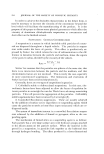
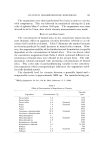
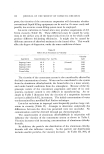
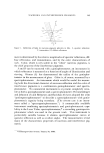
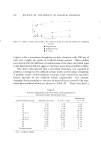
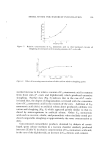
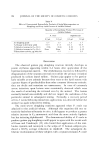
154 .JOURNAL OF THE SOCIETY OF COSMETIC CHEMISTS In order to achieve the desirable characteristics in the dilute form, it may be necessary to increase the viscosity of the concentrate beyond the level which will facilitate the manufacturing of the product. It is the purpose of this paper to discuss soIne physical parameters which affect the viscosity of aluminum chlorhydroxide suspensions as concentrates and their effect on the finished aerosol. SUSPENSIONS: GENERAL CONSIDERATIONS A suspension is a system in which insoluble solid particles of a mate- rial are dispersed throughout a liquid vehicle. The particles in suspen- sion settle under the force of gravity. This effect is qualitatively ex- pressed by Stokes' law which relates the rate of sedimentation to the dif- ference in densities between the particle and medium, times the square of the particle radius, divided by the viscosity of the vehicle. Kr• (d• - d,•) Rate = Stokes' law assumes that the particles are spheres of the same size, that there is no interaction between the particle and the medium, and that electrokinetic factors are not involved. This is rarely the case, especially in more concentrated suspensions. The limitations and extensions of Stokes' law have been reviewed elsewhere (1). Generally, there are two types of suspensions in practice: 1. Colloidally stable cr defiocculated suspensions. In this case, elec- trokinetic factors have been adjusted to allow the forces of repulsion be- tween particles to outweigh the van der Waals forces of energy associating particles. This will prevent the aggregation of the particles. Colloidally stable suspensions have been reviewed by Cartwright (2). 2. Controlled fiocculation suspensions. These are usually achieved by the addition of surface active ingredients or suspending agents which cause the particles to settle as loose riocs (open structures) which are re- dispersed easily. The system of immediate interest is a controlled fiocculation suspen- sion achieved by the addition of fumed or pyrogenic silica as the sus- pending agent. The mechanism of fumed silica as a suspending agent is as follows: Each particle has a very large surface area with hydroxyl groups attached to the silicon atoms on the particle surface. When the material is dis- persed in a suspension, its particles link together at the hydroxyl sites through hydrogen bonding. The effect produced is a three-dimensional

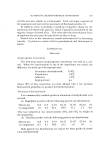
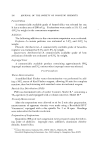
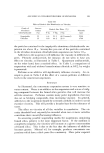
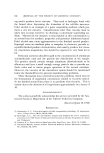
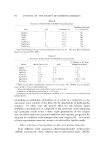
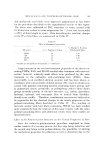
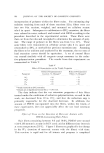
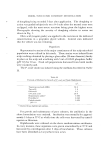
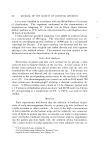
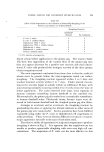
ALUMINUM CHLORHYDROXIDE SUSPENSIONS 155 cell-like structure similar to a honeycomb. Each cell traps a portion of the suspension and restricts free movement of fluid and particles (3). In addition, there is probably a build-up of positive charge by the aluminum chlorhydroxide particles, which is partially neutralized by the negative charge of fumed silica. This overcomes the electrokinetic force of repulsion between particles and allows the riocs to form. Fumed silica in the concentrate retards sedimentation by increasing viscosity. It produces a system which is pseudoplastic and thixotropic in nature. EXPERIMENTAL Materials Antiperspirant Concentrate The following typical antiperspirant concentrate was used as a con- trol. When the concentration of any of the ingredients was varied, the difference was made up with isopropyl ester. Aluminum chlorhydroxide Fumed silica Additives Isopropyl ester 33.0% 4.0% 3.9% q.so About 10% of this concentrate was then diluted with a low pressure fiuorocarbon propellant to produce the finished product. ,4 lureinure Chlorhydroxide Two commercially available grades of aluminum chlorhydroxide were selected. (a) Impalpable powder with the following particle size distribution: Micron size 0-2 2-5 5-10 10-17 17-27 27-34 34 % composition 1.9 4.5 25.3 28.9 31.1 7.5 0.8 This was evaluated at two concentrations (33% and 41% by weight in the suspension). (b) Ultrafine powder with the following particle size distribution: Micron size 0-2 2-5 5-10 10-17 17-27 27-34 34 % composition 0.7 8.1 66.2 23.3 1.6 0.1 ___ Both particle size distributions are typical for these grades of alumi- num chlorhydroxide.
Purchased for the exclusive use of nofirst nolast (unknown)
From: SCC Media Library & Resource Center (library.scconline.org)