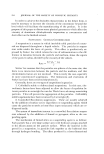
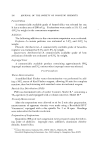
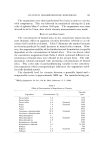
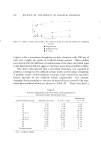
156 JOURNAL OF THE SOCIETY OF COSMETIC CHEMISTS Fumed Silica A commercially available grade of fumed silica was selected for use. It has a surface area of 200 m2/g. Evaluations were made at 3.0, 3.5, and 4.0% by weight in the concentrate suspension. Additives The following additives to the concentrate suspension were evaluated. Perfume--A custom perfume was evaluated at 3.5% and 5.0% by weight. Phenolic Antibacterial--A commercially available grade of hexachlo- rophene was evaluated at 0.4% and 1.0% by weight. Quaternary Antibacterial--A commercially available grade of ben- zethonium chloride was evaluated at 0.5% by weight. Isopropyl Ester A commercially available product containing approximately 95% isopropyl myristate and 5% various other isopropyl esters was selected. Test Procedures Water Determination A modified Karl Fischer water determination was performed by add- ing a 50% excess of Karl Fischer reagent, allowing 10 min for complete reaction, then back-titrating with standard water-in-methanol reagent. Particle Size Distribution (PSD) PSD was determined with a Coulter Counter, Model B, * containing a 70-• aperture (4) and equipped with a volume converter, Model M.* Viscosity Measurement After the suspensions were allowed to sit for 2 rain after preparation. measurements of apparent viscosity were made using a Brookfield RVT Viscometer,* equipped with a disc spindle No. 3 at 10 rpm. Readings were taken after the fourth revolution. Preparation of Suspensions Quantities (300 g) of each suspension were prepared using the follow- ing order of addition: isopropyl ester, additives, almninum chlorhy- droxide, fumed silica. * Coulter Electronics, Industrial Div., 590 W. 20th St., Hialeah, Fla. 33010. ? Brookfield Engineering Laboralories, Inc., 240 Cushing St., Stoughton, Mass. 02072.

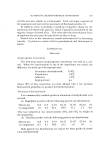
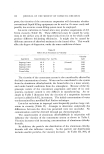
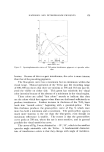
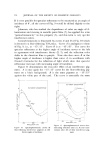
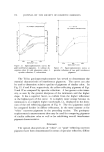
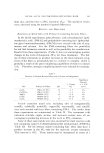
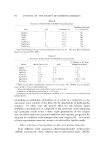
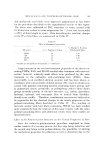
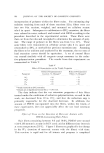
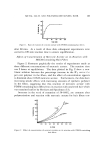
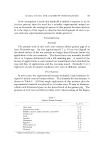
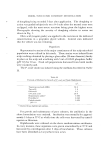
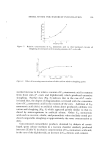
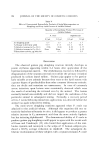
ALUMINUM CHLORHYDROXIDE SUSPENSIONS 157 The suspensions were then hand-stirred for 2 min in order to wet the solid components. This was followed by mechanical stirring for 2 min with a Lightnin Mixer* at about 1165 rpm. The suspensions were then allowed to sit for 2 min, after which viscosity measurements were made. RESULTS AND DISCUSSION The concentration of fumed silica in the concentrate system has the most dramatic effect on apparent viscosity (hereafter referred to as vis- cosity) of all variables evaluated. Table I illustrates the marked increase in viscosity produced by small increases in fumed silica content. How- ever, the suspension stability of the finished aerosol formulation is equally dependent on the concentration of fumed silica. This was shown when the concentrate suspensions from Table I which contained different con- centrations of fumed silica were diluted to the aerosol form. The sedi- mentation volumes increased with increasing concentrations of fumed silica. This is the only viscosity-influencing variable in the concentra- tion suspension which correspondingly influences the suspension stabil- ity of the finished aerosol. The threshold level for viscosity between a pourable liquid and a nonpourable cream is approximately 5000 cps. For manufacturing pur- *Mixing Equipment Co. Inc., 136 Mt. Blvd., Rochester, N.Y. 14603. Table I Effect of Concentration of Ingredients on Viscosity Ingredient Viscosity Concentration (%) (cps) Fumed silica Fumed silica Fumed silica Water Water Water Aluminum chlorhydroxide Aluminum chlorhydroxide Hexachlorophene Hexachlorophene Hexachlorophene Benzethonium chloride Benzethonium chloride Perfume Perfume Perfume 3.0 1250 3.5 1950 4.0 (Control) 2900 7.0 (Control) 2900 7.5 7850 8.0 8950 33.0 (Control) 2900 41.0 8500 0 2900 O. 4 (Control) 2900 1.0 2900 0 2900 0.5 10,000 0 500 3.5 (Control) 2900 5.0 3700
Purchased for the exclusive use of nofirst nolast (unknown)
From: SCC Media Library & Resource Center (library.scconline.org)