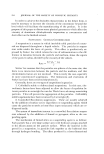
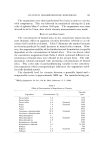
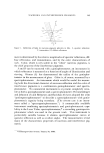
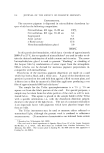
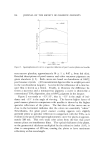
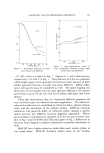
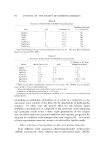
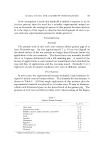
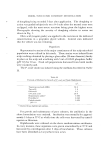
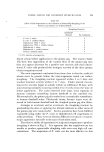
184 JOURNAL OF THE SOCIETY OF COSMETIC CHEMISTS incorporation of poly•ner within the fibers exists. For esti•nating deg- radation resulting from each of these reactions 12-in. fibers were cut into two 6-in. sections, weighed, and mounted on cellulose acetate tabs 4 in. apart. Subsequent to calibration to 20% extension, the fibers were relaxed in water, reduced, and treated with DEM according to the procedure described in the experimental section. These fibers were then cut from the tabs and reweighed to determine the amount of poly- mer. The range of polymer in the fibers was from 5 to 11%. These same fibers were remounted on cellulose acetate tabs 2 in. apart and restretched to 20% at one-half the previous extension rate. Assuming the fibers to be uniform and unaltered by the treatment, the two sets of load extension curves should be equivalent. A set of control fibers was treated similarly with all reagents except monomer in the redtic- five-polymerization procedure. The results from this experiment are summarized in Table V. Table V Effect of Polymerization on the Tensile Properties _ Reduced-Unpolylnerized Reduced-Polymerized Parameter Controls (% Change) b Fibers (% Change)•' _ W• --14 --13 Eg --15 --14 F.,0 -- 14 -- 11 • Work recovered on 20% extension. b Results are all significant beyond the a -- 0.05 level. The data indicate that the wet extension properties of hair fibers treated under the conditions of reductive-polymerization, as used in this work, are decreased from 10 to 1,•c•o, and that the reduction step is primarily responsible for the observed decreases. In addition, the amount of PDEM incorporated into the fibers, within the limits t,f the•e experiments, de, es not appreciably affect the wet load extension properties. E[Jccl of Ti.tc o• the Reaclio• of Mercttric Acetate with PDEM-Conlai•i•tg Hair Fibers l tair fibers containing between 9.6 and 10.6% PDEM were treated with 0.13I mercnric acetate in 0.1N acetic acid at different ti•ne intervals at room temperature (24øC). Figure 1 illustrates graphically the change in the W• (reaction of •nercuric acetate with the fibers) with time. •Fhis reaction is rapid and for all intents and purposes is co•npleted

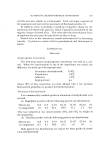
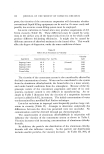
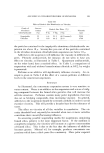
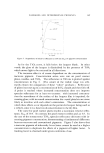
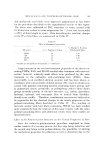
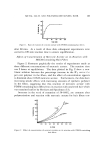
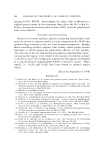
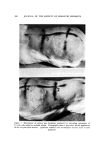
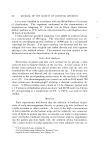
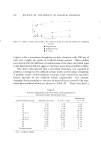
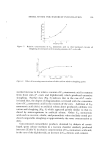
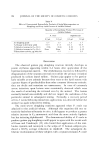
METAL SALTS AND POLYMER-CONTAINING HAIR 185 8O • 60 • ß •, •o ß 20 I I I I 40 80 120 160 200 TIME (MIN.) Figure 1. Rate of reaction of mercuric acetate with PDEM-containing hair fibers after 60 min. As a result of these data, subsequent experiments were carried to 120 rain reaction time to ensure equilibration. Effects of Concentration of Mercuric Acetate on its Reaction with PDoeM-Containing Hair Fibers Figure 2 illustrates graphically the results o[ experiments made at three different concentrations o[ mereuric acetate. The reaction time was 2 hours at equilibrium. The data plotted in Fig. 2 show a ncn- linear relation between the percentage increase in the W• verstts the per cent polymer in the fibers, and the effect of concentration appears to diminish above 0.05M mercuric acetate. Furthermore, the data show increasing tensile effects with increasing amounts o[ synthetic polymer in the fibers, suggesting that this reaction o[ mereuric acetate with PDEM-containing hair differs from its reaction with unaltered hair which was examined earlier by Menkart and Speakman (13). Increases in the work of extension o[ 50-100cfo are common alter polymerization and reaction with ruercurie acetate [or hair fibers con- 120 - tO0 /..•0.05 M ,o o.,o..q / •. 6o •e 40 20 •...,"-• i i i i i i I i 2.0 4.0 6.0 8.0 I0.0 12.0 14.0 16.0 % PDEM Figure 2. Effect of concentration of mercuric acetate on its reaction with PDEM-containing hair fibers
Purchased for the exclusive use of nofirst nolast (unknown)
From: SCC Media Library & Resource Center (library.scconline.org)