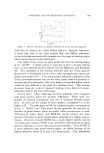
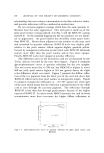
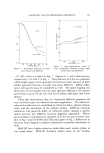
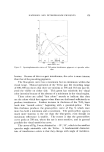
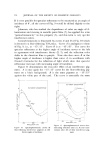
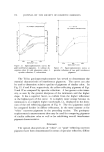
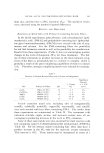
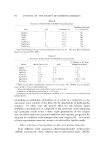
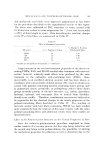
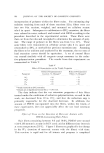
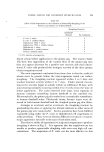
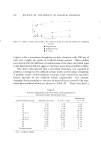
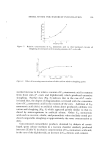
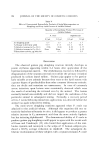
186 JOURNAL OF THE SOCIETY OF COSMETIC CHEMISTS taining 10-157o PDEM. Interestingly, the elastic limit is affected to a slightly greater extent by this treatment than either the W• or the In fact, increases in the elastic limit of above 100%, from the polymerized state, were achieved. SUMMARY AND CONCLUSIONS Reaction of certain synthetic polymer-containing keratin fibers with mercuric acetate in aqueous media at room temperature for 30-90 min produces large increases in the wet load extension properties. Keratin fibers containing synthetic polymer with tertiary amine groups, alcohol functions, or nitrile groups are particularly effective in this reaction. The increases in the wet load extension properties of polytertiary amine- containing hair appear to be related to the amount of synthetic polymer in the fibers, up to 15% weight gain, and the reaction appears to diminish at a concentration of approximately 0.05M in mercuric acetate. Other metals, i.e., Cu(II) and Ni(II), have been found to produce similar effects. (Received September 8, 1970) REFERENCES (1) Harris, M., and Brown, A. E., Natural and synthetic protein fibers, Soc. Dyers Colour., Sy,zp. Fibrous Proteins, 203-6 (1946). (2) Alexander, P., Fox, M., and Hudson, R., Reaction of oxidizing agents with wool. (V), Oxidation products of the disulfide bond and the function of a sulfonamide in the pep- tide chain, Blocbern. J., 49, 129-38 (1951). (3) Robbins, C., unpublished results. (4) Boardman, N. K., and Lipson, M., Polymerization of a series of vinyl toohomers in wool, J. Soc. Dyers Colour., 69, 336-8 (1953). (5) Madaras, G., and Speakman, J. B., Formation of polymers in wool, Ibid., 70, 112-6 (1954). (6) Wolfram, L. J., Formation of polymers in keratin. A novel method of modifying hair by internal deposition of polymethacrylamide, .f. Soc. Cosmet. Chem., 2t), 539-54 (1969). (7) Leeder, J. D., Pratt, A. J., and Watt, I. C., Wool-polymer systems: effect of vinyl poly- mers on water absorption, J. Appl. Polyrn. Sci., ll, 1649-59 (1967). (8) Negishi, M., Arai, K., Okada, S., and Nagakua, I., New method for graft polymerization of vinyl toohornets in wool fibers, Ibid., 9, 3465-70 (1965). (9) Needles, H. L., Persulfate degradation of wool, Text. Res. J., $5, 298-303 (1965). (10) Watt, I. C., The modification of wool fibers by cross-linking reaction, Proc. 3rd Int. Wool Conf., Paris, II, 200-11 (1965). (11) Keller, R. N., and Parry, R. W., in Bailar, J. C., Jr., The Che•rdstry of the Coordinated Compounds, Reinhold Publishing Corp., New York, 1956, pp. 157-219. (12) Stumm, W., in Faust, S. D., and Hunter, J. v., Principles and Applications of Water Chemistry, John Wiley and Sons, Inc., New York, 1967, p. 545. (13) Menkart, J., and Speakman, J. B., The production of unshrinkability by cross-linkage formation in wool. II. The rate of reaction of mercuric acetate and animal fibers, ]. Soc. Dyers Colour., 65, 322-4 (1947).

J. Soc. Cosmet. Chem., 22, 187-198 (March 4, 1971) Model System for of Dandruff the investigation JOHN A. TROLLER, Ph.D.* Synopsis--A model system has been described for the production of a DANDRUFF-like syn- drome on GUINEA PIGS. This syste•n, in addition to SCALP ORGANISMS, requires the presence of a LIPID mixture. The sloughing reaction observed is probably due to the liberation of free FATTY ACIDS and the relative amount of Cts MONOENOIG AGID in- crease at the irritated site. The replacement of the microbial moiety of the test system with a G•s monoenoic acid (oleic) also produces a similar type of desquamation and strongly sug- gests that this or a similar compound may be responsible for the sloughing reaction. INTRODUCTION The noninflammatory, scaling desquamation of the horny layers of the human scalp, commonly known as dandruff, has been under in- vestigation for a considerable period of time. Despite the plethora of investigational effort which has been devoted to this disease, there re- mains much disagreement concerning its etiology. One of the major obstacles to definitive investigations of the etiologi- cal aspects of dandruff has been the lack of a suitable and meaningful ex- perimental model. Previous attempts to use humans and/or laboratory animals for this purpose have met with only indifferent success. Although humans have been used as test animals for numerous stud- ies, they possess certain, inherent disadvantages as suitable subjects, the greatest of which is the almost universal occurrence of dandruff. This ubiquity dictates that the scalp must be "cleared" of naturally occurring dandruff by artificial means before test conditions can be imposed upon it, thus creating a less than desirable experimental model (1). * Miami Valley Laboratories, Procter 8c Gamble Co., P.O. Box 39175, Cincinnati, Ohio 45239. !87
Purchased for the exclusive use of nofirst nolast (unknown)
From: SCC Media Library & Resource Center (library.scconline.org)