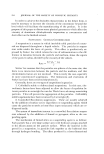
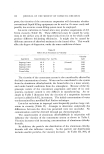
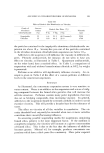
188 JOURNAL OF THE SOCIETY OF COSMETIC CHEMISTS Kile and Engman (2) described studies in which they inoculated hu- xnans with live and killed Pityrosporum ovale, an organisxn commonly implicated as the causative agent of dandruff (3). The most extensive scaling was produced by rubbing a viable culture of P. ovale on the in- tact scalp skin. Other workers (4, 5) have also inoculated humans and xvith at least some success however, as Rocha et al. (6) point out, there seems to be considerable doubt concerning the identification of the fun- gus used in these studies. Emmons (1) states that the trauma incident to intracutaneous injection and scarification, which was a characteristic of many of the preceding studies, often results in some scaling and pig- mentation without the inoculation of scalp organisms. Therefore, in- terpretation of data from many of these studies is difficult. In studies with a confirmed culture of P. ovale inoculated on the scalp and back of test subjects, Emmons could not show the presence of lesions on the back and could demonstrate no increase in the severity of scalp lesions. From these data, he concluded that P. ovale is a saprophyte of the scalp with no etiological significance in seborrhea. Rocha et al. (6) applied P. ovale in a lanolin paste to scarified and nonscarified areas of human backs and also injected suspensions of live P. ovale cells intradermally into the same skin areas. In all cases, after a short incubation period character- ized by erythema and induration, these symptoms disappeared with no further reaction or scaling. Martin-Scott (7) applied P. ovale to the skin of human volunteers under a nylon adhesive dressing with similarly negative results. The use of laboratory animals to simulate dandruff-like conditions has been rather limited. Martin-Scott (7) injected concentrated cell sus- pensions of P. ovale into mice and rabbits with no signs of pathogenicity and no evidence of antibody formation. Durfee and Cousins (8) were somewhat more successful in their attempts to produce dandruff with a P. ovale culture applied to the scarified skin of rabbits. These workers found that the induced infections were controlled with a number of antiseptic materials. Leone (9) was unable to produce a pathogenic re- action when P. ovale was inoculated into human and guinea pig skin. He concluded that P. ovale is a saprophyte of norxnal skin and that any increase in the pathogenicity of this organism is connected with an in- crease in the lipid content of the scalp. Spoor (10) also considers lipids to be important in the production of dandruff on animals and concludes that the high level of skin fat or sebum on humans provides an environ- ment for the initiation of dandruff.

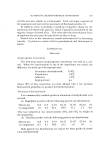
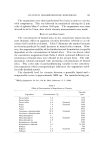
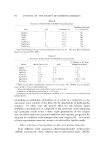
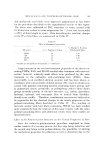
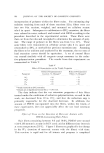
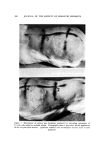
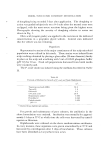
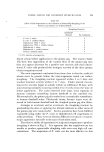
MODEL SYSTEM FOR DANDRUFF INVESTIGATION 189 If the assumption is made that dandruff is indeed a response to an in- fectious process, then the need for a suitable, experimental animal sys- tem to determine the etiological aspects of this process becomes obvious. It is the object of this report to describe the developInent of such a sys- tem and some experimental parameters which govern it. EXPERIMENTAL Animals The anixnals used in this work were mature albino guinea pigs of at least 12 months age. An area approximately 7 X 14 cm was clipped on the dorsal surface of the test animals no longer than 24 hours before the application of the test materials. The shaved area was normally divided into 4 or 6 spaces, delineated with a felt marking pen. A record of the history of applications to each animal was maintained which detailed the type and date of applications and the reactions noted. Normally 3 or 4 replicates of each treatment condition were run on different animals. Test Systems In most cases, the experiniental systems included a lipid mixture de- signed to mimic natural human sebum. The formula for this mixture is shown in Table I. A 0.2-ml single application of this mixture plus the experimental material was placed in a circular area, 25 mm in diameter, within each delineated space on the shaved back of the guinea pig. The progress of each test was followed daily with a final reading of the degree Tablc I Artificial Sebum Formula Oleic acid 15.2 Coconut fatty acids 1.5 Middle cut fatty acids (1Iydrofol acids 580) •L 13.7 Coconut oil 3.0 Lard 27.3 Lanolin 20.3 Cholesterol 1.9 Squalene 4.0 Wheat germ oil 1.0 Petrolatum 8.0 Glycerol 4.1 Ashland Chemical Co., Columbus, Ohio.
Purchased for the exclusive use of nofirst nolast (unknown)
From: SCC Media Library & Resource Center (library.scconline.org)