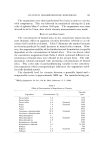
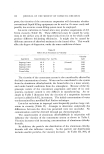
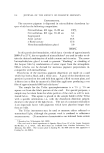
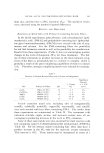
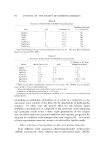
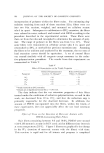
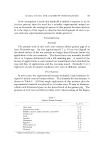
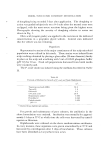
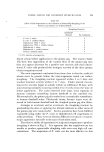
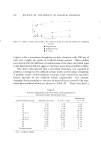
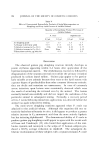
196 JOURNAL OF THE SOCIETY OF COSMETIC CHEMISTS Table V Effect of Concentrated Extracellular Products of Scalp Microorganisms on Sloughing and Fatty Acid Content of Artificial Sebum Quantity of Extracellular Product Per Gram of Artificial Sebum P. Ovale Diphtheroid 0.1 ml 1.0 ml 0.1 ml 1.0 ml Av sloughing grade 1.7 1.7 1.3 1.7 % Change in free fatty acids -- 0.9 q-. 4 q- 1.1 q- 3.9 % Relative increase in Cts (1=) 2.86 8.66 2.52 4.77 % Relative increase in Ct8 (2•) None None 0.45 4.39 Tributyrinase activity, •g/min/ml . . . 0.9 ... 2.5 DISCUSSION The observed guinea pig sloughing reaction initially develops as patent erythema appearing within 3-4 hours after application of the lipid-microorganism matrix. The erythematous reaction is followed by desquamation of the stratum comeurn not unlike the primary irritation produced by sodium lauryl sulfate. Guinea pigs appear to be particu- larly suitable as test animals because they react to the l ipid system with a greater degree of predictability than other com•non laboratory animals: they are docile and restraints are unnecessary. In cases of extremely severe irritation, open lesions were occasionally observed which were the result of scratching the irritated area by the animal. The lesions normally healed uneventfully and did not impair the usefulness of the particular animal in subsequent testing. Normally, a recovery period of 6 to 7 weeks following initial test applications was allowed before the animal was again subjected to testing. Tht most severe sloughing reactions appeared when P. ovale was admixed to the artificial sebum. Although this organism did not ex- tensively hydrolyze tributyrin in vitro, it did appear to produce a greater relative increase in C•s monoenoic acid than the more actively lipolytic but less irritating diphtheroid. The demonstrated ability of P. ovale to produce guinea pig sloughing would appear to agree with the recent work of Gosse and Vanderwyk (13) who found that application of the anti- biotics nystatin and neomycin to the scalps of 11 human subjects pro- duced a 63.4% average reduction in dandruff. The subsequent de- liberate recolonization of these subjects with a nystatin-resistant P. ovale

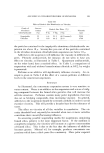
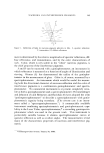
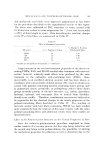
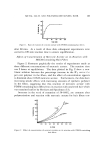
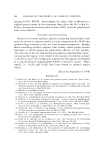
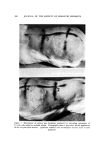
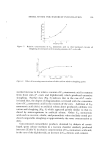
MODEL SYSTEM FOR DANDRUFF INVESTIGATION 197 mutant resulted in an average increase of 88.1% in dandruff production, thus indicating the importance of this organism as an etiological agent. The appearance of appreciable levels of free fatty acids in the arti- ficial sebum was most probably the result of the hydrolytic activities of the microbial component of the system. Although fatty acids were pres- ent in the artificial sebum to which microorganisms were not added (Table IV), it appeared that an additional quantity of free fatty acids was required, particularly C•s monoenoic acid, to initiate the reaction. This would suggest that so•ne manner of fatty acid threshold must be exceeded to initiate sloughing. These data were further confirmed when cell-free fractions of extracellular medium constituents, containing demonstrable tributyrinase activity, produced an increase in per cent of C•s monoenoic acid and total free fatty acid content, and prolonged sloughing of at least moderate severity (Table V). It is thus apparent that extracellular lipases were capable of producing irritation in the absence of the organisms which initially synthesized them. The implications of these data for human dandruff are obvious. Hu- man sebum has been shown by Kellum (14) to be free of fatty acids as it is secreted by the sebaceous gland, yet appreciable levels are present in surface lipids. The probable source of these fatty acids is sebum tri- glycerides hydrolyzed by microbial enzymes since the three groups of organisms most commonly found on the scalp, P. ovale, diphtheroids, and staphylococci, are competent producers of lipase (15-17). Other data (18) have shown that fatty acids are irritants however, our attempts to apply specific concentrations of certain fatty acids to the human scalp have been unsuccessful due to the difficulty of maintaining these concen- trations on the scalp at all times. However, when attempts (Fig. 4) were made to produce guinea pig sloughing with the artificial sebum com- ponent which increases to the gxeatest degree on guinea pigs, oleic acid, a concentration-dependent sloughing reaction could readily be produced. In addition, dandruff is a disease appearing usually at puberty when sebaceous secretions on the scalp are increasing rapidly. It can be specu- lated that the concurrent onset of dandruff and extensive lipid secretion are more than coincidental. It should be remembered, however, that other physiological alterations occurring at this time could possibly in- duce dandruff-like conditions. (Received September 11, 1970)
Purchased for the exclusive use of nofirst nolast (unknown)
From: SCC Media Library & Resource Center (library.scconline.org)