80 JOURNAL OF THE SOCIETY OF COSMETIC CHEMISTS bundle tenacity of chemically bleached hair significantly in comparison to that of natural hair samples. The present paper will systematically check these initial findings on synergistic damage of human hair by cosmetic pretreatment and sunlight. Thus, brown human hair was cosmetically pretreated using permanent waving, chemical bleaching, or oxidative red dyeing, and subsequently irradiated with simulated sunlight. The latter was split in a special irradiation apparatus into UV-B, UV-A, VIS, and IR so as to determine the extent of modification of the respective ranges of wavelength (1). Color and tensile strength determinations as well as quantitative determination of internal lipids (IL) using cholesterol as an example allow us to make statements about photochemical modifications of the three main components of human hair: melanin, proteins, and lipids. The final discussion takes patterns of damage as a function of the irradiation range into consideration so as to be able to develop specific measurements for sun protection of cosmetically pretreated hair. MATERIALS AND METHODS HAIR SAMPLES Untreated brown hair was obtained from Herzig Co. as 25-cm-long tresses of European origin. COSMETIC TREATMENT OF HAIR Hair tresses were cosmetically pretreated using products from The Schwarzkopf Com- pany. For the permanent wave treatment, tresses were reduced by ammonium thiogly- colate (Style Wave X © from CLYNOL) and subsequently reoxidized for 10 min with 3 % H202 (Natural Styling Stabilifix©). Chemical bleaching was achieved using a 40-min treatment with one part Igora Brilliantblond © containing 55 % persulfates and two parts 6% H202 (Igora Oxigenta Lotion©). Another part of the hair sample was oxidatively dyed red for 30 min using p-toluylenediamine (one part Igora Royal Nuance R2 ©) and 6% H202 (one part Igora Oxigenta Lotion©). In order to obtain identical starting conditions for the hair surface, untreated, permed, bleached, and dyed hair tresses were immersed for 30 min in 1% citric acid, as this treatment is obligatorily used during bleaching. IRRADIATION OF HAIR The hair tresses were irradiated for a period of four weeks (672 h) in individual com- partments with UV-B, UV-A, visible light, IR, or global radiation at RH 70%. The description of the special constructed radiation chambers was given in the first part of these publications concerning the irradiation of hair (1). The applied wavelength ranges and intensities were: UV-B, 280-350 nm, 2.5 W/m2 UV-A, 320-400 nm, 48 W/m2 visible light, 370-780 nm, 463 W/m2 IR, 750-2800 nm, 440 W/m• global light, 280-1100 nm, 1037 W/m 2. In each case a tress of approximately 2.2 cm (1.5 g) of hair was used. The tress was turned over daily to assure uniform exposure to irradiation.

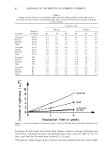
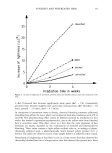
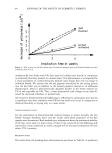
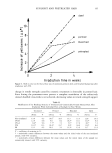
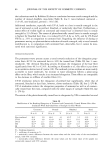
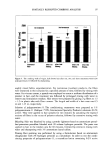
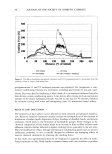
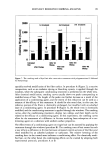
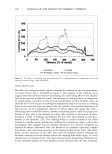
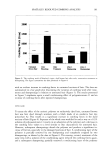
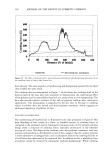
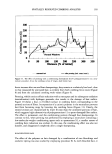
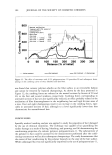
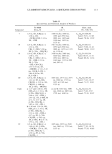
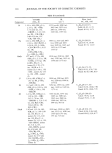
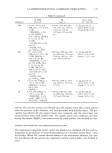
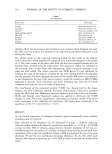
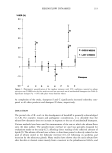
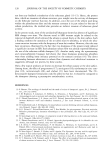
SUNLIGHT AND PRETREATED HAIR 81 COLOR MEASUREMENT The hair color was determined in Datacolor © 3890 equipment using the CIELAB- system. TENSILE STRENGTH TESTS The breaking tenacity and breaking elongation were measured ten times on ten indi- vidually irradiated hairs in an Instron 1122 © apparatus. The test was carried out wet, in distilled water, using a gauge length of 10 mm, a test speed of 10 mm/min, and a preload of 10 N. LIPID DETERMINATION The extraction of surface lipids and internal lipids (IL), thin-layer chromatographic separation, and quantitative determination of cholesterol were carried out as described earlier (3) RESULTS AND DISCUSSION COLOR CHANGES For the assessment of color changes induced by irradiation of cosmetically treated hair, changes in brightness (AL*) and the color coordinates on the red green axis (Aa*) and the blue yellow axis (Ab*) were determined after two and four weeks of irradiation according to the CIELAB system. These results are compared in Table I. A difference of 1.5 units is significant. UV-B and IR irradiation did not cause a significant color change, whereas UV-A and VIS showed a considerable influence on the hair samples. Therefore, their resulting brightness and yellow values are represented graphically as a function of irradiation time and are discussed below. Brightening and color changes caused by sunlight occur linearly both in untreated and cosmetically treated hair with the exception of chemically bleached samples (see below). UV-A irradiateduntreated and permed hair shows after four weeks of irradiation no significant change in brightness hair dyed red increases in brightness after this period of time by 4.5 units and bleached hair by 9 units (Figure 1). VIS irradiated hair shows a considerably higher extent of bleaching than that irradiated with UV-A (Figure 2). Already after two weeks a significant brightening is visible both in cosmetically pretreated and untreated hair, which is further increased by another two weeks of irradiation. Chemically bleached hair brightens after four weeks of irradiation with visible light by 25.8 units, dyed hair by 10.8 units, permed hair by 6.8 units, and untreated hair by 3.9 units. Untreated and cosmetically treated hair becomes significantly more yellow after four weeks of irradiation with UV-A (Ab* is positive in Figure 3). Chemically bleached (Ab* = 5.7) and dyed samples (Ab* = 5.9) become considerably more yellow during this period of time than untreated (Ab* = 1.8) or permed hairs (Ab* = 2.2).
Purchased for the exclusive use of nofirst nolast (unknown)
From: SCC Media Library & Resource Center (library.scconline.org)