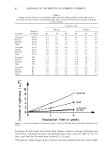
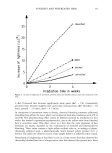
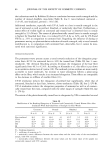
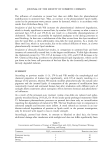
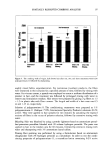
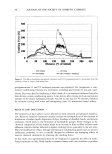
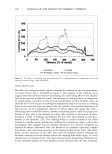
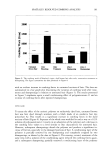
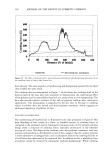
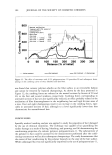
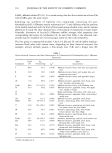
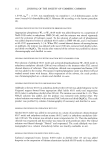
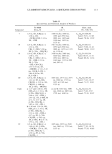
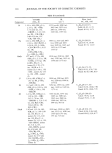
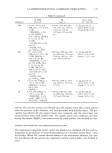
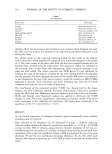
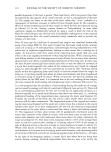
82 JOURNAL OF THE SOCIETY OF COSMETIC CHEMISTS Table I Change of Color Values on the Brightness (AL), Red Green (Aa), and Blue Yellow (Ab) Axes of Untreated and Cosmetically Treated Human Hair After Irradiation With Individual Parts of Sunlight for Four Weeks Irradiation time 2 Weeks 4 Weeks Range of Treatment irradiation AL Aa Ab AL Aa Ab Untreated UV-B 0.3 0.3 0.2 0.6 0.5 0.5 Permed UV-B 0.4 0.2 0.4 0 0.3 0.4 Bleached UV-B 0.7 0.2 0.4 1.0 0.3 0.9 Dyed UV-B 0.5 0.4 0.7 0.3 0.7 1.3 Untreated UV-A 0.5 0.6 0.8 1.3 1.3 1.8 Permed UV-A 0.6 0.8 1.1 1.0 1.5 2.2 Bleached UV-A 4.0 0.6 3.4 8.2 0.7 5.7 Dyed UV-A 2.0 1.6 2.8 4.4 2.8 5.9 Untreated VIS 1.4 1.4 2.0 3.9 2.8 4.5 Permed VIS 2.5 2.1 3.2 6.8 3.9 7.6 Bleached VIS 15.6 1.2 5.7 2 5.8 3.8 6.1 Dyed VIS 5.0 2.5 6.4 10.8 4.1 12.4 Untreated IR 0.2 0.2 0.2 0.1 0.2 0.3 Perreed IR 0.6 0.3 0.2 0.5 0.4 0.5 Bleached IR 0.9 0.2 0.1 1.4 0.2 0.1 Dyed IR 0.5 0.3 0.6 0.8 0.5 1.1 6- 2- 0- •n bteoched • •m dyed •, *'•" • e•, - • ....- -' unfreafed -•.•'--' - .............. 8 permed o 2 Irrodiofion time in weeks Figure 1. Increase in lightness of untreated, permed, dyed, and bleached human hair after irradiation with UV-A. Treatment for four weeks with visible light (Figure 4) leads tO stronger yellowing than with UV-A. Untreated, permed, and bleached hairs show values for Ab* of 4.5-7.6 units, and dyed hair becomes more yellow by 12.4 units. VIS caused a visible change on the red green axis after irradiation for four weeks (Table

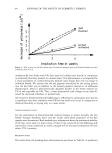
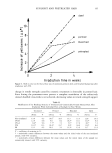
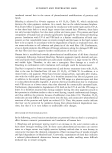
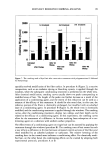
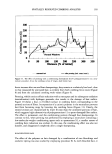
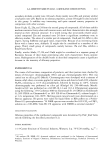
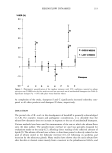
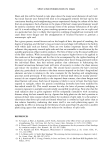
SUNLIGHT AND PRETREATED HAIR 83 25 L ID bleoched 1 / 1 I •.,,• dyed ! . I . •' .. © permed I 1 • I 1 •. ......' o untreoted 0 2 /+ Irrodiofion time in weeks Figure 2. Increase in lightness of untreated, permed, dyed, and bleached human hair after irradiation with VIS. I, Aa). Untreated hair becomes significantly more green (Aa* _- 2.8). Cosmetically pretreated hair becomes slightly more green than untreated hair (Aa* bleached -- 3.8 units permed = 3.9 units dyed -- 4.1 units). In comparison to permanent wave or dyeing, chemical bleaching promotes additional photobleaching of hair the most, which can be detected both after irradiation with UV-A and VIS. This photobleaching effect cannot be linearly increased by irradiation for four weeks, but instead it approaches asymptotically, just as the yellow value from bleached hair, a saturation value. This effect serves as a hint that the color pigments of hair (melanin) are largely degraded by the combination of chemical and photooxidative bleaching. There either remains a light yellow residual color or, in analogy to photo- chemically yellowed wool, a photochemically newly formed yellow product (6,7) is formed. The subjective observer notices a hair sample faded to a yellowish white strand. Photochemical brightening of dyed hair occurs to a lesser extent than that observed for chemically bleached hair but to a larger extent than that observed for permed hair. After
Purchased for the exclusive use of nofirst nolast (unknown)
From: SCC Media Library & Resource Center (library.scconline.org)