j. Cosmet. Sci., 49, 155-163 (May/June 1998) Urea analysis of extracts from stratum corneum and the role of urea-supplemented cosmetics D. HJ•NTSCHEL, G. SAUERMANN, H. STEINHART, U. HOPPE, and j. ENNEN, Paul Gerson Unna Skin Research Centre, Beiersdorf AG, UnnastraJ3e 48, 20245 Hamburg (D. H., G. S., U. H., J. E.), and Department of Food Chemistry and Biochemistry, University of Hamburg, Grindelalle 117, 20146 Hamburg (H. S.), Germany. Accepted for publication May 15, 1998. Synopsis This investigation was undertaken to quantify the amount of urea in extracts from stratum corneum of normal skin in comparison to extracts from skin after cleansing, or from skin after a prolonged topical application of urea-supplemented emulsions. We measured a dramatic decrease in the amount of extractable urea from stratum corneum after skin cleansing. This loss of urea can be partially compensated by a cleansing formula supplemented with urea. On the other hand, a skin care emulsion with urea supplementation increases significantly the amount of urea that can be solubilized from stratum corneum. From these results we conclude that the urea content of stratum corneum varies in a wide range, limited at the lower end by a reduced status that can be observed when skin cleansing had been performed, and at the higher end by an increased level that can be obtained after prolonged application of urea-containing emulsions. These findings might have important implications for therapeutic compensation of urea deficiency in pathological skin diseases and also for cosmetic compensation for a lack of water-retaining substances in dry skin. INTRODUCTION Urea is one of the most important soluble substances of the stratum corneum. In recent years this substance has become more and more important in dermatological therapy and cosmetics. Many diseases have been described that are characterized by a deficiency of urea, such as atopic dermatitis or clinical dry skin (1). The urea content of normal skin is nearly 1% (2). It contributes in a significant manner to the hydration of the stratum corneum. Besides amino acids, lactate, and other substances, urea contributes approxi- mately 3-7% to the natural moisturizing factor (NMF) (3). The NMF appears to be responsible for the hydradon status of stratum corneum. Otherwise urea is known for its keratolytic and pruritus-easing properties (4), and it is a very potent humectant in moisturizing creams (5,6). Its sources in the epidermis are sweat (7) and the decompo- sition of arginine by arginase during the process of keratinization (8). The high relevance of urea prompted us to look for a rapid method for determination of the urea content of stratum corneum. Here we describe a noninvasive method of deter- 155

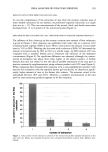
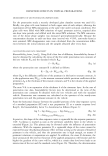
156 JOURNAL OF COSMETIC SCIENCE mining the water-soluble urea in the stratum corneum. First we determined the homo- geneity of urea distribution on the volar forearms of volunteers. Then we investigated the urea loss of stratum corneum following a washing procedure and the partial supple- mentation of lost urea by addition of urea to a cleansing product. Because of the high loss of urea in consequence of the cleansing procedure, we measured to what extent an external application of urea influences the extractable urea and the hydration of stratum corneum. EXPERIMENTAL SUBJECTS The experimental subjects were healthy female and male volunteers (age 18 to 60 years) without a history of dermatological disease and lacking visible hairs on the volar forearm. The skin area treated and examined was the volar forearm. The tests revealed no patho- logical findings. All subjects gave their informed consent. The number of subjects and the subjects themselves varied between the different tests. STRATUM CORNEUM EXTRACTS Extraction of water-soluble urea from stratum corneum was carried out using a plastic cylinder, 2.5 cm in diameter. The cylinder was fixed in position on the skin area by the volunteers. The urea was extracted with 1.5 ml distilled water for two minutes. The volunteers were asked to gently move the water within the cylinder by a movement of the forearm. Immediately after extraction, 75 lul of a sodium azide solution (4 g/100 ml distilled water) was added to each extract. UREA DETERMINATION Urea determination was carried out according to a method of Kerscher and Ziegenhorn (9), with modifications in concentrations of enzyme and NADH solutions. The enzyme solution I consisted of glutamate dehydrogenase (EC 1.4.1.3.) from bovine liver (about 15 U/mg lyophilisate 40 kU/l), ADP-disodium salt (6.8 mmol/l), 2-oxoglutarate (41.7 mmol/l), bovine serum albumin (400 mg/1), Tris base (500 mmol/1), and succinate (200 mmol/l) adjusted to a pH of 8.0 at 25øC with NaOH. The enzyme solution II consisted of seven parts of urease (EC 3.5.1.5.) from jack bean (ca. 80 U/mg lyophilisate 100 kU/l) in sodium-phosphate buffer (4 mmol/1) adjusted to a pH of 6.8 and one part ofglycerine. The NADH solution consisted of [3-NADH (5 mmol/1), ADP-disodium salt (6.8 mmol/l), 2-oxoglutarate (41.7 mmol/1), Tris base (500 mmol/l), and succinate (200 mmol/l) adjusted to a pH of 8.0 at 25øC with NaOH. One hundred forty microliters of standard or sample was mixed with 50 lul of enzyme solution I and 10 lal of NADH solu- tion in 96-well plates. After ten minutes the absorption at 365 nm was measured (A•) us- ing the spectrophotometer Spectra Max 250 (Molecular Devices Corporation, Sunnyvale, California). Fifteen minutes after the initiation of the reaction by addition of 5 lul of enzyme solution II, the absorption at 365 nm was measured (A2). Each solution was measured in quadruplicate. The urea concentration was calculated by determination of
Purchased for the exclusive use of nofirst nolast (unknown)
From: SCC Media Library & Resource Center (library.scconline.org)