THE 'PIGMENT MELANIN OF THE SKIN AND HAIR 45 34. Kreibich, C.: Ueber das Melanotische Pigment der Epidermis, Arch. L Dermat. 118: 837, 1914. 35. Pautrier, L. M., Levy, G. and Diss, A.: Dermo-Epidemic Interchanges, Arch. Dermat. and Syph. 17:1 (Jan.) 1928. 36. Caudiere, M.: Recherches sur l'evolu- tion des cellules pigmentaires dans cer- taines epitheliomes envahessant l'epi- derme, Ann. d'anat. path. 3: 119, 1926. 37. M. asson, M.P.: Les naevi pigment- aires tumeurs nerveuses, Ann. d'anat. path. 3:417 and 657, 1926. 38. Oettel, H.: Uber chronische Vergift- ungen mir Hydrochinon, Arch. f. exper. Path. u Pharmackol 181: 151-2, 1936. 39. Oliver, E. A., Schwartz, L. and Warren, L. H.: Occupational Leukoderma, J.A.M.A. 113: 927-8, Sept. 2, 1939. 40. Schwartz, L., Warren, L. H. and Oliver, E.A.: Occupation Leukoderma, Pub. Health Rep. 55: 1111--30, June 21, 1940. 41. Peck, S. M., Sobotka, H.: Effect of Monobenzyl Hydroquinine on Oxidase Systems in Vivo and in Vitro Jour. of Invest. Derm. Vol. 4, No. 4, Aug. 1941. 42. Lewin, M. L. and Peck, S. M.: Pig- ment Studies in Skin Grafts on Experi- mental Animals, Jour. of Invest. Derm. Vol. 4, No. 6 (Dec.) 1941. 43. Saxton, J. A., Schmekebier, M. M. and Kelley, R. W.: Autogenous Trans- plantation of Pigmented and Unpig- mented Ear Skin in Guinea Pigs, Biol. Bull. 71: 1936, 453. 44. Loeb, L.: Ueber Transplantation yon weisser Haut auf einen Defekt in schwarzer Haut und umgekehrt am Ohr des Meerschweinchens, Archiv f. Entw. Mech. Bd., 6, 1897. 45. Carnot, P. and Deftandre, C.: Persist- ance de la Pigmentation dans les Greffes Epidermiques. Comptes rendus des seances et mem. de la Soc. biolog. 48, 1896, 178. 46. Rand, H. and Pierce, M. E.: Skin grafting in frog tadpoles local speci- ficity of skin and behavior of epidermis Jour. of Exper. Zool. 62: 1932, 125. 47. Peck, S.M.: Zur Pigmentgenese in der Haut und den Haaren yon Kaninchen. Arch. olDermat. u Syph. 157: 1929, 235. 48. Peck, S.M.: Pigment studien Schwei- zerischen Medizinischen Wochenschrift, 59, 1929, nr. 48, 1227.

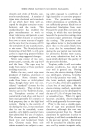
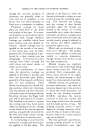
THE DIAGNOSIS OF COSMETIC DERMATITIS* By Lous SCHWARTZ, M.D. Medical Director, -U.S. Public Health Service, Bethesda, Md. COSMETICS as a whole are among the most harmless substances with which we come in contact. This is proven by the fact that al- most all civilized people, female and male, use cosmetics in some form or other, and only an insignificant number ever complain of any dele- terious effect of cosmetics on the skin. Nevertheless, the manu- facturers of cosmetics are occa- sionally bothered by complaints from some individuals who claim that a particular cosmetic has caused their skin to become inflamed. Despite the fact that the manufacturer has sold thousands of the same cosmetic and this com- plaint may be the only one of dermatitis, he should make an effort to determine whether the cosmetic is really the cause of the dermatitis, and if it is, then he should endeavor to fir•d the actual substance in the cosmetic to which the complainant is allergic. Careful investigation and accu- rate diagnosis of the causes of re- ported cases of dermatitis and sys- temic poisoning from cosmetics is of great importance not only for the benefit of the patient but also to *Presented at the December 6, 1946, Meeting, New York City. cosmetic manufacturers and should be encouraged by the latter in order to improve their products and safe- guard the public and to protect the good name of cosmetics. Certain substances, which are classed as cosmetics, are known to be primary skin irritants. That is, they will inflame the normal skin if they are permitted to stay on it for a sufficient period, especially in con- siderable quantities. Such sub- stances are: 1. Hair tonics containing irri- tants such as resorcin, can- tharides, sulfur, etc., in an alcoholic solution, 2. Hair wavers and straighteners containing strong alkalis, thioglycollic acid, or in- organic sulfides, 3. Depilatories consisting usually of inorganic sulfides or thioglycollates, 4. Hair bleaches containing alkaline persalts, 5. Freckle removers containing inorganic mercurials, fl. Antiperspirants containing aluminum chloride and sul- fate, 7. Cuticle softeners containing sodium and potassium hy- droxide, or triethanolamine.
Purchased for the exclusive use of nofirst nolast (unknown)
From: SCC Media Library & Resource Center (library.scconline.org)