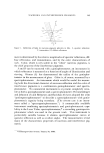
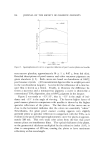
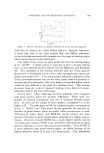
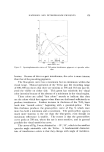
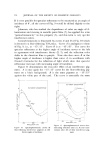
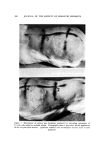
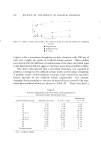
162 JOURNAL OF THE SOCIETY OF COSMETIC CHEMISTS face powder, and liquid makeup. The newer nacreous pigments create iridescent and gold as well as frosted effects (1). Nacreous pigments have traditionally been evaluated by visual tech- niques. The first nacreous pigment was natural pearl essence in which the pigment particles are guanine-hyl•oxanthine platelets, and its original use was in the preparation of simulated pearls. The initial test for pearl luster, therefore, consisted in visual comparison of simulated pearls which were prepared simultaneously from the test sample and from standard pearl essence samples. The technique is capable of discerning very small differences between samples and is still in use, especially in the evaluation of the more brilliant nacreous pigments, such as natural pearl essence plates. A drawdown method is very effective with the less brilliant nacreous pigments, such as the bismuth oxychloride and titanium dioxide-coated mica pigments which have had extensive applications in cosmetics during recent years. The sample for test is dispersed in a suitable vehicle, such as nitrocellulose lacquer. Using a film applicator, the dispersion of the test sample and a dispersion of a standard are made into adjacent films on a half-black, half-white card. The TiO2-coated micas include nacreous pigments which are also interference pigments, producing color by means of thin film inter- ference phenomena (2, 3). In the case of TiO2-coated mica, a TiO2 layer on each broad face of the mica platelets is of such thickness that a specific color is reflected and its cmnplement is transmitted. Drawdowns very effectively show small differences in color as well as in nacreous lus- ter, but the advent of color in nacreous pigments made an instrumental method of measurement even more urgent than was the case with the white pearlescent pigments. Nacreous luster is a directional effect. The pigment particles are transparent platelets of high refractive index which behave like small mirrors. They are oriented parallel to one another in multiple planes (Fig. 1). Because the reflections arise from many layers of platelets, the eye receives an impression of shimmer or pearly luster as opposed to the sharp, metallic reflection characteristic of a single reflecting surface. The higher the luster of a specific nacreous pigment, the greater is the specular or mirror-like reflection, S, in Fig. 1. The lower the luster, the greater the diffuse reflection, D, which consists of light scattered in nonspecular directions. Finally, a portion of the light, T, is transmitted through the nacreous pigment film. The visual effect of a nacreous pig-

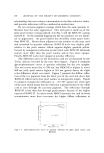
NACREOUS AND INTERFERENCE PIGMENTS 163 7- Figure 1. Reflection of light by nacreous pigment platelcts in fihn. S, specular reflection T, transmission D, diffuse reflectance ment is determined by the relative magnitudes of specular reflectance, dif- fuse reflectance, and transmittance, and by the color characteristics o[ each. Color, which is very subtle in the "white" nacreous pigments, is the chief property of the interference pigments. S and D can be measured with a goniophotometer, an instrument in which reflectance is measured as a function of angles of illumination and viewing. Hunter (4) has demonstrated the utility of the goniopho- tometer in the measurement of gloss. Color is, of course, measured by a spectrophotometer. An instrument which would be useful for measur- ing both the directional character of nacreous reflection and the color of interference pigments is a combination goniophotometer and spectro- photometer. No commercial instrument is at present completely versa- tile as both a goniophotometer and a spectrophotometer Hemmendinger and Johnston (5) and Billmeyer and Davidson (6) have adopted the term "goniospectrophotometer" to describe a spectrophotometer with gonio- photometric capacity being secondary. (The reverse case is an instru- ment called a "spectrogoniophotometer.") A commercially available instrument combining spectrophotometric and goniophotometric capa- bility is the Leres Trilac spectrophotometer,* a recording goniospectro- photometer which was used in the present work. This instrument is particularly suitable because it obtains spectrophotometer curves at specular reflection as well as at other angles. The measurements reveal many of the characteristic properties of nacreous and interference pig- ments. * Kollmorgen Color Systems, Tatamy, Pa. 18085.
Purchased for the exclusive use of nofirst nolast (unknown)
From: SCC Media Library & Resource Center (library.scconline.org)