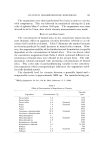
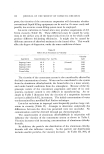
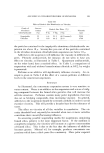
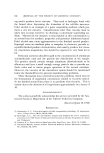
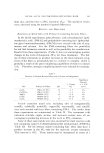
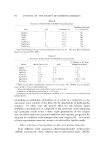
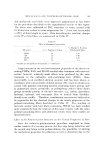
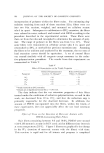
160 .JOURNAL OF THE SOCIETY OF COSMETIC CHEMISTS ing media produce lower viscosity. They tend to hydrogen bond with the fumed silica, depressing the formation of the cell-like structure. Ethyl alcohol is an example of a polar suspending medium which pro- duces a very low viscosity. Gonsiderations other than viscosity must be taken into account, however, in choosing a concentrate suspending me- dium. Mineral oil, for instance, is unacceptable at this concentration in an aerosol form for aesthetic properties and potential inhalation hazard. Ethyl alcohol may cause agglomeration in the finished aerosol product. Isopropyl esters are medium polar to nonpolar in character, provide ac- ceptable finished product characteristics, and usually produce low viscos- ity concentrate suspensions, but should be expected to vary from lot to lot. Particular attention should be paid to the concentration of aluminum chlorhydroxide used and the particle size distribution of the sample. The product should contain enough aluminum chlorhydroxide to be efficacious and have a small enough average particle size to provide aes- thetic value and to insure proper operation of the aerosol container. However, the viscosity of the concentrate system should be maintained below the threshold level to prevent manufacturing problems. These discussions have centered around the problems which exist in the formulation of suspension concentrates related to viscosity control. In the finished aerosol form there is no problem with viscosity. This is mainly due to the dilution of all ingredients approximately by a factor of 10. ACKNOWLEDGMENT The authors gratefully acknowledge the services provided by the Ana- lytical Chemistry Department of the Gillette Toiletries Company. (Received June 18, 1970) REFERENCES (1) Schumacher, G. C., Theoretical aspects of bulk compounding technology, II, Suspensions, Amer. J. Hosp. Pharm., 26 (9), 548-50 (1969). (2) Cartwright, A. C., The role and selection of gums and thickness for use in suspensions, presented at the 1969 Society of Cosmetic Chemists of Great Britain Symposium on "Gmns and Thickeners." (3) Loftman, K. A., Fumed silica in liquid specialtics, Soap Chem. Spec., 42 (9), 70-3 (1969). (4) Instruction Manual, Coulter Counter Industrial Model B, Coulter Electronics, Industrial Div., Hialeah, Fla. 33010.

]. Soc. Cosmet. Chern., 22, 161-177 (March 4, 1971) An Instrumental Study of the Optical Characteristics of Nacreous and Interference Pigments L. M. GREENSTEIN, Ph.D., and R. A. BOLOMEY, Ph.D. •' Presented September 20-25, 1970, Sixth IFSCC Congress, Barcelona, Spain $ynopsis--NACREOUS or PEARLESCENT PIGMENTS are used to impart pearl luster to many items, including cosmetics. The pigment particles are transparent platelets of high refractive index. Although the most significant property of a nacreous pigment is high specular reflectance, the specific OPTICAL BEHAVIOR of a given pigment is determined by the relative magnitudes of specular reflection, diffuse reflection, and transmission. These factors can be compared by measuring reflectance at various angles of illumination and angles of viewing. INTERFERENCE PIGMENTS are nacreous pigments in which the platelet thickness is such that COLOR is produced by light interference phenomena. Interference color is de- pendent on angle of incidence. Furthermore, interference pigments display two colors, a re- flection color and the complementary transmission color. These characteristics have been studied by means of the Leres Trilac GONIOSPECTROPHOTOMETER. The measure- ments make possible the characterization of nacreous and interference pigments, and their comparison in terms of quality. INTRODUCTION Nacreous or pearlescent pigments have long been used in cos- metics, the first large-scale example being natural pearl essence in pearly nail enamels. With the increased variety ot: nacreous pigments which have become available, they are now widely used in lipsticks, eye makeup, * The Henry L. Mattin Laboratories, The Mearl Corp., Ossining, N. Y. 10562. 161
Purchased for the exclusive use of nofirst nolast (unknown)
From: SCC Media Library & Resource Center (library.scconline.org)