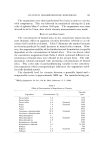
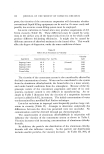
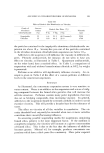
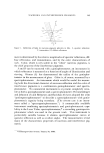
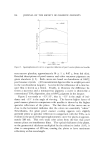
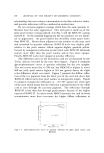
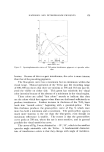
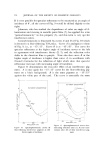
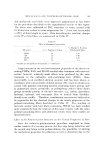
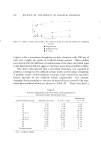
172 JOURNAL OF THE SOCIETY OF COSMETIC CHEMISTS light and conversely transmits less. The crystals (average diameter about 15 •) are very fiat bipyramids rather than perfect platelets, and their aver- age thickness is greater than that of pearl essence plates. Hence, maxi- mum reflectance occurs at a higher wavelength. The optical differences between the two pigments can thus be correlated with the properties of the pigment platelets. Which is the "best" nacreous pigment? The single criterion most useful for defining the luster of a nacreous pigment is the R550-concentra- tion curve (Fig. 5), but the differences inherent in the various aspects of the pigment as exhibited in Figs. 6, 7, and 8 all contribute to the optical effect. Accordingly, the choice of a nacreous pigment for a particular cosmetic application lies with the cosmetic stylist. Interference Pigments The titanium dioxide-coated mica pigments make up a series which include "white"-refiecting platelets ("pearl") and color-reflecting plate- lets (interference pigments). The mica platelets generally average about 20 • in length and about 0.3 • in thickness. The color depends on the optical thickness of the TiO2 (anatase) layers: pearl, approxi- mately 140 nm yellow, 210 red or magenta, 265 blue, 330 green, 395. Further increase in TiO,• thickness produces a second yellow and a repetition of the color cycle. Spectrophotometric curves at specular re- flection are given for several colors in Fig. 9. These measurements were made as usual on the black portion of the drawdown card. The reflection curve for yellow has a minimum in the blue portion of the spectrum. The interference films are of such thickness that blue is eliminated from the reflection. The residual components of the white light, which are reflected, create an impression of the complementary color, or yellow, on the eye. It is seen from the curve that the residual light includes violet, yellow, and red. The combination of this spectro- photometric curve with the pigment's directional reflectance has the visual impact of "gold." The light which is eliminated from the reflec- tion is actually transmitted, as will appear below. The red curve shows the reflection which remains after green is eliminated by interference. The residual light consists primarily of violet and red. The curve for blue is the first which has both a minimum and a dis- tinct maximum. The minimum represents the elimination of yellow- orange by interference, the maximum the reinforcement of blue by inter-

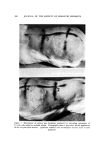
NACREOUS AND INTERFERENCE PIGMENTS 173 io 5 4 // ,, ,..• /,. ,,. \"\/./ /',, • '-• 2 • //• ½•./ ',,, •-'' 4• 550 6• WAVELENGTH F•u•½ 9. Spectrophotome[ri½ ½u•es of TiO•-mi½a interference pJ•]ents at specular reflec- tion ference. Because of this two-part interference, the color is more intense than that of the preceding pigments. The blue-green curve has a maximum but no minimum within the visual range. Manual operation of the Trilac past the recording range of 400-700 nm shows that there are minima at 395 and 712 nm just be- yond the visible on either side. This green has relatively low visual color intensity because of the absence of a minimum in the visual region. These colors are called "first colors" merely to indicate that they are the colors which first appear when films are thickened sufficiently to produce interference. Further increase in thickness of the TiO2 layer leads into "second colors," beginning with a gTeenish-yellow. This film thickness produces the green-yellow curve of Fig. 9, which once more has both a minimum and a maximum. The green-yellow appears much more lustrous to the eye than the blue-green, even though its maximum reflectance is smaller. The reason is that the green-yellow curve peaks at 550 nm, where the eye is most sensitive, and in general parallels the visual sensitivity curve. The curves of Fig. 9 were obtained at --15ø/15 ø, which is the smallest specular angle attainable with the Trilac. A fundamental character- istic of interference colors is that they change with angle of incidence.
Purchased for the exclusive use of nofirst nolast (unknown)
From: SCC Media Library & Resource Center (library.scconline.org)