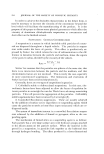
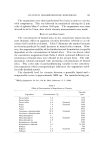
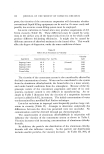
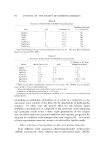
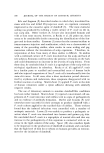
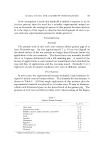
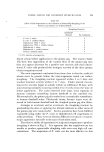
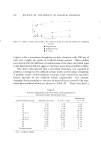
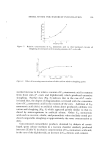
158 .JOURNAL OF THE SOCIETY OF COSMETIC CHEMISTS poses, the viscosity of the concentrate suspension will determine whether conventional liquid filling equipment can be used or if a more costly and possibly less accurate cream filling system must be employed. Lot-to-lot variations in fumed silica may produce suspensions of dif- ferent viscosity (Table II). These differences may be caused by varia- tions in the surface area of the fumed silica from lot to lot which could produce different thickening efficiencies. It might also be caused by different amounts of adsorbed moisture in the fumed silica. This would affect the degree of dispersion, under the same conditions of shear. Table II Effect of Lot Variations on Viscosity Viscosity Ingredient Concentration (%) Lot No. (cps) Isopropyl ester 60.0 A (Control) 2900 Isopropyl ester 60.0 B 3450 Isopropyl ester 60.0 C 5500 Fumed silica 4.0 A (Control) 2900 Fumed silica 4.0 B 3800 The viscosity of the concentrate system is also considerably affected by the final concentration of water. Water can be contributed to the system from the aluminum chlorhydroxide, the fumed silica (to a lesser extent), and under humid conditions from the atmosphere. Because of the hy- groscopic nature of the concentrate suspension and some of its com- ponents, moisture control is very difficult in manufacturing. An ex- ample in Table I illustrates how the viscosity of a suspension increases as water is added in 0.5% increments. The initial concentration of water was determined by a modified Karl Fischer technique. Lot-to-lot variations in isopropyl ester frequently produce large vari- ations in viscosity (Table II). Attempts to determine analytically the differences between the three lots presented were not successful. No contamination could be detected through gas chromatography. The concentration of aluminum chlorhydfbxide in suspension will influence the viscosity of the concentrate system as shown in Table I. Viscosity increases with increasing concentrations of aluminum chlorhy- droxide. In addition, the particle size distribution of the aluminum chlorhy- droxide will also influence viscosity. As the particle size distribution includes smaller particles, the viscosity increases. In Table III, 70% of

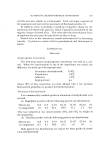
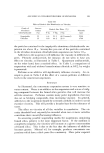
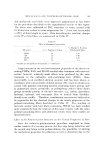
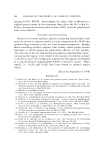
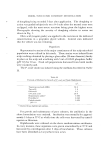
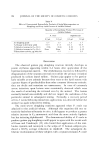
ALUMINUM CHLORHYDROXIDE SUSPENSIONS Table III Effect of Particle Size Distribution on Viscosity Grade of Concen- Particle Size Distn. (%) Aluminum tration Viscosity Chlorhydroxide ( % ) 0-5• 5-10• ) 10• (cps) Impalpable 33 6.4 25.3 68.3 (control) 2900 Ultrafine 33 8.8 66.2 25.0 6700 159 the particles contained in the impalpable aluminum chlorhydroxide sus- pension are above 10 •. Seventy-five per cent of the particles contained in the ultrafine aluminum chlorhydroxide suspension are below 10/•. Additives to the suspension will influence the viscosity in different de- grees. Phenolic antibacterials, for instance, do not seem to have any effect on viscosity, as illustrated in Table I. Quaternary antibacterials, on the other hand, have a marked effect. In Table I, a comparison of suspensions with and without benzethonium chloride at 0.5% by weight is presented. Perfume as an additive will significantly influence viscosity. An ex- ample is given in Table I of the effect of a custom perfume at different levels in the concentrate suspension. SUMMARY As illustrated, the concentrate suspension system is very sensitive to water content. Water is an additive to the suspension and acts as a bridg- ing compound between the fumed silica particles that will increase the cell-like structure. Perfumes contain many polar ingredients that may also act as bridging compounds, thus increasing viscosity. In general, additives to the suspension should be screened carefully in order to avoid excessive viscosity. This will provide a broader base for the tolerance of water. The effect on viscosity of all the variables is cumulative. The vis- cosity threshold level ca• easily be exceeded when two or more variables contribute their VlSCOSlty.-lncreaslng influence. In screening possible suspending media for suspensions containing fumed silica, polarity is the most important factor. If the medium is completely nonpolar, the viscosity will increase at a given concentration of fumed silica. This is due to the fact that the influence of additives becomes greater. Mineral oil, for example, produces concentrate sus- pensions which have a thick paste-like consistency. More polar suspend-
Purchased for the exclusive use of nofirst nolast (unknown)
From: SCC Media Library & Resource Center (library.scconline.org)