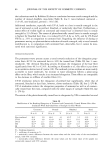
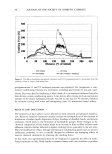
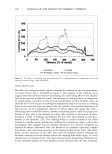
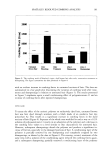
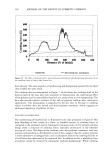
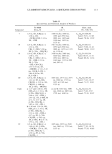
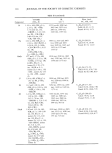
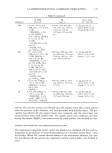
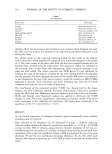
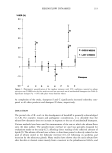
88 JOURNAL OF THE SOCIETY OF COSMETIC CHEMISTS The influence of irradiation on permd hair does not differ from the photochemical modifications in untreated hair. Thus, an increase in the photooxidative lipid modifi- cation by the permanent-wave process cannot be detected, which is in accordance with results from. Hilterhaus-Bong (14). Irradiation of dyed hair with VIS increases the photochemical cholesterol degradation, which is already significant in natural hair, by another 40% contrary to what is seen in untreated hair, UV-A and UV-B do not result in a detectable photodegradation of cholesterol. This result can possibly be explained analogous to the dyeing processes in wool finishing. In that case a stabilization of the fiber occurs from the dyes introduced into the wool fiber, as these additionally cross-link the wool proteins. As a result, the fibers swell less, which in turn results, due to the reduced diffusion of water, in a lower photochemically initiated lipid oxidation. Irradiation of chemically bleached hair results, in comparison to untreated hair and both instances of cosmetically treated hair, in the largest modification. Visible light decreases the cholesterol content by 75%, UV-A decreases it by 42%, and UV-B decreases it by 8%. Chemical bleaching accelerates the photochemical lipid degradation, which can be put down to the lower self-protection of the hair fiber by the chemically and photooxi- datively degraded melanin. SUMMARY According to previous results (1-3), UV-A and VIS modify the morphological and chemical properties of human hair significantly, with UV-A mainly resulting in a damage of the proteins, whereas VIS mainly modifies photochemically the natural color pigments and the internal lipids. A comparison of the patterns of modification from cosmetically treated and untreated human hair after irradiation with different parts of sunlight allows statements about synergistic effects between chemical and photochemi- cal influences. As a result of the permanent-wave treatment cystine cross-links are reduced and subse- quently reoxidized using 2 % H202 for 10 min under partly prolonged treatments (Table V). Subsequent photooxidative processes on perreed hair show only an intensification regarding the degradation of melanin by VIS. The hair brightens more in comparison to untreated samples and becomes more yellow. A trend towards an increase in an irra- diation-induced degradation of proteins or lipids could, in the present investigation, only be detected with regard to loss in tensile strength. Accordingly, permed hair shows, in contrast to bleached or dyed hair, the lowest additional damage after irradiation with sunlight and does not differ significantly from Table V Concentration and Duration of Contact of Human Hair with H202 During Permanent Waving, Bleaching, and Dyeing Treatment H202 concentration (%) Reaction-time (rain) Permanent waving 2 10 Bleaching 4 40 Dyeing 3 30

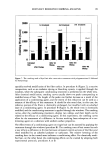
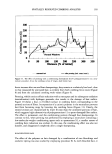
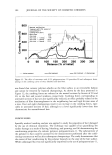
SUNLIGHT AND PRETREATED HAIR 89 irradiated natural hair in the extent of photochemical modifications of proteins and lipids. Bleaching is achieved by 40-min exposure to 4% H202 (Table V), which oxidatively destroys the color pigment, melanin. As a result, hair on the whole becomes brighter. This desired effect is supported especially by irradiation with visible light and by UV-A, so that these hairs fade to a much larger extent than natural hair. However, these hairs not only become brighter, but also more yellow and more green. The protein and lipid components of human hair are already significantly damaged by the chemical bleaching process. Irradiation with UV-A and VIS leads to a further modification of both com- ponents so that considerable losses in tensile strength and decreases in the lipid content have to be accepted. In accordance with the degradation of lipids in irradiated wool, this can mean reduction in cell cohesion and plasticity of the total fiber (18). Furthermore, a loss in lipids promotes the diffusion of foreign substances along the damaged CMC into the hair fiber and thus supports further modifications of the hair (17). Human hair is sensibilized towards photochemical modifications of all three chemical components following chemical bleaching. Melanin pigments (partly desired) and pro- teins and lipids (both undesirable) are particularly modified to a large extent by UV-A and visible light. Therefore, in this case a synergistic fiber damage as a result of bleaching in combination with irradiation with sunlight could be demonstrated. Dyed hair is exposed to lower concentrations of, and shorter treatment times with, H202 than is the case for bleached hair (30 min 3% H202, C/f Table V). In addition, it is treated with a red pigment. These hairs become orange-yellow, especially after irradia- tion with the visible part of sunlight. It is therefore assumed that the red pigment acts in addition to the natural brown pigment in the VIS range as a photoreceptor and that it is also photochemically degraded. A protein chemical modification due to irradiation with VIS occurs to a lower extent than that observed for cosmetically untreated hairs. Furthermore, photooxidative degradation of IL both in the UV-A and the VIS range is lower. It is therefore assumed that during oxidative dyeing the color pigments attach to hair proteins in a fashion similar to that in wool dyeing, impede conformational changes, and thus stabilize the proteins because of additional cross-links (16). Therefore, H202 molecules can only diffuse to a lower extent into the hair, and consecutive photochemical reactions of the proteins and lipids are reduced (19). Thus, the present results indicate that hair can be protected by oxidative dyeing from photochemical degradation reac- tions, but that it is in turn subject to undesirable color changes. MECHANISM OF PHOTODEGRADATION In the following, several reaction mechanisms are presented that can lead to a synergistic effect between cosmetic pretreatments and irradiation of human hair. 1. Bleaching and permanent waving result in an increase in the water retention value as hairs show stronger swelling (20). In these cases photochemical reactions can convert water to a larger extent into highly reactive hydroxy radicals that in turn destroy in consecutive reactions the chemical components of hair (increased loss of tensile strength and lipid degradation in bleached hair). Conversely, examination of dyed hair indicates a reduced photochemical destruction because dyeing makes swelling more difficult (reduced loss in tensile strength).
Purchased for the exclusive use of nofirst nolast (unknown)
From: SCC Media Library & Resource Center (library.scconline.org)