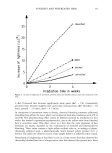
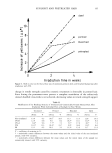
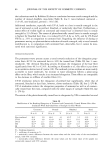
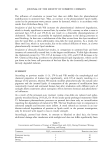
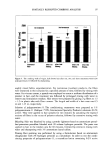
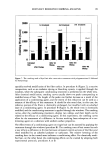
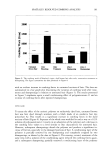
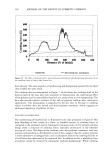
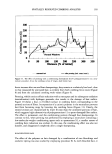
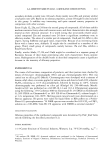
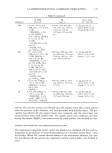
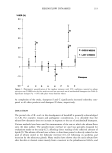
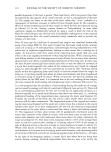
SPATIALLY RESOLVED COMBING ANALYSIS 101 2000 1500 1000 50O 1418+83 .................................................................... 433 ................ ....... 308-4-14 39•-I- 10 ................. 607..+._7O Untreated After After After 1 After 4 Brown Hair Bleaching Treatment Shampooing Shampooings Figure 9. The combing work of bleached, virgin, dark brown hair after each, consecutive treatment or shampooing. The figure summarizes the data presented in Figure 8. with an evident increase in combing forces in untreated sections of hair. The data are summarized in a bar graph plot illustrating the variation of combing work after treat- ments and shampooings in relation to untreated hair (Figure 5). The results presented in Figure 5 emphasize again a small conditioning effect of polyquaternium-11 and an increase of combing forces after repeated shampooings. DYED HAIR To assess the effect of the cationic polymer on oxidatively dyed hair, untreated brown hair was first dyed through windows with a black shade of an oxidative hair dye (procedure A). This results in a significant increase in combing forces in the dyed sections of hair (Figure 6). Exposure of the whole tress modified in such a way to a 0.2% solution ofpolyquaternium-11 results in an adsorption of the polymer and a decrease in the combing force values to a level similar to that characteristic for untreated hair. However, subsequent shampooings desorb the polymer and produce a significant in- crease of friction, especially in the damaged portions of hair. A conditioning layer of the polymer is partially removed by one shampooing and completely stripped by two shampooings, as shown by the data in Figure 6. The ensuing, second, treatment of the same tress with a solution of the conditioning agent reduced the combing forces again, and a subsequent shampooing partially removed a conditioning layer of the polymer

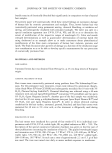
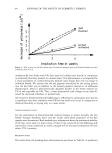
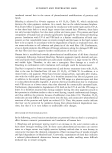
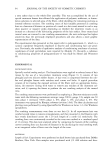
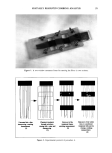
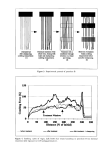
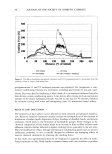
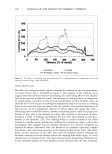
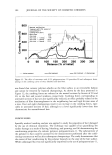
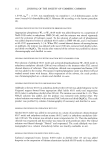
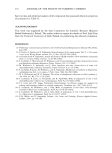
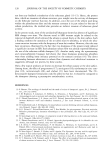
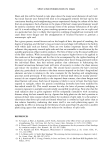
102 JOURNAL OF THE SOCIETY OF COSMETIC CHEMISTS 600 500 300 200 100 0 50 100 150 200 250 300 350 Distance [% of initial] .... untreated hair after perming (incl. neutralization) Figure 10. The effect of perming with a nonconditioning formulation and shampooing (procedure A) on the combing curves of virgin, dark brown hair. from the hair. The same sequence of conditioning and shampooing repeated for the third time yielded the same result. The combing data are summarized in Figure 7, which shows the combing work of the dyed sections of the tress after each treatment. It demonstrates the conditioning effect of the polymer and its removability from hair as a result of one or two shampooings. The data also provide indirect evidence of the lack of polymer buildup after consecutive applications. This presumption is supported by the fact that no decrease in combing values is evident after the second and third polymer treatment, which suggests no additional deposition of polymer on hair. BLEACHED OR PERMED HAIR The conditioning of bleached hair is illustrated by the data presented in Figure 8. One hour bleaching of hair results in a three- to fourfold increase in combing forces as compared to the untreated control. Subsequent treatment with a 0.2% polymer solution brings about a reduction of combing forces, especially pronounced in the bleached sections of a tress. The shape of the combing trace after polymer treatment, with two minima corresponding to the bleached section of hair, suggests that the cationic polymer is more substantive to damaged hair, and its adsorption reduces the combing friction to a level below that characteristic for untreated hair. In addition to this, a modifying layer of polymer cannot be removed by subsequent multiple shampooings. While combing
Purchased for the exclusive use of nofirst nolast (unknown)
From: SCC Media Library & Resource Center (library.scconline.org)