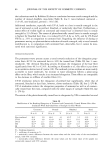
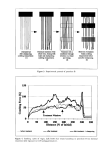
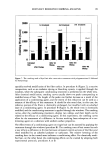
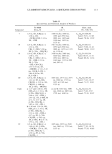
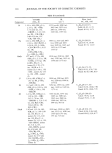
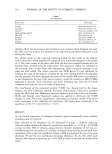
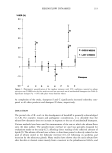
118 JOURNAL OF THE SOCIETY OF COSMETIC CHEMISTS Table I Test Shampoos Brand name Antifungal Anatel © Piroctone olamine 1% Cystelle © Piroctone olamine 1% Dercos © Piroctone olamine 0.5% Head and Shoulders © Zinc pyrithione 1% Nizoral © Ketoconazole 2% Pevaryl © Econazole nitrate 1% Selsun © Selenium sulfide 2.5 % Zinkan © Zinc pyrithione 1% shampoo. Both the investigators and volunteers were unaware which shampoo was used. No other cosmetic product was allowed on the scalp during the three weeks prior to and during the study. The seburn output on the scalp was evaluated weekly for five weeks on the alopecic vertex using the L'Oreal Lipometer ©, equipped with a specially designed 6-ram probe (6,7). The close contact of the glass plate with the skin was rendered possible after the hair had been cut flush with the scalp surface. The amount of sebum was measured in the morning, three to four hours after shampooing. Eight successive measures at the same site were added. The sebum excretion rate (SER, lag/cm2/h) was calculated by dividing the value of the amount of sebum by the time interval between the shampoo and the measures. For each shampoo, the mean of the weekly SER values was compared to that obtained at the end of the run-in period to yield the variation in SER (V-SER) expressed in percent. Such calculation was made including data from the five-week treatment and from the last two weeks of treatment. The distribution of the numerical variable V-SER was characterized by the mean, median, and 95% confidence interval. Variations from baseline values were evaluated using the Wilcoxon test. Differences between products were tested with the Kruskal- Wallis and Dunnet tests. Regression analysis was applied to determine the V-SER changes in time. The linear, logarithmic, exponential, and power models were tested with calculation of the coefficient of correlation. All results were considered to be significant at the 5% critical level (p 0.05). RESULTS At the clinical inspection, all shampoos showed a good antidandruff activity without revealing signs of irritation. Data collected in the lipometry test are illustrated in Figure 1. Subjects using the selenium sulfide shampoo (S) showed a significant logarithmic (r = 0.70, p 0.05) SER increase in time. SER in subjects using piroctone olamine shampoos (A, D) was un- modified except for one product (C) yielding increased values from the fourth week until completion of the study. No significant change in SER was disclosed for one of the azole shampoos (P) and the zinc pyrithione-containing shampoos (H, Z). The other azole shampoo (N) induced a significant (p 0.05) SER decrease for the last two weeks of the study.

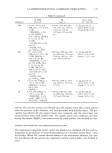
SEBUM FLOW DYNAMICS 119 V-SER (%) 50 40 20 - ß OVER 5 WEEKS 1 0 t t ß LASWE2 - 10 ! •r Shampoo -20 A C D H N P S Z Figure 1. Photometric quantification of the median variation with 95% confidence interval in sebum excretion rate (V-SER) over the five-week use and last-two-week use of antidandruff shampoos (see Table I). Significant changes (*p 0.05) take place versus baseline values. At completion of the study, shampoos S and C significantly increased seborrhea com- pared to all other products and shampoo N alone, respectively. DISCUSSION The pivotal role of M. ovalis in the development of dandruff is generally acknowledged (1-3,8). For cosmetic reasons and pathogenic consideration, it is desirable that the sebum flow dynamics does not increase in response to the use of antidandruff shampoos. Various methods have been used for measurement of the rate at which the sebum flows onto the skin surface. The optoelectronic method we used was specially designed for evaluations made on the scalp (6,7), affording direct reading of the collected amount of lipids (9). The sebum collected over a three- to four-hour period is directly related to the pool of sebum stored in the follicular reservoir (10-12) following its synthesis and secretion by the sebaceous glands. Many studies have shown that the early sebum flow after the skin is cleaned comes mainly from a reservoir in the pilosebaceous follicle, and
Purchased for the exclusive use of nofirst nolast (unknown)
From: SCC Media Library & Resource Center (library.scconline.org)