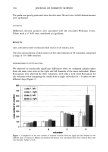
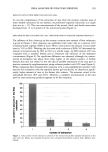
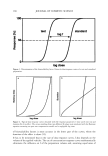
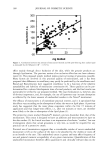
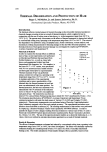
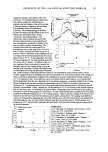
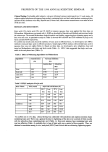
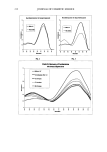
178 JOURNAL OF COSMETIC SCIENCE Optic methods have previously been used to study skin surface lipids. Using the pro- posed amount of moisturizer, direct optical measurement of skin surface lipids was impossible, as the results were beyond the range of the apparatus. Skin surface lipids were therefore measured using the Sebumeter © (Khazaka & Courage, Cologne, Germany) after blotting. Blotting is not an absolute process and is modified not only by the method used in the actual blotting, but also by the dynamic absorption of the lipids into the superficial compartment of the skin. Using the Sebumeter for further measurement of skin surface lipids after blotting may therefore add validity to the proposed method by analogy with previously described technology. Weighing was done using a Sartorius Basic scale (0.001-100 g) (Sartorius, G6ttingen, Germany). Using this method, the greasiness of five commonly used creams on the Danish market was studied and compared to that of a protective cream, a gel, and an untreated control area. Each measurement was performed in triplicate and the mean value used in further calculations. Descriptive statistics as well as non-parametric statistics (Spearman rank correlation and Kruskall-Wallis paired comparisons) were used. RESULTS Methodological variation was described by the coefficient of variance (--SD*100/mean), which was found to be in the range of 8%-44% (see Table II). A large coefficient of variation was seen when small amounts of cream were present, e.g., if only a little had been applied or if the time given for absorption was long. A standard procedure was chosen by selecting a setup that was practical to manage and in which all elements had a low coefficient of variance. The standard procedure was: application of 50 pl/25 cm 2 moisturizer on volar forearm skin. After 20 minutes blotting was done with a 25 cm 2 (5 by 5 cm) piece of ordinary filter paper with pores of medium size. Blotting was done for 120 seconds with firm pressure applied by a rubber-gloved hand. The final chosen standard procedure had a coefficient of 23%. The amount of excess residual cream following a single application of the different moisturizers, protective cream, and gel is shown in Table I. Vaseline © left the highest proportion of the applied cream as residue, while the gel tested left only little residue, which was in good accordance with the clinical impression of their greasiness. Because absorption into the skin is a relative rather than absolute step, complete reabsorption by blotting is not possible in any process resembling actual use. The overall correlation between blotted moisturizer and unblotted residual skin lipids as measured by the Sebumeter is shown in Figure 1, which shows a significant positive correlation between the two methods (p 0.0001, Spearman rank correlation). DISCUSSION Our observations suggest that simple blotting under standardized conditions is a reliable method for quantification of non-absorbed excess moisturizer. The methodological varia- tion as assessed by the coefficient of variance is within the same range as many recognised biophysical measurements of the skin, and this simple method may therefore be of use in future studies of moisturizer greasiness and efficacy.

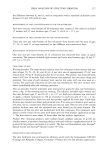
THE GREASINESS OF MOISTURIZERS 179 Table II Coefficients of Variation for Different Variables Parameter studied Changes Coefficient of variation (%) Volume of moisturizer 25 pl/25 cm 2 35 50 pl/25 cm 2 14 100 pl/25 cm 2 23 150 pl/25 cm • 8 Area 25 cm 2 14 100 cm • 22 Post-application time 20 rain 23 40 rain 18 60 rain 12 120 min 34 180 rain 44 Blotting time 30 s 31 45 s 11 60 s 21 90 s 12 120 s 8 Load on blotting Rubber-gloved hand 17 1 kg 17 Anatomical region Volar forearm 13 Back 11 Blotting paper OOH (small pores) 20 OOK (medium pores) 18 OOR (large pores) 20 BB (standard, mixed-size pores) 20 Previous studies have used the Sebumeter for the assessment of skin surface lipids (1). Actual use of moisturizers or other creams, however, involves the application of amounts of lipids that are in excess of the range of the optic method, and Sebumeter measure- ments were therefore performed after blotting. Blotting is modified by many factors, including the film-forming capacity of the lipids and the steady state achieved by the diffusion of lipids in and out of the superficial compartment of the skin. Using the Sebumeter for further measurement of skin surface lipids after blotting therefore adds validity to the proposed method. A significant correlation between the two methods was seen (rs -- 0.53), although considerable scatter was noted on single measurements, suggesting the two methods give mutually supportive rather than mutually exclusive results and should perhaps be used together. Using the proposed method to compare the greasiness of commonly used moisturizers, protective creme, and gel also showed that the results appear to be in good accordance with the general clinical impression, al- though a panel of test persons were not used in this study. Of the moisturizers examined, Vaseline © and Locobase © leave the most residue, while gel and the cosmetic moisturizer from Clinique © leave the least residue. The dry or lipid content of each moisturizer is, of course, a key factor. Vaseline © has a very high dry content, while moisturizers developed primarily for cosmetic use and gels have a high water content. This would aj r•ori suggest that the latter products exert their
Purchased for the exclusive use of nofirst nolast (unknown)
From: SCC Media Library & Resource Center (library.scconline.org)