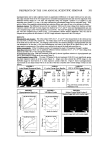
PREPRINTS OF THE 1998 ANNUAL SCIENTIFIC SEMINAR 189 •!1/Differences of Asian and Caucasian Hair •./• and Wet Tensile $b'en•th of SI• •m Differences of Asian and Caucasian Hair "1 [" -.. . .. Influence of Shampoos •_../- Wet Tm•lle •tmngth of Perreed Hair Al•llcatlon of P•oteln Hydroly•t• and Smf•ctant• ß Influence of Shampoos. •.,,./* Dry and Wet Combing Work . Influence of Shampoos •.,/o Formulations - Dry and Wet Combing Work .,lh . After Hair Treatments ,•.,/o Dry and Wet Combing Application of Conditionera . .• •. .,' • c•uc.•.i•m After Hair Treatments Wet Combing Work I Emollients in ConditJonem •: , .:, •.',• ß .:• ) .... ] iiiiiiiiiiiiiiii ii

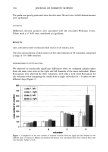
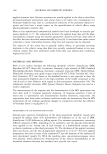
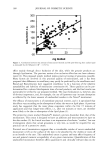
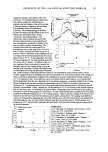
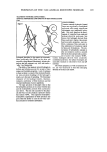
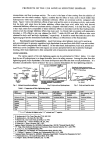
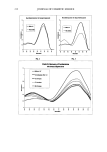
190 JOURNAL OF COSMETIC SCIENCE THERMAL DEGREDATION AND PROTECTION OF HAIR Roger L. McMullen, Jr. and Janusz Jachowicz, Ph.D. International Specialty Products, Wayne, NJ 07470 Introduction The literature reflects a limited amount of research focusing on the irreversible chemical and physico chemical changes occurring in hair as a result of thermal treatment, which is applied to hair in conjunction with the use of curling irons or hair-dryers, i.e. in the temperature range from 100 øC to 170 øC [1-5]. The present study concentrates on the effects of thermal treatments on human hair induced by conventional curling irons, operating in the temperature range from 130 øC to 164 øC. The extent of hair degradation was probed by using a tryptophan assay, Hunter colorimetry, texture analysis, and mechanical combing measurements for detecting changes in the inter-fiber frictional properties. The thermal protection of hair against structural damage was investigated by employing PVP/DMAPA Actylates Copolymer and Quatermum 70. Materials & Methods In order to examine the thermal effects on different types of hair, several experiments were performed on bleached and Piedmont hair purchased from DeMeo Brothers, Inc., as well as Asian, light brown, and unpigmented (white) hair from International Hair Importers, Inc. Hair samples, in the form of 6.5" x 1.25" tresses, were precleaned with 3% w/w ammonium lauryl sulfate solution and thoroughly rinsed prior to experimentation. Thermal treatment of hair was performed using a commercial curling iron, operating in the temperature range from 130 øC to 165 øC. In order to maintain uniformity of the experimental conditions and to assure repmducibility of the obtained data, the thermal treatment to each hair tress was administered in the same position. For thermal protection, the hair tress treatments were administered with 1% solutions of the indicated active in which 3.46 mg of active was applied per each gram of hair. The treated tress was then air- o Figure 1 o Bie/½h0d, k-.04 [] Piedmont, k•.05 •x .t•ien, k-.OS X Light Brown, k•.04 ß White, k-.03 Time dried (23 øC) with an Elchim Professional hair clsyer (Model EC 35227) distributed by Elchim - USA. The treatments described above (PVP/DMAPA Acrylates Copolymer and Quatemium 70) are commercial products sold under the trade names of Styleze CC-10 (ISP) and Ceraphy170 (ISP), respectively. Fluorescence measurements were performed using a Fluomlog-2 spectrophotometer (Spex Industries) equipped with a fiber-optic sample accessory. The experimental procedures were similar to those described in reference [6]. The combing measurements of hair tresses were performed by employing a Diastron Miniature Tensile Tester operated by MTrWIN software. In order to quantfly the degree of color changes resulting from heat treatment in various types of hair, we used a HunterLab ColorQUEST Sphere Spectrocolorimeter marefractured by Hunter Associates Laboratory, Inc., Reston, VA, USA. The use of the spectrocolorimeter enables us to obtain the tristimulus (L, a, b) values, which were utilized to calculate discoloration parameters as a result of thermal treatment. Results & Discussion The effects of thermal treatments on human hair induced by conventional curling irons, operating in the temperature range from 130øC to 164øC, have been investigated. The fibers were thermally exposed by continuous heating for extended periods of time (3-15 ram) or by short (15 seconds) intermittent heating cycles. The model calculations of heat transfer through a fibrous assembly, based on heat
Purchased for the exclusive use of nofirst nolast (unknown)
From: SCC Media Library & Resource Center (library.scconline.org)