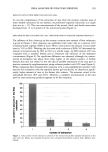
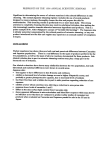
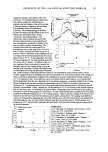
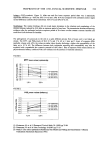
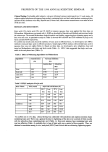
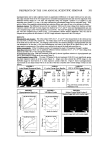
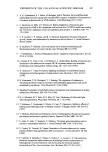
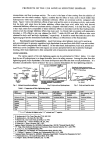
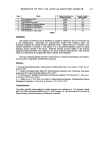
PREPRINTS OF THE 1998 ANNUAL SCIENTIFIC SEMINAR 193 Irritancy (PGoe2-synthesis, Figure 2): After one and five hours exposure period there was a statistically significant difference (p 0.05) for APG 3 % AS and APG 10 % AS compared to the untreated control. Again no real difference could be observed between APG 3 % and APG 10 % AS. Morphology: The routine histology did not reveal major alterations in the structure and morphology of the stratum corneum induced by SLS after an exposure period of one hour. The transmission electron microscopy evidences after the prolonged occlusive exposure period of five hours swollen stratum corneum lamellae and small focal clefts between the lamellae. The pathogenesis of cytotoxicity in the skin is a quite different process from irritancy and is not linked up closely. The MTT- and PGE2-1evels of SLS 10 % and 3 % AS at I hour and 5 hours of exposure differ markedly, wheras with APG, the values are rather close, thereby disclosing a higher skin compatibility of the latter up to 10 % AS. The difference between both surfactants regarding skin compatibility may also be explained with a remarkable low cytotoxic potential of APG after I hour of exposure which means almost no physicochemical effects, combined with a low influence on the synthesis of mediator substances. FIGURE 1 1,20 1,1o 1 ,oo 0,90 0,80 0,70 0,60 0,50 0,40 0,30 MTT mean values (cytotoxicity) ß '--• u•lreeted (n-20) ß --O•APG, 3% (n,,a) •APG, 10% (n-a) ß •O•SOS. 3% (n-4) •SDS, 1o% (fire4) 1,0h 5,0h FIGURE 2 1,35 Z• 1,25 Q 1,15 • 1,05 • 0,95 • 0,85 0,75 • 0,65 0,55 PGE2 mean values (Irrltancy) T • '--4'•u•eated (n-20) ••.•,• --cz.• A,.oG, 3% (•) •• •,•o%(•) • • •, 3% (•) •, 1• (•) 1,o h 5,0 h (1) Kietzmann, M. et. al. J. Pharmacol. Toxicol. Meth. 30. (1993) pp 75-84 (2) Pittermann, W. et al. In Vitro Toxicology 10 (1997) pp 17-21 (3) MaaB, P. Das isoliert perfundierte Rindereuter-Ein Modell zur Prtlfung der Hautirritation ? (Thesis) Tiertlrztliche Hochschule Hannover (1993)

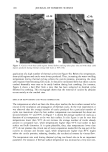
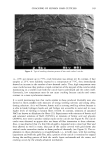
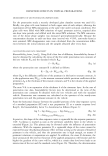
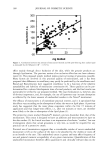
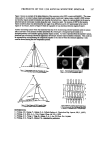
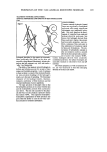
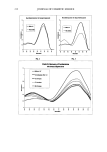
194 JOURNAL OF COSMETIC SCIENCE EVALUATING THE MILDNESS/IRRITATION POTENTIAL OF SURFACTANTS IN PERSONAL CARE PRODUCTS A! Gabbiane!!i, Robert Hi!iermeier, Martha Tate and Michael Prendergast Rhodia, Inc., Cranbury, NJ 08512 Surfactants and surfactant blends are used in virtually every aspect of modem cosmetic chemistry. Their use as wetting and spreadability additives, as emulsifiers for creams and lotions, and as active ingredients in hair care, skin care and oral care preparations are wide spread and well known. Exposure of the general public to these materials on a regular basis has therefore become virtually inevitable. As a consequence, surfactants and surfactant blends must elicit negligible levels of irritation and meet increasingly higher standards for product mildness. While surfactants are routinely subjected to a wide battery of safety and irritation assessments there has historically been a paucity of published studies on the.irritation potential of surfactants in humans. This presentation will focus on recent studies used to evaluate the irritation potential of several key surfactants that are currently of interest in the personal care arena. Case studies will be reviewed in which various instrumental, clinical and subjective evaluations were used to assess both the beneficial and adverse effects of these materials including the determination of mildness and irritation potential. Simple irritation (versus sensitization) is generally classified into two broad categories: irritation resulting from a single exposure and irritation resulting from multiple, repeated or extended exposures. As a result of the aversion to animal testing in recent years and the difficulties associated with the interpreting and correlating in-vitro techniques to human responses, clinical patch testing remains the most predictive and widely accepted technique used to characterize both types of irritation. Forty eight hour patch tests are used to assess irritation resulting from a single protracted exposure while 14 or 21 day cumulative patch testing is used to determine the effect of repeated and extended exposure. Specialized evaluation procedures such as the forearm flex wash or modified forearm flex wash have also become popular for the evaluation of irritation potential. Consequently, the 48 hour patch test was initially used to evaluate the irritation profile of Sodium Laureth Sulfate (SLES), Sodium Cocoamphoacetate (SCA) and combinations thereof. All surfactants and surfactant combinations were evaluated as 3.0% (w/w) aqueous solutions. Results indicated that the greatest irritation is elicited by the pure anionic surfactant SLES and that irritation potential decreases proportionally upon addition of the amphoteric surfactant SCA (Figs. I & 2). Evaluation of Derreal Irfitancy { B48 Hou'-, B 88 Hou'-,] Effect of SCA Addition On SLES Irritation o o 20 % SGA I-.-•...,.- .--e--.... I Fi,qure I Fi,qure 2
Purchased for the exclusive use of nofirst nolast (unknown)
From: SCC Media Library & Resource Center (library.scconline.org)