286 JOURNAL OF COSMETIC SCIENCE agents that may be involved in anti-aging and anti-wrinkle care (16-17). To develop active agents for skin anti-aging, we previously screened the inhibitory effects of 150 medicinal plants on elastase activity. The Areca catechu metanolic extract showed high inhibitory effect on elastase compared with reference compounds (18), and we selected the Areca catechu extract as a new candidate for anti-aging agent in cosmetics. Areca catechu L. is widely cultivated, especially in southern Asia, and its seed is used as a chewing material, as an anthelmintic, and also as a kompo-traditional medicine. Prepa- rations containing Areca are used also as digestive medicine since Areca promotes the secretion of saliva (19-20). Areca catechu L. contains a number of chemical components, such as alkaloids, tannins, flavonoids, and fatty acids (21,22). These compounds have been tested for their individual mutagenicity in bacterial and some rodent test systems (23). To clarify the mechanism of Areca catechu L. extract against anti-aging, we have studied the inhibitory capacity of elastase in vitro and also performed ex vivo assessments using human skin tissue and automated image analysis. Furthermore, we investigate here the effects of the Areca catechu extract on collagen synthesis, extracellular matrix deposition of human dermal fibroblasts in culture, wrinkle reduction, skin moisturizing, and skin elasticity in vivo, MATERIALS AND METHODS CHEMICALS All solvents were of analytical grade. Human leukocyte and porcine pancreatic elastase, ascorbic acid, reference substances, and the basic fibroblast growth factors were pur- chased from Sigma Chemical Co. (St. Louis, MO). [N-Succ-(Ala)3-p-nitroanilide and Meo-Succ-(Ala)2-Pro-Val-p-nitroanilide were purchased from Calbiochem. Other re- agents were analytical grade from commercial sources. EQUIPMENT Spectrophotometric measurements were performed with a UV-visible spectrophotometer (Beckman). The composition analyses of CC-516 were performed with a GC/MS (HP 5890 GC/HP 5970 MS), an amino acid analyzer (TCX 3100, ACS, UK) a TLC (Kiesel gel 60, F254 glass plate, Merck), and an HPLC (Shimatzu LC-9A, Japan). The anti-aging effects of the cream containing CC-516 wer• measured by a corneometer CM 820 (Courage + Khazak, C+K, Germany), a cutometer SEM 474 (C+K Electronic GmbH, Germany), a skin visiometer SV 400 (C+K Electronic GmbH, Germany), an automated image analyzer (BIOCOM 200, France), and a scanning electron microscope (JSM-840 A, Jeol Co.). PREPARATION OF CC-516 Areca catechu seed was purchased from the oriental medicinal market, Seoul, South Korea, and it was sliced and weighed. 100 g of Areca catechu was soaked in 500 ml of 90% ethanolic aqueous solution at room temperature for seven days. After filtration, the ethanolic flitrate was evaporated to dryness under vacuum, and then completely dried by

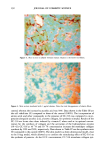
ARECA CATECHU L. EXTRACT 287 lyophilization. The dried extract was designated the "CC-516," and used as the sample in this study. Areca catechu seed was extracted with other solvents (methanol, ethanol, ether, hexane, chloroform, ethyl acetate, and butanol) by the same extraction process as for the CC-516, and the inhibitory effect on elastase was assayed. Especially, the etha- nolic extract showed a high inhibitory effect on elastase. Thus CC-516 was used as the sample in this study. DETERMINATION OF ELASTIC PROPERTIES Assay for elastase activity. Porcine pancreatic elastase (PPE Sigma, Type IV) was assayed spectrophotometrically by the method of James et al. (27), using N-Succ-(Ala) 3- nitroanilide (S.A.N.A.) as the substrate, and by monitoring the release ofp-nitroaniline for 20 min at 25øC. The amount of p-nitroaniline was determined by measuring the absorbance at 410 nm. The reaction mixture contained 0.2 M Tris-HCl buffer (pH 8.0), ! lag/ml elastase, 0.8 mM Succinyl-Ala-Ala-Pro-p-nitroanilide (ESIV elastase substrate IV, Calbiochem) as substrate, and CC-516 dissolved in methanol. The CC-516 was preincubated for 20 min at 25øC. The reaction was started by adding the substrate. Blanks contained all the components except the enzyme. Human leukocyte elastase (HLE, Sigma) activity was spectrophotometrically determined by measuring the amount ofp-nitroaniline at 410 nm for 20 min at 25øC. The reaction mixture contained 0.! M HEPES buffer (pH 7.5) ! lng/ml elastase 0.5 M NaC1 9.8% DMSO, 1% (v/v) 10 mg/ml BSA (Sigma, fraction V) 1. ! 2 mM Meo-Succinyl-Ala-Ala-Pro-Val-p-nitroaniline (ESI, elastase substrate I, Calbiochem) as a substrate and CC-516. The CC-516 dissolved in methanol was preincubated for 20 min at 25øC, and the reaction was started by adding the substrate. The rate of the reaction was determined by the slope of the line recorded and was proportional to elastase activity. A control curve was prepared with elastase in the absence of CC-516. One unit of elastolytic activity is defined as the activity releasing 1 uM of p-nitroaniline/min. The percentage of inhibition was calcu- lated as: Inhibition (%) = (! - B/A) x 100, where A is the enzyme activity without CC-516 and B is the activity in the presence of CC-516. Assay for elastase activity on dermal sections. The elastase activity on dermal sections was assayed by the modified method of Donald et aL (28). In this study, CC-516 was diluted in 0.! M HEPES buffer (pH 7.5) containing 0.! M NaCI. Skin sections were obtained from plastic surgery on the mammary gland of a woman. The plastic surgery cut the mammary gland into fragments of 1 cm on each side. Fragments were placed on a cork support and frozen in liquid nitrogen. Cross sections carried out with a freezing micro- tome were placed on glass plates and maintained hydrated with the HEPES buffer. The CC-516 dilutions were deposited on skin sections, at the rate of 100 ul per section, and incubated for 30 min at 37øC. After 30 min, an enzyme-impregnated thread (HLE, ! lag/ml) was deposited on the section. After three hours of incubation, sections were rinsed with HEPES and colored with orcein. The effect of the CC-516 on the enzyme activity was assayed by observing sections by a semi-automated image analysis (section photos were taken), and the sections were graded. ASSAY FOR ANTI-AGING EFFECTS WITH FIBROBLAST IN VITRO Fibroblast cultures were initiated from biopsies of normal human skin. Tissue was minced and plated onto 75-T plastic tissue flasks. Cells were maintained in Dulbecco's
Purchased for the exclusive use of nofirst nolast (unknown)
From: SCC Media Library & Resource Center (library.scconline.org)