j. Cosmet. Sci., 49, 309-320 (September/October 1998) Photodegradation of human hair S. RATNAPANDIAN, S. B. WARNER, and Y. K. KAMATH, Textile Sciences Department, University of Massachusetts, Dartmouth, MA (S.R., S.B.W.), and TRI/Princeton, Princeton, NJ (Y. K. K.). Accepted for publication August 31, 1998. Synopsis The role of moisture in photolysis of hair was investigated in this research. Melanin-free Piedmont hair was exposed to simulated sunlight at different humidity levels. Changes in wet mechanical properties, swelling behavior, and IR spectrum were used to determine the degree of damage. Weathering damages hair under all conditions of relative humidity during exposure, with exposure at 30% RH causing the least damage. A free-radical mechanism is used to explain the photolysis process. INTRODUCTION Hair is constantly subjected to repeated environmental assaults, commonly termed "weathering." Weathering occurs over a period of time, and the effects can be easily observed on long hair, with tip ends being more damaged than root ends. Hair light- ening and dullness, weak and brittle tips, split ends, and an overall rough feel are a few of the obvious characteristics of damaged hair (1,2). Damage to hair causes a reduction in tensile and fatigue properties (3). According to Robbins and Bahl (4) and Speakman et al. (5), the reduction is largely attributed to chemical damage to the protein chains, especially the S-S covalent crosslinks in cystine. The loss of crosslinks, in photochemical damage, alone will result in increased solvent swelling, although Wolfram (6) disagrees. He argues that crosslinking between amino acid residues would occur on irradiation and that these new crosslinks would limit solvent swelling in the case of keratin fibers. According to the hair photolysis mechanism proposed by Tolgyesi (1), cystine, tyrosine, phenylalanine, and tryptophan residues absorb UV radiation, resulting in the formation of free radicals. Homolytic scission of disulfide bonds occurs. Melanin, the natural coloring matter in hair, provides partial protection to the hair fiber. It acts in a sacrificial manner, resulting in the lightening of hair color. Tolgyesi (1) explained that melanin, by its comprehensive system of double bonds and conjugated carbonyl groups, protects hair by scavenging free radicals generated by exposure to light. Wei (7) furthered the free-radical mechanism by showing that, all other factors being equal, the extent of 309

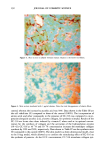
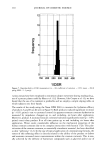
310 JOURNAL OF COSMETIC SCIENCE photodamage is proportional to the square root of the amount of free-radical initiator present in the fiber. The mechanism assumed that the S-S group was the initiator, giving two -S' free radicals by homolytic scission. Leroy et al. (8) and Dubief (9) investigated the role of moisture in the photobleaching of hair. Their research was limited to extreme RH levels, namely 5% and 88% only. Their data showed an increase in bleaching, measured as luminance, with exposure time, as shown in Figure 1. They also noted a greater loss in tensile properties, measured under deionized water, when hair was irradiated in the presence of moisture as per the 1 stretching index shown in Figure 2. Also, a radiation dose of 105 J/cm 2 approximately equals an exposure period of 360 hours. Based on the concepts suggested by Wei, we hypothesize that moisture, in combination with trace minerals such as iron, is a source of free radicals in the presence of UV radiation. This leads to the notion that an increase in photodegradation will occur with increasing amounts of moisture during irradiation, up to a certain concentration. This work tests the hypothesis by investigating the role of moisture in the photolysis of melanin-free human hair exposed to simulated solar radiation. Our objective is to characterize the damage in hair keratin as a function of RH during exposure to simulated solar radiation in air. The result is a better understanding of the photodegradation processes of hair keratin. Such knowledge may aid in formulating hair care products that minimize photolytic damage. MATERIAL Bleached hair was avoided because the bleaching process damages the fiber (10). There- fore approximately 6-in-long root ends of 18-in-long virgin, unaltered, naturally mela- nin-free, Piedmont hair samples, supplied by DeMeo Bros., New York, were used. WEATHERING About 120 individual Piedmont hair fibers (6-in-long) were mounted in a single layer 25 - - •, - .XENOTEST (88%) _-- SUNTEST (5%) O t"= ,,, 20 0 50000 100000 150000 Doses (Jlcrn 2) Figure 1. Bleaching of pigmented hair exposed at two RH levels (8).
Purchased for the exclusive use of nofirst nolast (unknown)
From: SCC Media Library & Resource Center (library.scconline.org)