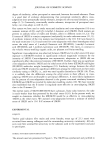
344 JOURNAL OF COSMETIC SCIENCE MATERIAL AND METHODS TEST SUBJECTS AND TREATMENT In this study 15 volunteer test persons were included. They had no pathologic results on the skin sites that were investigated (volar forearm). The measurements were carried out in partly air-conditioned rooms (22øC, 45% relative air humidity). The time for accli- matization was 30 minutes. The age distribution of the nine men and six women included in the study was 20.6 (18-37) years for women and 27.2 (16-35) years for men. The wash solutions used had the following composition: A: Almond oil 30.0 Paraffinum per liqu. 70.0 B: Tween 20 • 18.0 Almond oil 64.0 Aqua purif. 18.0 C: Tween 20 47.0 Almond oil 41.0 Aqua purif. 12.0 Bath oil A was a spreading oil bath, and bath oils B and C were dispersion-type oil baths with differing amounts of tenside. The dilution was 0.2 ml per 500 ml (corresponding to 40 ml per 100 1 of a bath) with luke-warm tap water (35øC) for each formulation. Before the start of each test, the forearms, which were not treated previously, were subdivided in two areas separated from each other by strips of adhesive tape. The test sites were rotated from test person to test person and thereby randomized. An initial value was measured (O-value) to which all further measurements were related. Washing procedure. The washings were performed according to the test procedures of Bettinger eta/. (7): The individuals sites were washed for three minutes with a roll of foam material that was moved back and forth 30 times per minute. After one and two minutes, respectively, the roll was soaked in the bath oil solutions again. No pressure was applied to the skin other than that of the roll's own weight. The forearms were lying horizontally on the padding during the washing procedure. The washing solution was left to incubate on the skin for 15 minutes. Subsequently the first measurement was performed after residues of solution A (spreading bath) were swabbed off with a non-fraying tissue (Kleenex, Kimberley Clark, USA). After the first measurement, we rinsed off the bath oil residues carefully without spilling the solutions from one test site to another. Afterwards the second washing was performed with tap water only, at 35øC, on all four test sites, each with an individual, fresh roll of foam material. Further measurements were performed 30, 60, 90, and 120 minutes after the first washing. • Polyoxyethylene sorbitanmonolaurate DAB 9, non-ionic tenside, Merck, Schuchardt, Hohenbrunn, Ger- many.

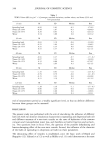
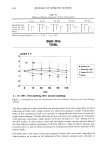
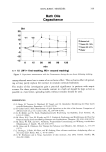
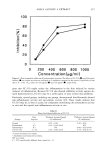
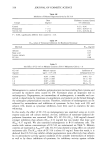
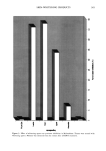
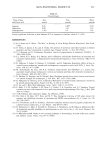
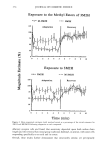
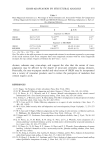
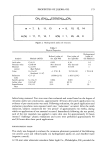
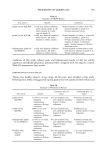
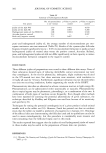
NON-IONIC TENSIDES 345 METHOD OF MEASUREMENT The horny layer hydration was determined by capacitance measurement using a Corne- ometer CM 820 (Courage & Khazaka, Cologne, Germany). The depth of measurement ranged from 60 i•m to 100 i•m. The method is critically discussed by Blichmann and Serup (8) as well as by Hashimoto-Kumasaka et al. (9), especially in comparison with other methods that register stratum corneum hydration. The measurements were carried out according to the guidelines published by Berardesca (10). The barrier function was detected with the help of transepidermal water loss using a Tewameter TM 210 (Cour- age & Khazaka, Cologne, Germany). The principle of the measurement method and the guidelines for use are described in detail and discussed by Pinnagoda et al. (11). STATISTICAL EVALUATION The measurements were related to the initial value (TO) before the first washing. Because the distribution was not normal, we carried out a distribution-free Wilcoxon signed- rank test for dependent samples. Average, standard deviation, median, and box (first and fourth quartile or 25% and 75% percentile, respectively) are given in Tables I and II. The significance level for differences was set to p 0.05 high significance was assumed for p 0.01. RESULTS The results are presented in Table I and II, and the statistical evaluation of the differ- ences between the measured values in the individual groups are shown in Table III and IV. Figures 1 and 2 illustrate the results. TRANSEPIDERMAL WATER LOSS The spreading bath and the oil bath with the low tenside content produce an occlusive effect. By contrast, the oil bath with the high tenside content and the water bath lead to increased transepidermal water loss and therefore to barrier damage. The difference between the spreading bath and the oil bath with the low tenside content is small. The water bath does not differ definitively from the bath with the high tenside content. STATE OF HYDRATATION OF THE STRATUM CORNEUM A dehydration effect in the form of a decrease in the capacitance values can be found for water alone and for the bath solution with the high tenside content, without any significant difference between these two baths. The best hydration is seen in the group with the spreading bath, with highly significant differences to the water bath, to the oil bath with high tenside content, and to the oil bath with low tenside content. The bath solution with the low tenside content showed a highly significant increase in the moisture content of the stratum corneum relative to high tenside concentration and the application of water alone, although it was less pronounced than with the spreading bath. The solution with the high tenside content differs from water alone, only at the
Purchased for the exclusive use of nofirst nolast (unknown)
From: SCC Media Library & Resource Center (library.scconline.org)