ZINC OXIDE IN FACE POWDER* By L. D. GRADY Deve/opment Eninering Division Technca/ Departmen, The New •7ersey Zin Compan (of Pa.), Pa/merton, Pa. INTRODUCTION ACCORDING to definition, face powder fulfils the useful and orna- mental purpose of altering the appearance of the face to conform to the current criterion of beauty. Face powder is sold because it re- places shininess with a delicate sheen and at the same time covers up sur- face imperfections in the skin. In addition, of course, face powder lends a bit of color and fragrance. Ingredients which are to be used for this purpose must fidill certain preliminary requirements. U.S.P. zinc oxide rafters these initial de- mands because it has a bright white color, fine texture, is unaffected by exposure to light and is not toxic or irritating to the skin. COVERING POWER Beyond the above characteristics, satisfactory covering power is prob- ably first in importance. Face pow- der is called upon for a certain de- gree of camouflage. High covering power is not the criterion--it is how well the powder blends in with the * Presented at the May 15, 1946, Meeting, New York City. surroundings rather than how well it covers. Too much covering power is worse than too little because of the unnatural effect which it creates. The measurement of covering power has been a controversial sub- ject for a long time. By varying the test conditions, the pigment concen- tration or the method of measure- ment one can obtain widely different values for the relative covering power of pigments. Tabulations of such covering-power values have been. published in journals of the paint industry, the paper industry, and the cosmetic industry. No ex- perimental data will be presented in this paper but, in order not to avoid the subject completely, values for covering power have been calcu- lated. In order to compare the covering power of several face powder in- gredients, calculations have been made based upon the refractive in- dices of the pigments and various media in which they may be used for cosmetics. Fresnel's law (1) states titat the reflectivity of an absorbing medi•m is proportional to the square of the difference in refractive index between the two components 17

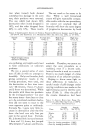
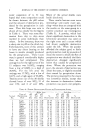
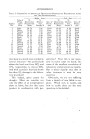
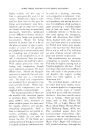
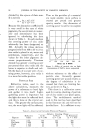
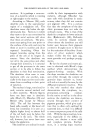
18 JOURNAL OF THE SOCIETY OF COSMETIC CHEMISTS divided by the square of their sum. It is written R = (n2 -- nl) 2 -[- k 2 (n• q- nt) 2 q- k • Because the absorption coefficient K is very small in the case of white pigments, the second term in numer- ator and denominator has been ignored in calculating the data shown in Table 1. In each medium the covering power of zinc oxide arbitrarily has been designated as 100. Actually tile values decrease progressively from 100 to 37 to 21 as zinc oxide is placed in air, water and petrolatum, respectively, and the values for the other pigments de- crease proportionately. Titanium dioxide has greater covering power per pound than zinc oxide and the latter is superior to chalk and talc. On the basis of cost per unit of cov- ering power, however, zinc oxide is in a more favorable position. PARTICLE SIZE Refractive index, used in the above caldulations, measures the power of a substance to bend light and gather it. into itself. Light- gathering power is important but the light also must be reflected back and this is done at the crystal sur- face. The greater the surface pres- ent, the more light will be reflected. Thus as the particles of a material are made smaller, more surface is created per pound and greater opacity results. Any discussion of covering power would be incomplete 0 0.2 0.4 0.6 0.8 1.0 PARTICLE SiZE IN #ICRON$ Figure 1.--Effect of particle size on light transmission of ZnO in water suspension without reference to the effect of particle size. Generally greater covering power per pound results as the degree of subdivision is in- creased but there are limiting fac- tors, as shown in Fig. 1. This chart is a calibration curve used for routine checking of particle size of zinc oxide in our plant opera- tions. •The turbidimetric method used in this test has been described in the literature (2) and will not be detailed here. It is sufficient to say TASLr. 1--CALcULATED COVERING POWER OF PIGMENTS , Relative Covering Power , Refractive In Air In Water In Petrolatum Pigment Index (n = 1.00) (n = 1.33) (n = 1. 475) TiO= 2.52 166 232 292 Zinc Oxide 2. 008 100 100 100 Chalk 1. 658 55 29 1 $ Talc 1. 589 46 19 6
Purchased for the exclusive use of nofirst nolast (unknown)
From: SCC Media Library & Resource Center (library.scconline.org)