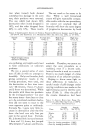
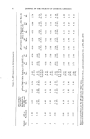
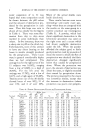
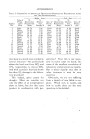
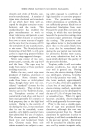
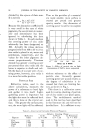
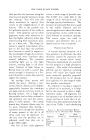
ZINC OXIDE IN FACE POWDER 19 that particle size increases along the abscissa and opacity decreases along the ordinate. You will note the sharp maximum in opacity that occurs in the neighborhood of .25 micron. This is the particle size for optimum opacity of zinc oxide in water. The optimum size for other pigments varies with refractive in- dex, the higher reft'active index pig- ments having their maximum opac- ity at a finer size. The sharp de- crease in opacity noted below .25 is due to the fact that the particles have become so small in respect to the wavelength of light that scatter- ing becomes more dominant than normal reflection. The particles scattering light act as new light sources, sending light in all direc- tions. Instead of light being re- flected back (as with a coarser pig- ment) enough is scattered in a for- ward direction to make the material appear less opaque. An analogy from nature will clarify the point. During a rain- storm, distant objects are not hidden appreciably because the raindrops are large and do not have much re- flecting surface. On a foggy day, the particle size has b4en reduced to the optimum size and the atmos- phere is really opaque. On a damp humid day, distant objects may be no more obscured than during a rainstorm even though the quantity of water present in the air in all three cases may be identical. In the last case the particles are so infinitely small that they can no longer reflect light. Our line of zinc oxide pigments covers a wide range of particle size. Our U.S.P. zinc oxide falls in the range of .25 to .40 micron and is in the high opacity classification. The product of extremely fine size is used in the rubber industry and for special applications where the chem- ical properties of zinc oxide are de- sired without its attendant opacity. The coarse types are used in ceramics and wherever else a re- duced reaction rate is required. PREVENTING SHINE A_ second desired function of a face powder is to eliminate the skin shininess caused by excessive oily secretion in certain facial areas. The prime requirement of a material for this purpose is a high absorptive capacity. Zinc oxide of the desired particle size for optimum covering power will retain less liquid than some materials specially prepared for this purpose but its oil absorp- tion capacity is in the range of other face powder constituents. In addition to having a capacity to absorb oil or moisture, it is help- ful for the material to have a high- refractive index. All pigments are less opaque in an oil medium than in water, and less in water than in air. Table 2 has been prepared using the data from Table 1 and calculating TABLE 2 RELATIVE COVERING POWER RETAINED AF'rSR WETTING DRY PIGMENT With With Pigment Water, % Petrolatum, TiO•, 51 37 Zinc Oxide 37 21 Chalk 20 5 Talc 15 3

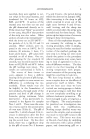
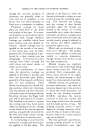
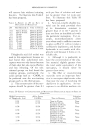
20 JOURNAL OF THE SOCIETY OF COSMETIC CHEMISTS the percentage relative covering power in changing froin an air to water and air to petrolatum med- ium. As face powder absorbs moisture and oil froIn the skin, its covering power decreases. Under these' con- ditions the high-refractive index pig- ments will lose proportionately less opacity than the materials of low- from fihns which were only a few particles thick (.00092 min.) and should be applicable to face powder considerations. Zinc oxide cuts off the ultraviolet more sharply than any other white pigment used in face powders. It is generally recognized that erythema is produced most rapidly by ultra- violet varying in wavelength from TABLE 3--ULTRAVIOLET TRANSMISSION CHARACTERISTICS OF PIGMENTS Per Cent Transmitted of Wavelength Pigment '4358 4047 365• ' 3342 3131 3023' Zinc Oxide 46 40 0 0 0 0 TiO2 35 32 18 6 1/2 0 China Clay 63 61 59 57 55 54 Chalk 87 86 84 82 80 79 Talc 90 90 90 89 88 87 refractive index which are used in face powder primarily for their absorbing characteristics. The ex- act proportion of ingredients used to satisfy the demands of covering power, absorbency, slip and adher- ence is, of course, the decision of the cosmetic chemist. ULTRAVIOLET ABSORPTION Zinc oxide may be of value in face powders because of its protective filtering action in absorbing ultra- violet from sunlight. Its protective action in prolonging the-life of ex- terior paint by delaying breakdown of the organic binder is well known and perhaps it applies here to a more limited extent. Data are availabl• showing the percentage of light transmitted by various pigments at various wavelengths through the ultraviolet spectrum (3). The val- ues shown in Table 3 were obtained 2950-3150 Angstrom units. Zinc oxide and, to a lesser degree, titan- ium dioxide, should be quite useful in preventing severe sunburn. It is pointed out in de Navarre's book (4) that investigators have found longer wavelength ultraviolet pro- duces specific effects upon the skin. Although these longer rays produce effects which are much less severe than sunburn, it seems pos- sible that the greater absorption o• zinc oxid¾ for these longer ray• might be advantageous. This i• hypothesis without proof. MEDICATIVE VALUE One of the intangible values o• zinc oxide for cosmetics may lie iri that property which makes it valu• able in pharmaceuticals (5). It is used in ointments as a mild local sedative and protective agent ant has slight antiseptic and astringent
Purchased for the exclusive use of nofirst nolast (unknown)
From: SCC Media Library & Resource Center (library.scconline.org)