COLOR MATCHING IN THE COSMETIC INDUSTRY 55 has been done. The International Committee on Illumination in 1931 adopted a standard kind of white light which they call "Illuminant C." This illuminant is similar to a mixture of north sky light and sun- light, and is a definite, fixed kind of light. Cosmetics are observed not only outdoors, but also, and perhaps even more importantly, under different kinds of artificial illumination. Modern lighting engineers have gone ahead with the development of tungsten filament lamps, fluorescent lamps having different phosphors in the coating, and gas or vapor lamps, such as the neon lighting signs. Added to this complexity are the various color effects introduced by means of colored filters placed over lights, particularly in places of amusement. Of all these artificial sources of light, only one has been defined that is a tungsten light. Illuminant A was chosen by the International Committee on Illumi- nation and this is a standard tung- sten light substantially. The man responsible for formulating the color of a cosmetic therefore, has to con- sider the attractiveness of his prod- uct under all these different kinds of illumination. The complete specification of an illumination consists of a distribu- tion curve showing the relative energy of the light as a function of its wave length. When white light is passed through a glass prism, the white light is broken up into the different spectral colors, which .are the familiar rainbow colors, and the intensity of each kind of light is the spectral distribution curve. Since these spectral distribution curves are difficult to speak about, there has been a simplification introduced with the concept of color tempera- lure. If an iron poker is placed in a furnace, as it warms up it will first become a dull red color, and as it gets hotter and hotter, the color will progressively change from a red to a yellow to a white, and finally to a bluish white color. This change in color of a so-called black body as it reaches differont temperatures some- what parallels the variation in apparent color of daylight under different conditions, and closely parallels the tungsten filament light at different voltages and therefore the concept of color temperature has been used to specify the color of an illuminant. For instance, it may be said that the north sky at a par- ticular time has blue color which is similar to the color which a black body would have if it were heated to a temperature of 10,1300 ø Kelvin. It is approximately true to say that the color temperature of the north sky is 10,000 ø Kelvin on this par- t•cular day. This does not mean that the temperature in the sky is actually 10,000 ø Kelvin, but it really means that the color coming from the sky is similar to the color which would come from a black body at a temperature of 10,000 ø Kelvin. Fluorescent light differs still more in its spectral distribution from the spectral distribution of black body light at any tempera- ture. The concept of color tern-

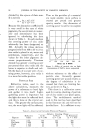
56 JOURNAL OF THE SOCIETY OF COSMETIC CHEMISTS perature can be applied to these only with a considerable degree of approximation. Nevertheless, it is so convenient to refer to a simple and single number that color tem- perature is commonly used even for fluorescent light. The spectral dis- tribution curve and the color tem- perature are the scientific terms used to describe the illumination which is one of the factors involved in the perception of color. ß The second factor in the percep- tion' of color is the object. The fundamental specification of the color of an opaque object is the curve in which reflectance is plotted rs. wave length. In the case of clear liquids, the curve of transmission rs. wave length is the fundamental specification of color. If we con- sider that white light containing all the different colors of the' rainbow is falling on a sample, a colored sample will selectively reflect these different kinds of light. A red sample will reflect more of the red light which is incident upon it than the blue light which is incident upon it. The white light has been altered in its spectral distribution by encounter- ing the sample. One of the easiest ways to determine the reflectance characteristics of a sample is to measure it with an automatically recording spectrophotometer. This is an instrument which consists of a monochromator and a photometer. The function of the monochromator is to furnish light of only one wave length at a time, varied through all the rainbow colors as the plot is made automatically. The function of the photometer is to compare the amount of this particular color light which is reflected from the sample to the amount which is reflected from the white standard. The white standard is usually taken to be magnesium oxide. This instrument automatically plots the reflectance curve or the transmission curve for a particular sample. This curve can be the specification of the color. Because the durve of reflectance rs. wave length for a particular sam- ple is difficult to talk about, it is common practice to reduce the data to a simpler set of numerical figures. It has been found that in general, at least three dimensions are necessary to specify a color. In this discus- sion we can do scarcely more than mention some of the more common ways of specifying the color. One of the methods is to use tri-stimulus values. As is well known by color marchers, using red, yellow and blue dyes or pigments in the proper pro- portion, it is possible to produce all dull colors. It is thus possible to express dull colors in terms of amounts of the three pigment pri- maries needed to duplicate them. In the tri-stimulus values, this fundamental method is used. A color is expressed in terms of three imaginary, additive primaries which have been internationally standard- ized by physicists and psychologists. Another way of specifying a color which also involves three terms, is to use the terms "apparent luminous reflectance, .... dominant wave len. gth," and "excitation purity." This is an additive method of speci-
Purchased for the exclusive use of nofirst nolast (unknown)
From: SCC Media Library & Resource Center (library.scconline.org)