COLOR MATCHING IN THE COSMETIC INDUSTRY 57 lying a color which can be demon- strated physically with real colors. If white light is mixed in with spec- tral light, and the intensity of the mixed light adjusted, any particular color may be duplicated and thereby specified. A third method of specifying color is in the Munsell notation. The Munsell notation involves specifying again three factors: value, hue and chroma. Value is related to the total amount of light reflected. Hue is related to the name of the color, that is whether it is red, green or blue. Chroma is related to in- tensity of a color, that is, it is the attribute by which a cherry red differs from a brick red. In all of these cases where color is specified in terms of three numbers, the color of the illuminant and the properties of the eye must be taken into consideration. Therefore, if two samples have the same specifi- cations in terms of any of these three simpler numbers, it means only that they will appear alike to a standard observer under standard illumination conditions. The fun- damental specification of the color attribute of a sample itself is the spectrophotometric curve. The eyes of individuals which are the third factor in appearance of color, vary quite widely in color per- ception. One reason for this is the phenomenon of color blindness. Colors which are confused by one person may be easily identified and distinguished by another person. Another factor which leads to differ- ences is the age of the observer. As the observer grows older, a yel- low pigment develops in the eye and this has the effect of giving a sample the appearance of being viewed under tungsten light. Thus an old person and a young person may look at two samples under north sky light and the younger observer may find that the two samples look alike but the older observer because of the yellow pigment in his eye is effec- tively viewing them under tungsten light where there may be mismatch and he may call the two samples different. An imaginary person with average eyesight, the so-called standard observer, has also been internationally adopted. The process of observing color is thus a complex one involving all the variations of the illuminant, the sample, and the human eye. The only way that one can be sure that two samples will look alike to all observers at all times is to have their. spectrophotometric curves identical, and even this must be qualified by the statement that they possess equal fluorescent properties and geometries. There are two methods of mixing colors to get a desired new color. One is the additive method of color mixture, and the other is the sub- tractive method of color mixture. In the additive method of color mixture, one starts out with no light at all, and adds to the amount of light which the observer can see. This method is the basis of the tri- stimulus specification, but is of lesser interest to the cosmetic color- ist because the cosmetic colorist

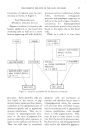
58 JOURNAL OF THE SOCIETY OF COSMETIC CHEMISTS usually has the reversed problem of beginning with a source of light such as daylight, and having the prob. lem of adding a dyestuff or several dye- stuffs to an object to remove part of the white light. This is the princi- ple of subtractive colorimetry, namely, to start out with white light and selectively remove parts of it by means of dyes or pigments. Color matching is still an art rather than a science. By far the great majority of all color matches produced in industry are produced visually rather than by means of in- struments. In practicing this art, the cosmetic color matcher will find the publications of Mr. W. H. Pea- cock particularly helpful. (Refer- ence is made specifically to Calco Technical Bulletin No. 573 entitled "The Practical Art of Color Match- ing" by William H. Peacock and Calco Technical Bulletin No. 715, :'The Application Propei'ties of Certified Coal Tar Colors" by William H. Peacock.) A useful con- cept in visual color matching is the color triangle which has red, yellow and blue at the points of the tri- angle. These are the primary col- ors. Equidistant between these three points, in the middle of the triangle, is the spot which is labeled "black." This is formed by mixing all three primaries together. Equi- distant between any two primary points are three more points on the side of the triangle the one mid- way between red and yellow is "orange" the one mid-way be- tween yellow and blue is "green" and the one mid-way between blue and red is "purple." This indicates that mixing a red and a yellow dye or pigment together will produce an orange color. This concept will be found very helpful in color match- ing. For instance, if someone has a standard red shade, and a sample which looks different from the standard, the question to ask is--in what manner 'does the sample differ from the standard? Suppose, for instance, that the standard is a red. With this color triangle in mind, the color marcher should ask himself if the sample differs from the standard red by being more of an orange or if it differs by being more of a pur- ple. Whichever way it differs, the sample can be brought to a match by adding the opposite color. Thus if the sample is tending toward an orange, then a purple pigment or toning color must be added to cor- rect the shade. It is clear from this triangle that dark colors, such as greys and browns, can differ from the standard in at-least three different directions, tending toward the three different primaries. Once this direction of divergence is estab- lished, the opposite color must be added to bring it back to shade. A small percentage of color match- ing is done spectrophotometrically. Such color matching can be directed toward either one of two objectives. One objective might be to duplicate exactly the spectrophotometric curve of a standard. This is highly desirable, because in this case, the sample and standard will look alike to any observer under any condition of illumination. It is also possible,
Purchased for the exclusive use of nofirst nolast (unknown)
From: SCC Media Library & Resource Center (library.scconline.org)