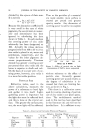
COLOR MATCHING IN THE COSMETIC INDUSTRY though more complicated, to d,.rect the color matching toward produc- ing a visual color match to the standard observer under a standard illumination, although the spectro- photometric curves do not have to be alike. As an illustration with transmission data, the transmission curve of a blue glass filter is given by the spectrophotometric curve relat- ing transmission to wave length. Similarly, the spectrophotometric curve gives the same kind of data for a yellow filter. If these two filters are in series, that is if the light passes first through one and then through the other, then the resultant curve may be obtained by multiply- ing the transmission of one filte•: by the transmission of the other. For instance, let the light pass first through •he blue and then through the yellow filter. Suppose that at 500 millimicrons, 70% of the inci- dent light is transmitted by the blue filter. Now let us further suppose that the transmission of the yellow filter at this wave length is 40•. Forty per cent is then the fraction of the blue transmitted fraction, which is transmitted by the yellow filter.. The product of these two numbers, or 28%, is the portion of the initial light which passes through both filters. By multiplying the trans- mission curves of the filters together, wave length by wave length, the re- sulting transmission of the combina- tion is found. It does not matter whether the light passes first through the yellow filter and then through the blue, or in the reverse order. In preparing a colored solu- tion which must be green, it is pos- sible to add first a yellow dye to the solution, and second a blue dye to the solution. It does not matter whether the light passes first through the yellow and then through the blue, or whether it passes through both of them simultane- ously. Thus the color of the solu- tion can be predicted from the color of the individual dyes used to make up the solution. A similar situation holds for re- flectance work, only it is more com- plicated. In reflectance work, there are two processes that affect the light one is absorption and the other is scattering. In order to get a high reflection, it is necessary to. have a material of low absorption and high scattering power, such as one of the white pigments. On the other hand, in order to get a dark sample, it is necessary to have a low scattering power, and a high absorp- tion. Some prediction of colors of reflectance samples have been made, calculated on the basis of the reflect- ance of the individual pigments in- volved• but this kind of work is still in the experimental stage. There are a number of factors in- volved in the judging of color effects, which the cosmetic color marcher must keep in mind. These factors are too numerous to elucidate here, and anyone interested is referred to the Calco Technical Bulletin No. 573 by W. H. Peacock, which lists and discusses twenty-two of these factors. One of the most important of these factors. discussed by Pea- cock is partial solubility.

60 JOURNAL OF THE SOCIETY Most colorists in the cosmetic trade have trouble obtaining the same color in successive batches of a product. Two lots made with iden- tical ingredients and used in identi- cal proportions may yet vary in final color. This variation is especially probable when mixed colorants are employed that are largely insoluble in the vehicles used--for one reason, because of differences in the degree of dispersion of the colorant in each batch. For example, suppose a red and an orange pigment were used in a lipstick base, if in one run 95% of the red pigment and 90% of the orange pigment were dispersed, and' in the succeeding run 88% of the OF COSMETIC CHEMISTS red pigment and 95% of the orange pigment were dispersed the two batches would not appear alike in color even though the same weighed amounts of pigment were used. Similar effects are possible in cake powder mixtures. The wettability, texture and oil absorption of the colorant and oth,er ingredients are additional influencing factors. With soluble dyes the final color effect is influenced by the solubility, concen- tration, and capillarity features of the colorant. Color matching is very definitely an art, and the man who does color matching of cosmetics must be a highly skilled artisan.
Purchased for the exclusive use of nofirst nolast (unknown)
From: SCC Media Library & Resource Center (library.scconline.org)