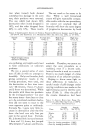
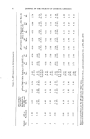
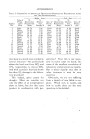
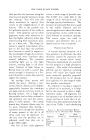
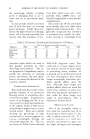
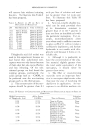
ANTIPERSPIRANTS 7 TABLE 5--CoMPARIS•ON OF AMOUNTS OF DESTRUCTION PRODUCED BY PERSPIRATION ALONE AND TWO ANTIPEKSPIRANTS , ,Right Arm, ,Left Arm, Type of % % % % Perspi- Destruction Destruc- Amt. of Destruction Destruc- Amt. of Subject ration Perspiration tion Protec- Perspiration tion Protec- No. Flow Alone Powder X tion Alone Cream Y tion 1 Light 2 Heavy 3 Normal 4 Slight 5 Normal 6 Slight 7 Heavy 8 Slight 9 Normal 10 Normal 11 Normal 12 Heavy 13 Normal 14 Normal 15 Normal 2O. 74 25.00 14.60 13.73 24.19 21 57 7 63 19 38 16 34 11 12 0 66 19.38 16.34 26.80 10.25 5.24 Good 18.96 8.84 Good 5.19 Poor 18.96 19.78 Poor 1.54 Good 16.34 14.31 Good 1.54 Fair 19.38 36.18 Fair 8.84 Good 18.96 12.48 Good 12.48 Good 17.21 38.01 Good 14.31 Poor 18.08 14.31 Poor 14.31 Good 11.12 17.85 Fair 14.31 Fair 26.80 48.95 Fair 12.48 Poor 14.60 14.31 Good 8.84 Poor 9.37 8.84 Fair 16.13 Fair 24.18 7.93 Fair 10.66 Good 19.38 7.93 Good 12.48 Poor 17.21 48.95 Poor 12.48 Good 16.34 34.36 Fair tion alone was much more marked in several instances--two particularly where the level rose from 26% and 17%, respectively, to almost 50%. And with a product that had shown less than 5% damage in the labora- tory procedure! This indeed, gives pause for thought. Must we consider not only the effect of an antiperspirant alone on fabric, but also that same product in combination with per- spiration? That this is not neces- sary in many cases we know, be- cause of the excellent correlation of laboratory and practical use results. But it seems equally true that in other instances it may be very essential. Obviously, we are not suffering from a dearth of new fields to ex- plore. Which ones to tackle, and how to tackle them are the next questions to be decided.

THE THREE PRIME FACTORS IN SUCCESSFUL PACKAGING* By E. C. EM_•Nt•E•, Chief Chemist, Glass & Closure Products, .4rmstrong Cork Company, Lancaster, Pa.. I• THE successful packaging of any material, there are three main factors for the producer to con- sider: the product, the container, and the closure. Although attractive closures, la- bels, wrappings, seals and cartons are important from a sales stand- point, they do not contribute to the keeping qualities of the product. The three major factors are, to repeat, first, the product itself, sec- ond, the container, and third, the closure. The product may be powder, liquid, or solid. It may be neutral or have an acid or alkaline hydrogen- ion concentration. It may contain water, alcohol, the higher alcohols, organic solvents, oils, fats, or waxes, organic or in'organic salts, essential oils, etc., or complex combinations of any of the above. The p.roduct may react with the container or with the closure therefore, great care must be exercised in the choice of these for proper results. The container may be glass, metal, paper, molded material, or a * Presented at the May 15, 1946, Meeting, New York City. speciaJ type not requiring closures, such as cellophane, Vinylitc, Plio- film or other synthetic wrappings. The closure may be a friction fit lid for a metal container, a ground glass stopper, or a plug or stopper type of closure such as corks, screw caps produced from various metals, or molded caps: During the war period, closures were produced from paper, wood. and other available materials. Paper closures have neither the utility nor the attractive appearance of either the molded or metal caps, consequently are not in general use. By far the most generally used closures are those with internal screw threads. Prior to 1919, each cap manufacturer and some closure users designed their own thread contours and designated the number of threads per inch and other dimen- sions. After the First World War, standardization in many fields was considered, and studies were under- taken in the Glass Container Asso- ciation-now the Glass Container Manufacturers Institute--to de- velop standards for the entire glass industry in the various diameters of
Purchased for the exclusive use of nofirst nolast (unknown)
From: SCC Media Library & Resource Center (library.scconline.org)