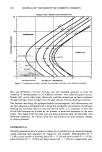
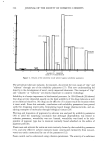
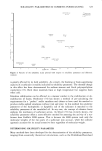
332 JOURNAL OF THE SOCIETY OF COSMETIC CHEMISTS most product properties, such as viscosity, volatility, lubricity, and tack, which give all cosmetics and toiletries their aesthetic appeal. It is evident that the limits of precision achieved by solubility technology offer consid- erable opportunity for refinement. Nevertheless, this field has progressed to the point where it now can yield major contributions to the advancement of the level of scientific formulation. Because solubility parameters are based on thermodynamic principles, they will serve to show what can be possible given adequate kinetic (mixing) treatment. Finally, the applicability of solubility parameters within the field of cosmetic chemistry has been demonstrated. Solubility parameters, unlike other measures of solubility, describe the physical size and strength of the intermolecular attractive fields. Therefore they lend themselves to mechanical explana.tions of intermolecular phenomena. As seen most recently in molecular biology, mechanical explanations can revolutionize a sci- entific field. Thus it is reasonable to expect many future refinements and computer applications of the solubility parameter applied to cosmetic chemistry. ACKNOWLEDGEMENTS The author would like to thank Dr. Paul Fehn, Mr. Paul Thau, and especially Dr. Frank J. Wright of Cosmair Inc. for their technical assistance and support, and Ms. Arlette Palo, of Cosmair Inc. and Dr. Richard Lovely of Yale University for their editorial assistance. I also wish to extend my appreciation to B. F. Goodrich Chemical Co. for permission to reproduce the chart labeled Figure 1. REFERENCES (1) (2) (3) (4) (5) (6) (7) (8) (9) (lO) (11) (12) (13) (14) (15) (16) D. Chandler, Chemistry, theory of liquids make gains. Chem. & Engr. News, April 11, 1983, p 30. J. H. Hildebrand and R. L. Scott, The Solubility of Nonelectrolytes, 3rd ed. (Reinhold Publ. Corp., New York, 1949). H. Burrel, The challenge of the solubility parameter concept,J. Paint Technol., 40, 197-208 (1968). C. M. Hansen, The three dimensional solubility parameter, J. Paint Technol., 39, 105 (1967). R. C. Nelson, Treatment of hydrogen bonding in predicting miscibility, J. Paint Technol., 42, 636 (1970). G. Lhoest, Use of physicochemical parameters to predict in vivo diffusion rate of an agent, Pharm. Acta Helv., 48, 549 (1973) (in French). P. A. Small, Some factors affecting the solubility of polymers, J. Appl. Chem., 3, 71 (1953). M. Nara, Dispersing pigments in cosmetics, Cosmetics & Toiletries, 94, 23 (January, 1979). S. A. Siddiqui, Studies of solvent dyeing, Textile Research Journal, 51, 527 (August, 1981). K. W. Harrison, "Solvents in Polymer Based Adhesives," in Adhesion, Vol. 13, K. W. Allen, Ed. (Applied Sci. PUN., Barking, England), Chapter 9. R. Tijssen, H. Billiet, and P. Schoenmakers, Use of the solubility parameter for predicting selectivity and retention in chromatography. J. Chromatogr., 122, 185 (1976). A. F. Barton, Handbook of Solubility Parameters and Other Cohesion Parameters (CRC Press, Boca Raton, 1983). P. Alessi, I. Kikic, and G. Torriano, Correlation of hydrocarbon activity coefficients with solubility parameters, J. Chromatogr., 106, 17, (1975). B. Alder, 1985 ACS Award in Experimental Chemistry of Liquids---Computer Simulations of Molecular Liquid Viscosity. S. E. Friberg, 1985 ACS Award in Colloid & Surface Chemistry--Non-Aqueous Lyotropic Liquid Crystals and Foams. J. S. Fritz, 1985 ACS Award in Analytical Chemistry--Non-Aqueous Acid-Base and Ion Exchange Chemistry.

SOLUBILITY PARAMETERS IN COSMETIC FORMULATING 333 (18) (19) (20) (21) (22) (23) (24) (25) (17) D. L. Wernick, Stereographic display of three dimensional solubility parameter calculations, Ind. Eng. Chem. Prod. Res. Der., 23, 2 (1984). J. D. Van der Waals, Z. Phys. Chem., 133 (1890). F. London, The general theory of molecular forces, Trans. Faraday Soc., 33, 8 (1937). R. F. Blanks and J. M. Prausnitz, Ind. Eng. Chem. Fund, 3, 1 (1964). W. H. Keesom, Leiden Comm. (1913), Proc. Akad. Wettemch. C. F. Boettcher, Theory of Electric Polarization (Elsevier, New York, 1952), Chapter 5. A. Beerbower and J. R. Dickey, ASLE Trans., 12, 1 (1969). B. F. Goodrich Inc., Specialty Polymers and Chemicals Division, Technical Data Sheet No. 41. A. Martin, P. L. Wu, and A. Beerbower, Expanded solubility parameter approach II., J. Pharm. Sci., 73, 188 (1984). (26) R. RawIs, Science: Chemists propose universal solubility equation, Chem. & Engr. News, March 18, 1985, p 20. (27) A. Beerbower, "The Environmental Capability of Lubricants," in An Interdisciplinary Approach to Liquid Lubricant Technology, P.M. Ku, Ed. (NASA Monograph SP No. 318, Washington, D.C., 1973), pp 365-431. (28) C. Hansch and T. Fujita, A method for correlation of biological activity and chemical structure, J. Am. Chem. Soc., 86, 1616 (1964). (29) A. Cammarata, S. J. Yau, and K. S. Rogers, Some biological applications of regular solution theory, Pure Appl. Chem., 35, 495 (1973). (30) H. Burrell, Pigment wetting parameter, Am. Chem. Soc. Div. Org. Coat. Plast., Paper 35(2), 18 (1975). (31) C. M. Hansen, Solvents for coatings, Chemtech, 2, 547 (1975). (32) C. M. Hansen, "Solvent Selection by Computer," in Solvents--Theory & Practice, Adv. Chem, Ser. 124, R. W. Tess, Ed. (Am. Chem. Soc., Washington, D.C., 1973), Chapter 14. (33) S. Ross and G. Nishioka, The relation of foam behavior to phase separations in polymer solutions, Colloid Polym. Sci., 255, 560 (1977). (34) A. Beerbower and M. W. Hill, Application of cohesive energy ratio (CER) concept to anionic surfactants, Am. Cosmet. Perfum., 87, 85 (1972). (35) H. Schott, Solubility parameter and hydrophilic-lipophilic balance of nonionic surfactants, J. Pharm. Sci., 73, 790 (1984). (36) J. Sevestre, On some corrections involving the solubility parameter, Double Liaison, 109, 67 (1964) (in French). (37) S. A. Siddiqui and H. L. Needles, Solubility parameters, Textile Research Journ., 52, 570-579 (1982). (38) G. Scatchard, Equilibria in non-electrolyte solutions, J. Am. Chem. Soc., 38, 321 (1916). (39) J. H. Hildebrand, Solubility, J. Am. Chem. Soc., 38, 1442-1473 (1916). (40) H. Burrel, Solubility parameters, Interchem. Rev., 14, 3-16 (1955). (41) H. Lee, Relation between solubility parameters and surface tension, J, Paint Technol., 42, 365-370 (1970). (42) D. D. Lawson and J. D. Ingham, Method for estimating solubility parameter, NASA Tech. Brief, TSP73-10022 (1973). (43) A. W. Francis, Critical Solution Temperatures, Adv. Chem. Ser. 31 (Am. Chem. Soc., Washington, DC 1961). (44) R. W. Taft, M. H. Abraham, R. M. Doherty, and M. J. Kamlet, The molecular properties gov- erning solubilities of organic nonelectrolytes in water. Nature, 313, January 31, 1985. (45) Industrial and Engineering Chemistry 38, p 320 (1946).
Purchased for the exclusive use of nofirst nolast (unknown)
From: SCC Media Library & Resource Center (library.scconline.org)