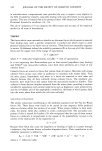
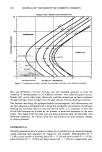
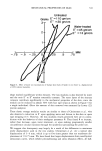
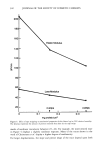
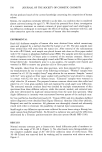
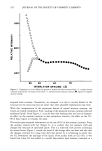
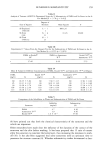
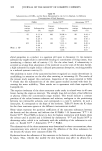
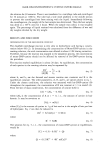
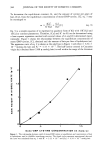
MECHANICAL PROPERTIES OF SKIN 341 Untreated Grams E' = 110 gm/cm 3 E" =30 gm/cm Water-treated E' =45 gm/cm E" = 13 gm/cm ' MM -.75 -.5 -.25 5 .5 .75 -1 Figure 4. Effect of water on viscoelasticity of human skin (back of hand) in vivo (force vs. displacement) at 20% relative humidity. shape reached equilibrium within minutes. The loss modulus is also lowered by water and the ratio E' to E" remains essentially constant. The outer layers of the stratum corneum contribute significantly to the mechanical properties of the skin, since the moduli can be reduced by almost 50% with four tape strips as shown in Figure 5 for a single individual. (Here the amount of skin removed was measured by Lowry (22) protein analysis). These elastic storage modulus results are similar to those of Christensen et al., who also observed a reduction in E' upon applying water and lotions to the skin or upon tape stripping (17). However, the loss modulus results presented here are in contra- diction with the behavior of their analogous parameter 0. They found 0 to increase, rather than decrease, upon water treatment, or upon making progressively smaller circumference circular incisions through the epidermis surrounding the probe site. We suggest this discrepancy may largely be a result of the differences in maximum probe displacement used in the two studies. Christensen et al. cite a typical skin displacement of 3-4 mm, which is up to five times greater than our maximum dis- placement of ---0.75 mm. We have found that larger displacements form nonelliptical stress-strain curves, which exhibit preconditioning and stress relaxation effects, all hall-

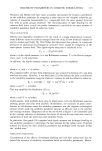
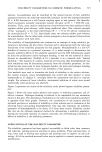
342 JOURNAL OF THE SOCIETY OF COSMETIC CHEMISTS E 180 16O Elastic Modulus 14O 120 1 O0 8O 6O 4O 20- 2 strips 4 strips • t • ! • 0 0.1 O.2 O.3 m•j protein/cm 2 Figure 5. Effect of tape stripping on mechanical properties of skin (lower leg) at 29% relative humidity. The abscissa represents the amount of protein removed from skin by the tape strips. marks of nonlinear viscoelastic behavior (23-26). For example, the water-treated trace in Figure 4 displays a slightly nonlinear response. Many of the traces shown in the work of Christensen eta/. display a higher degree of nonlinearity. For larger displacements, the slope and precise shape of the trace depend upon both
Purchased for the exclusive use of nofirst nolast (unknown)
From: SCC Media Library & Resource Center (library.scconline.org)