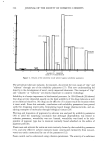
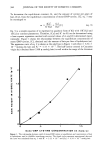
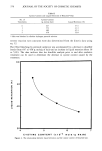
374 JOURNAL OF THE SOCIETY OF COSMETIC CHEMISTS the hair during the incubation period. The ZPT levels in the wash water were below the limits of detection as a consequence of the relatively large wash volumes used. The observation that approximately 50% of the ZPT is still associated with the hair after three washes is in agreement with that of Okumura et al, (3) who concluded that the ZPT was not easily removed from hair by a following application of a plain shampoo or plain cream rinse. The publication by Okumura et al. (3) is one of the few in which ZPT determinations on hair or skin have been described. Their method, although sensitive and reliable, was based upon the use of ZPT radiolabelled on the sulphur atom, a material which is not readily available in most laboratories. Results of the direct measurement of antimicrobial activity of ZPT on calfskin have been published (4), but the experimental details were not included and the untreated calfskin itself clearly had inhibitory activity towards certain organisms. The method described in this letter is simple, reproducible, and uses readily available materials. It is suggested that the method is likely to be of value in, for example, the rapid assessment of ZPT leachability from hair following application of different shampoo formulations and the factors influencing this process. REFERENCES (1) B. L. Kabacoff and C. M. Fairchild, Determination of zinc pyrithione by chelate exchange, J. Soc. Cosmet. Chem., 26, 453-459 (1975). (2) R. J. Fenn and D. A. Czejka, The stability of 2-pyridinethiol-l-oxide, sodium salt, as a function of pH, J. Soc. Cosmet. Chem., 33, 243-248 (1982). (3) T. Okumura, S. Hayashi, F. Tokiwa, and S. Horin, Adsorption of zinc pyrithione onto hair and skin, Costa. Perf., 90, (3), 101-104 (1975). (4) G. A. Hyde and M. A. Auerbach, Formulation techniques for zinc pyrithione antidandruff shampoos, Cosmetics and Toiletries, 94, 57-59 (1979). j. E. Fairbrother Stiefel Laboratories Sligo, Eire G. W. Hanlon N. A. Hodges Pharmacy Department Brighton, Polytechnic Brighton BN2 4G J, U.K.

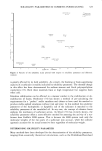
j. Soc. Cosmet. Chem,, 36, 375-380 (September/October 1985) Abstracts The Annual Scientific Meetings and Seminars of the Society of Cosmetic Chemists are important venues for informing the participants about the state of the art and recent technical advances in the field of Cosmetic Science. To provide broader dissemination of that information, the Publication Committee has decided to publish abstracts of the technical presentations made at these Meetings and Seminars in the Journal.-- The Editor. Society of Cosmetic Chemists ANNUAL MEETING December 5-6, 1985 The Waldorf-Astoria, New York Program arranged by the Society's Committee on Scientific Affairs Jan Curry, Chairman, 1985 SESSION I FRAGRANCE TECHNOLOGY MAECIS: A computer program for the handling and analysis of flavor and fragrance molecules Craig B. Warren Ph.D., William E. Brugger Ph.D., and Gary Zander, IFF, 1515 Highway 36, Union Beach, NJ 07735 Chemical structure and information-handling present problems for flavor and fragrance companies because of the large number and structural diversity of molecules used by this industry for their product lines. This problem is compounded by the use of industry-specific, trivial names that contain no struc- tural information. Examples are galaxolide and ce- lestolide, names of two common, musk-like odor- ants. Our solution to this particular information- handling problem was the development of MAECIS, a user-friendly, interactive program written in FORTRAN for the DEC VAX 11-780 computer. Applications of multivariate data analysis to fra- grance material quality control D. L. Carroll, Ph.D., Colgate-Palmolive Co., 909 River Road, Piscataway, NJ 08854 Published gas chromatography data collected on lavender and lavandin oils have been analyzed by multivariate statistical methods. It will be shown that several techniques, including principal com- ponents, k-nearest neighbor, cluster, SIMCA, and discriminant analysis, can effect a machine classi- fication of lavender from lavandin oils. The lavandin oils may be further classified as to Abrialis, Grosso, and Super hybrids. Application of these methods to several other materials of flavor fragrance interest will be discussed. Segmenting fragrance preferences Howard R. Moskowitz, Moskowitz/Jacobs, Inc., 14 Madison Avenue, Valhalla, New York 10595 Consumer tests with both fine and functional fra- grances reveal large differences among consumers in degree of liking, but substantial agreement in terms of sensory properties. Rather than considering the variability of preferences as an unavoidable "fact of life," it turns out that there are different segments of consumers in the population, showing well de- fined, homogeneous preferences. This paper shows how to uncover those segments, and find out what sensory characteristics consumers in each segment prefer. The paper also deals with the relation be- tween sensory attribute level and acceptance for each segment (sensitivity and analysis), and the simul- taneous scientific/commercial opportunities which present themselves upon discovering and isolating new consumer preference segments for fragrance. 375
Purchased for the exclusive use of nofirst nolast (unknown)
From: SCC Media Library & Resource Center (library.scconline.org)