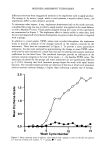
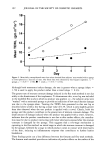
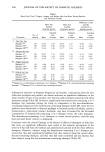
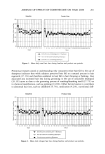
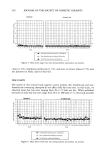
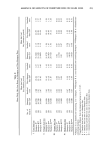
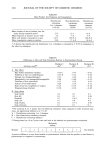
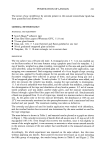
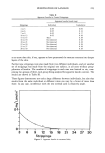
ABSENCE OF EFFECTS OF DIMETHICONE ON HAIR LOSS 205 data on the actual mean daily hair loss rates in a large population of 404 healthy Thai females over a period of six weeks and is consistent with reported findings in the normal population (2-3,8). As expected, significant differences were noted in the hair loss rates from grooming on shampoo versus non-shampoo days. No abnormal hair loss was evident pre- to posttreatment. Scalp examinations conducted to assess the degree of flaking, erythema, and scalp disease pre- to posttreatment indicated no shampoo-related effects. The subjects in the study answered questionnaires relating to their perception of hair fall and hair health. No differences were noted in the hair fall perceptions of the subjects using the three different shampoos. In this study, we determined why consumers associate hair loss with the use of sham- poos. While subjects on study perceived hair fall as a natural process in hair regrowth (37.1%) and unrelated to hair thinning or balding, they associated any increased hair loss during the hair grooming process to the use of unsuitable shampoo (39.1%), more so than to the grooming process of combing/brushing (27.7%) or to chemical modifi- cation (14.6%). Other factors known to contribute to abnormal hair loss such as child- birth (5.7%), medication (4.2%), nutritional deficiency (1.2%), hereditary predilection (1.7 %), and acute or chronic illnesses (2.7%) were not perceived by the subjects as likely causes of their hair fall. ACKNOWLEDGMENTS We are grateful to Vera H. Price, M.D., of the University of California, San Francisco, for her input in the design of the clinical protocol and for reviewing the results of the study. We also acknowledge the Deemar Survey Research Group, Bangkok, Thailand, for its assistance in the recruitment of subjects and the administration of the perceptual questionnaires. REFERENCES (1) C. Cainan, "Adverse Reactions to Hair Products", in The Science of Hair Care, C. Zviak, Ed. (Marcell Dekker, New York, Basel, 1986), pp. 407-423. (2) C. W. Ihm and J. Y. Lee, Evaluation in daily hair counts, Dermatologica, 182, 67 (1991). (3) J. R. T. Reeves and H. I. Maibach, "Drug and Chemical Induced Hair Loss", in Advances in Modern Toxicology, F. N. Marzulli and H. I. Maibach, Eds. (Hemisphere Publishing Corp., Washington, London, 1977), Vol. 4, pp. 487-500. (4) E. J. Van Scott, Physiology of hair growth, Clin. Obstet. Gynecol., 7, 1062-1074 (1964). (5) F.J. Ebling and A. Rook, "Hair", in Textbook in Dermatology, A. Rook, D. S. Wilkinson, and E. J. B. Ebling, Eds. (Blackwell Scientific Publications, Great Britain, 1968), Vol. 2, pp. 1355- 1425. (6) C. Zviak and R. Dawber, "Hair Structure, Function and Physiochemical Properties" in The Science of Hair Care, C. Zviak, Ed. (Marcell Dekker, New York, Basel, 1986)pp. 1-48. (7) J.P. Stroud, Diagnosis and management of the hair loss patient, Cutis, 40, 272-276 (1987). (8) Personal communications with Dr. A.M. Kligman. (9) A.M. Kligman, The human hair cycle, J. Invest. Dermatol., 33, 307-316 (1959). (10) D. M. Pillsbury, W. S. Shelly, and A.M. Kligman, "Hair", in Dermatology (W.B. Saunders, Phil- adelphia, 1956) pp. 40-51. (11) R. Dawber, "Alopecia," in The Science of Hair Care (Marcell Dekker, New York, Basel, 1986), pp. 451-467.

206 JOURNAL OF THE SOCIETY OF COSMETIC CHEMISTS (12) A. Rook and R. Dawber, Diseases of the Hair & Scalp (Blackwell Scientific Publications, Oxford, 1982), pp. 1-341. (13) W. F. Bergfeld, Diffuse hair loss in women, Cutis, 22, 190-195 (1978). (14) J. Eckert, R. E. Church, E. J. Ebling, and D. S. Marma, Hair loss in women, Br. J. Dermatol., 19, 543-548 (1967). (15) D. A. Weigand, Recent developments in alopecias, Int. J. Dermatol., 17, 280-286 (1978). (16) M. B. Brodin, Drug-related alopecia, Dermatologic Clinicas, 5, 571-579 (1987). (17) A. Levantine and J. Almeyda, Drug induced alopecia, Br. J. Dermatol., 89, 549-553 (1973). (18) G. Kovacs and R. Marks, Contraception and the skin, AustralasJ. Dermatol., 28, 86-92 (1987). (19) J. E. Jelinck, Cutaneous side effects of oral contraceptives, Arch. Dermatol., 101, 181-186 (1970). (20) M. J. Scott and M. J. Scott Ill, Dermatologists and anabolic-androgenic drug abuse, Cutis, 44, 30-35 (1989). (21) S.S. Koide and K. Ch'iu Lyle, Unusual signs and symptoms associated with oral contraceptive medication, J. Reprod. Med., 15, 214-224 (1975). (22) H. Baker, Adverse cutaneous reaction to oral contraceptives, Br. J. Dermatol., 81, 946-949 (1969). (23) Unpublished findings, The Procter & Gamble Company.
Purchased for the exclusive use of nofirst nolast (unknown)
From: SCC Media Library & Resource Center (library.scconline.org)