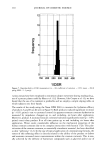
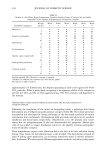
290 JOURNAL OF COSMETIC SCIENCE l0 (%) 0 • •: :'' ,9 •.•} 7 •- -. ß _a ' ß ß Figure 1. Percentage of total amino acids in CC-516. Free amino acid content was 0.2% determined by amino acid analyzer (TCX 3100, ACS, UK). Table II Composition Analysis of Fatty Acids in CC-516 by GC/MS Fatty acid Lauric Myristic Palmitic Stearic Oleic Linoleic Composition (12:0) (14:0) (16:0) (18:0) (18:1) (18:2) Others (%) 24.2 33.3 11.5 1.3 14.4 14.3 1.0 Derivated trimethylsilyl was prepared from the dried extracts (1 mg) by dissolution in Bis(trimethylsi- ly)trifiuroacetamide (50 1 fi) and pyridine (50 1 fi) heated at 60øC for 30 min. Aliquots of 0.05 I•1 were injected onto the GC. CC-516 and standards were run alternately on the GC/MS with blanks of BSTFA/ pyridine. A fused HP ultra-2 column (Econocap: 50m capillary: 0.2 mm, thickness: 0.11 l•m) was crosslinked with a PMS. The bonded phase was eluted with He (inlet pressure 6 psi) directly into the ion source ofa HP 5890 GC/HP 5970 MS. The column was temperature programmed from 50øC to 300øC at 10øC/min. The major components and many of the minor components were identified, after trimethylsi- lylation, by comparison of their electron impact mass spectra and GC elution t, mes with standard sample spectra. lauric (24.2%) acids were the major fatty acids of the hexane-soluble fraction. Oleic (14.4%) and linoleic (14.3%) acids appear to be major contents of unsaturated fatty acids. Intercellular lipids, particularly ceramides, play an important role in regulating skin barrier function as well as in maintaining the water-holding capacity of the stratum corneum. Several lipidic substances could inhibit leukocytic elastase, pancreatic elastase,

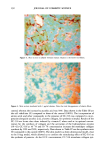
ARECA CATECHU L. EXTRACT 291 and plusmin. In particular, their active sites can accommodate unsaturated fatty acids and fatty acid derivatives. It was therefore postulated that CC-516, composed of fatty acids, many of them amino acids, polypeptides and flavonoids, could inhibit HLE and thus attenuate HLE-catalyzed extracellular matrix alterations during skin inflammatory disorders. Figure 2 shows the concentration-dependent inhibition of PPE and HLE by CC-516. The CC-516 at 10-500 pg/ml as the final concentration exhibited 37% to 98% inhi- bition, and IC5o values were 40.8 pg/ml (PPE) and 48.1 pg/ml (HLE), respectively. Figures 3-5 show the effects of the CC-516 on the enzyme activity in vivo. The elastase affects a reduction in the number of elastin fibers at the level of the enzyme deposit. The number of fibers increased when we drifted from the enzyme deposit point. CC-516 has insignificant inhibitory effects at the concentrations of 10 pg/ml and 50 pg/ml. On the other hand, it reduces strongly the elastase activity and thus increases the number of fibers at 100 pg/ml, as shown in Figure 5. This highly protective behavior towards elastin degradation contrasts with the properties of other elastase inhibitors (6). CC-516 could protect elastic fibers against elastase degradation in an ex vivo assay. Table III shows the effect of CC-516 on the cell proliferation of human fibroblasts. CC-516 increased cell proliferation by 85% at 10-4% concentration, compared to that of the 120 lOO -• 80 .--- 60 ,- 40 20 0 --e- HLE -El- PPE 0 1 O0 200 300 400 500 Concentration (IzO/m I) Figure 2. AntJ-eJastase activity of CC-516. Dose-response curves for the inhibitory effects on PPE (IC5o: 40.8 pg/ml) and HLE (IC5o: 48.1 pg/ml).
Purchased for the exclusive use of nofirst nolast (unknown)
From: SCC Media Library & Resource Center (library.scconline.org)