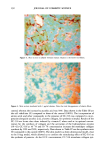
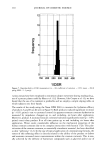
292 JOURNAL OF COSMETIC SCIENCE Figure 3. Skin section incubated without elastase Elastin is the brown-red fibers. Figure 4. Skin section incubated with I I•g/ml elastase. Note the total disappearance of elastin fibers. control, whereas the increase by ascorbic acid was 50%. Data shown in the Table III are the cell viabilities (%) compared to those of the control (100%). The incorporation of amino acids and other compounds in the presence of CC-516 was compared to incor- poration alongside ascorbic acid, a known collagen, for synthesis stimulus. Results of the CC-516 are better than those induced by vitamin C when used at its optimal concen- tration for the synthesis of collagen and the activation of the hydroxylation enzyme (39-42). CC-516 at 10-5% and 10-4% concentration increases the monolayer collagen synthesis by 20% and 50%, respectively. Data shown in Table IV are the synthesis ratio (%) compared to the control (100%). The skin model is a three-dimensional model, close to the living model, which allowed us to confirm the stimulating effect of CC-516 on the synthesis of proteins. At the 0.1% concentration, CC-516 stimulates collagen syn-

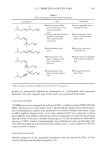
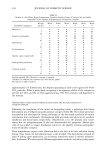
ARECA CATECHU L. EXTRACT 293 Figure 5 Skin section incubated with elastase (1 lag/ml) in the presence of CC-516 (100 lag/ml) Table III Effect of CC-516 on Cell Proliferation at Various Concentrations Concentration (%) Materials 1 x 10 -2 1 x 10 -3 1 x 10 -4 1 x 10 -5 1 x 10 -6 Ascorbic acid 105 130 150 140 105 CC-516 110 143 185* 120 95 Control 100 100 100 100 100 Data in the table are the cell viabilities (%) compared to control (100%). *p 0.05 vs control and ascorbic acid. Table IV Effect of CC-516 on Collagen Synthesis (monolayer and three-dimensional culture) Concentration Monolayer 3-D Culture (%) Materials l x 10 -3 1 x 10 • 1 x 10 5 I x 10 • 1 x 10 -2 I x 10 3 Ascorbicacid 102 104 118 95 98 92 CC-516 108 140' 120 120 100 104 Control 100 100 100 100 100 100 Data shown in the table are the synthesis ratio (%) compared to control (100%). *p 0.05 vs control and ascorbic acid. thesis by a factor of 1.2, at 0.01% and 0.001% concentrations. This stimulation is almost the same as that of the control (100%). The elasticity of the skin depends on its water content and on the swelling capacity of the fibers of its connective tissue. Evalu- ation of stratum corneum hydration by the capacitance method showed that skin mois- turizing increased about 16.5% against untreated cream. In the skin hydration experi- ment, all measurements were done in triplicate and the average values were used for
Purchased for the exclusive use of nofirst nolast (unknown)
From: SCC Media Library & Resource Center (library.scconline.org)