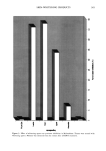
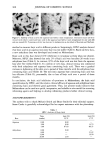
j. Cosmet. Sci., 49, 361-367 (November/December 1998) An in vitro method for screening skin-whitening products GOPA MAJMUDAR, GEORGE JACOB, YOLANDA LABOY, and LOUIS FISHER, Mary Kay Holding Corporation, Dallas, TX 75247. Accepted for publication October 15, 1998. Synopsis Melanoderm (Mat-Tek) is an in vitro model of the human epidermis consisting of well-differentiated, cultured human keratinocytes and melanocytes. We utilized this model to evaluate the efficacy, stability, and cytotoxicity of whitening agents. Magnesium ascorbyl phosphate (MAP), kojic acid, and lactic acid in aqueous or anhydrous base were applied to Melanoderm. Following incubation, tyrosinase activity was measured using L-dihydroxyphenylalanine (L-DOPA). Melanocyte staining was observed under the micro- scope. Melanoderm treated with either MAP, kojic acid, or lactic acid showed 33%, 48%, and 46% reduction, respectively, of tyrosinase activity. Microscopic examination of treated Melanoderm clearly showed the dendritic nature of melanocytes, and normal morphology of keratinocytes and MTT assay suggested that the test materials were not cytotoxic. The kojic acid effect declined with the age of the preparation, and subsequent analysis via high performance liquid chromatography (HPLC) showed kojic acid to be unstable in the aqueous base. Clinical tests using a chromameter to evaluate skin color indicated that kojic acid in an anhydrous base can induce more skin lightening than in the aqueous base. We obtained a good correlation between the Melanoderm, HPLC, and clinical tests. The data show that Melanoderm is a suitable tool for screening whitening agents and developing whitening products. A combination of two in vitro tests, such as the Melanoderm and HPLC methods, is useful to evaluate the relative activity, stability, and cytotoxicity of whitening ingredients and products before testing on humans. INTRODUCTION Melanin pigments in skin play a key role in determining skin color and are synthesized by large dendritic cells known as melanocytes, which are located at the epidermal- dermal junction (1). Tyrosinase in melanocytes is a key enzyme in the synthesis of melanin pigments (2-4). Melanocytes transfer melanin pigments to neighboring cells such as keratinocytes. Melanin production and transport of melanin is increased by factors such as UV rays, hormones, and chemicals, resulting in darkening of the skin and development of age spots, freckles, melasma, and other disorders of hyperpigmentation (5-8). In Asia, skin-whitening products are very popular and are used to lighten the skin and to treat freckles and skin hyperpigmentation (9-11). The development of successful whitening skin care products depends on the use of effective whitening or depigmenting ingredients that inhibit melanin formation in melanocytes. A number of in vitro screen- Yolanda Laboy's present address is BASF Corporation, Washington, NJ 07882. 361

362 JOURNAL OF COSMETIC SCIENCE ing methods, such as measuring the inhibition of L-DOPA auto-oxidation (12) and inhibition of tyrosinase and melanin production in melanocytes (13,14) are available however, these in vitro methods are not suitable to measure the activity of whitening ingredients in a finished product. Finished products are cytotoxic to the monolayer cell culture and interfere in L-DOPA auto-oxidation assays. These methods are also limited to compounds that are soluble in water or in culture media. In contrast, a living skin equivalent allows the topical application of a finished product or a water-insoluble compound as it is applied to human skin. Living skin equivalent models are not complete in vitro systems, as they lack dermis and other components of human skin such as hair follicles, sebaceous glands, blood vessels, sweat ducts, and sensory nerves. How- ever, these three-dimensional skin models are very useful for testing cosmetics and pharmaceutical products and ingredients before testing on humans. This article reviews a new method to screen tyrosinase-inhibiting agents and subsequently develop whiten- ing products. We utilized a three-dimensional human skin model, Melanoderm, to screen whitening agents before testing the product on humans. Melanoderm is a living skin equivalent in vitro model of the human epidermis, consisting of well-differentiated human keratinocytes and melanocytes. The biochemical, histological, and ultrastructural properties of Melanoderm are similar to those of human epidermis. A cross section of Melanoderm shows the presence of stratum corneum, keratinocytes, and dendritic me- lanocytes localized in the basal cell layer (15). Melanocytes stain positive when exposed to L-dihydroxyphenylalanin (L-DOPA), a precursor of melanin. The relative activity of whitening agents such as kojic and lactic acids and magnesium ascorbyl phosphate (MAP) was measured on Melanoderm. A new method was developed to measure total kojic acid in a finished product using HPLC. Finally, a complete formula was tested on human subjects to determine the correlation with in vitro test methods. MATERIALS AND METHODS TESTING ON MELANODERM Melanoderm was purchased from the Mat-Tek Co, Ashland, MA. Kojic acid, lactic acid, and MAP in either an aqueous or anhydrous base or the bases alone were applied to Melanoderm and incubated for two to three days. Tissues were refed with the fresh medium daily. At the end of incubation, the cream was removed. The Melanoderm was first rinsed in phosphate-buffered saline (PBS), treated with 10% buffered formalin for ten minutes at room temperature, and incubated in 0.1% L-DOPA for one hour at room temperature. After one hour Melanoderm was placed in 0.1% fresh L-DOPA and in- cubated 4 to 16 hours. Melanin from the Melanoderm was extracted and measured at 490 nm using a microplate reader. HPLC The kojic acid assay was performed using a Hewlett Packard 1090 model HPLC in- strument comprised of an automatic injector, ternary pump, photodiode array detector, and a Chemstation to control the instrument and manage the data. The chromatographic conditions consisted of a C s, ODS-5, 150 x 4.5 mm column (Metachem #0297) and a
Purchased for the exclusive use of nofirst nolast (unknown)
From: SCC Media Library & Resource Center (library.scconline.org)