376 JOURNAL OF COSMETIC SCIENCE (13) X.-N. Zeng, J. J. Leyden, J. G. Brand, A. I. Spielman, K. J. McGinley, and G. Preti, An investigation of human apocrine gland secretion for axillary odor precursors,J. Chem. EcoL, 18, 1039-1055 (1992). (14) C.J. Wysocki, X.-N. Zeng, and G. Preti, Specific anosmia and olfactory sensitivity to 3-methyl-2- hexenoic acid: A major component of human axillary odor, Chem. Senses, 18, 252-253 (1993). (15) T. Sato, J. Hirono, and M. Takebayashi, Tuning specificities to aliphatic odorants in mouse olfactory receptor cells. Poster presented at the meeting of the Association for Chemoreception Sciences, Sara- sota, FL, April 1995. *All reprint requests should be sent to John D. Pierce, Jr.

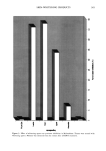
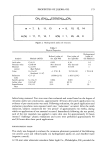
j. Cosmet. Sci., 49, 377-383 (November/December 1998) Non-comedogenic and hypoallergenic properties of jojoba oil and hydrogenated jojoba oil D. J. ARQUETTE, E. M. BAILYN, J. PALENSKE, D. DEVORN BERGMAN, and L. A. RHEINS, American Jojoba Oil Association, Gilbert, AZ (D.J.A.) and California Skin Research Institute, San Diego, CA (E.M.B., J.P., D.d.V.B., L.A.R.). Accepted for publication October 15, 1998. INTRODUCTION Jojoba oil and its derivatives have found broad and growing application in cosmetic and personal care products. The jojoba plant (Simmondsia chinensis) is native to the Sonoran Desert that straddles the border of Mexico and the United States. Commercial planta- tions have been established in various suitable growing regions including Mexico, the United States, Argentina, Peru, and Israel. The oil from the seed of the jojoba plant is unique in that it is a pure liquid wax ester, not a triaclyglyceride typical of most seed lipids. Its composition is close to that of sperm whale oil, which was used abundantly in cosmetic formulations before being banned by various treaties protecting the whales' existence in the early 1970s. Its chemical structure gives jojoba derivatives high stability and resistance to oxidation and degradation, enabling its storage for years in closed containers, in contrast to oils that become rancid and decompose with time. The liquid wax is composed of esters derived from C•s, C2o, C22, and C24 monounsaturated acids and alcohols, as demon- strated in Figure 1 (1). Hydrogenated jojoba oil retains the same structure, with the elimination of the double bonds (Figure 2). The fully hydrogenated wax esters form a hard white solid with a melting point of 69-70øC. The history and the botanical, agrotechnical, and economic aspects of the plant and the wax are presented elsewhere (2). Although widely accepted for their non-occlusive properties, little clinical data to substantiate the effect(s) of these products on the skin exist. In this paper, the safety of jojoba oil and hydrogenated jojoba oil was investigated. Draize and colleagues, in 1944, developed the Draize test for skin corrosivity and irritation using the rabbit skin and eye (3). Draize also developed early versions of an exaggerated patch test for irritation in humans. Later modifications by Maibach and Marzuli led over the years to the development of the so-called modified human Draize 377
Purchased for the exclusive use of nofirst nolast (unknown)
From: SCC Media Library & Resource Center (library.scconline.org)