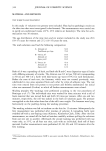
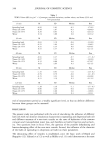
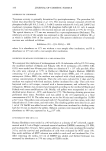
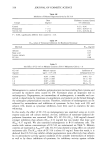
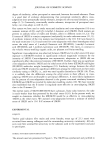
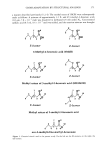
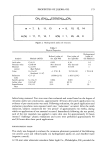
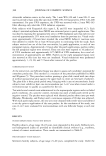
378 JOURNAL OF COSMETIC SCIENCE ( Z,Z)-C H 3 (C H2)7C H =C H (C H2)rnC OO(C H2) n C H=C H (C H2)7 C H 3 m = 7, 9, 11, 13 n = 8, 10, 12, 14 m(%) - 11, 71, 14, 1 n(%) = 1, 45, 44, 9 Figure 1. Jojoba oil structure. patch test, or the human repeat insult patch test (HRIPT), to assess the contact sensi- tization potential of a material (4). The development of a human follicular biopsy comedogenicity study, as developed by Mills and Kligman in 1981, provided a physiologically relevant test to assess comedone formation (5). Because African-American men have a greater propensity for comedones/ acne, due to large pilosebacceous glands located in the upper back, they are often included in routine comedogenicity studies to exaggerate the potential for comedone formation of raw and/or finished product materials. Negative results in this particular population, when compared to the appropriate controls, provide a convincing set of data for non-comedogenicity claims. To determine the safety of potential new products containing jojoba oil (both refined and pure), as well as hydrogenated jojoba oil, three preliminary studies were undertaken to evaluate their comedogenicity, and their phototoxic and allergenic potential(s). MATERIALS AND METHODS Two grades of jojoba oil, refined and pure, are available commercially. Both are expeller- pressed (mechanically extracted). The refined jojoba oil is filtered and refined with a dilute caustic to remove free fatty acids and hydratable phospholipids. The oil is bleached to remove all the color using a montmorilonite clay. Vacuum deodorization removes any remaining odors. Pasteurization is accomplished during the deodorization process. The pure jojoba oil receives only filtration and pasteurization, retaining the typical golden color and nutty aroma. Hydrogenated jojoba oil is produced by the nickel catalyzed hydrogenation of refined jojoba oil. The hydrogenated oil is bleached and deodorized. The physical properties of the materials are listed in Table I. Initially, these three substances were tested for cutaneous allergenic potential using the HRIPT, an adaptation of the Draize patch test (3,4). HUMAN REPEAT INSULT PATCH TEST (HRIPT) The purpose of the HRIPT was to evaluate the potential of one or more of jojoba test articles to induce allergic contact sensitization. Briefly, test articles were applied to the skin of the back utilizing a patch system under occlusive conditions in order to exag- gerate exposure conditions. Each patch remained in place for approximately 48 hours

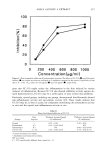
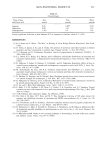
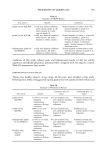
PROPERTIES OF JOJOBA OIL 379 CH3 (CH2)m+9COO(CH2)n+9CH3 rn = 7, 9, 11, 13 n = 8, 10, 12, 14 m(%) = 11, 71, 14, 1 n(%) = 1, 45, 44, 9 Figure 2. Hydrogenated jojoba oil structure. Table I Physical Properties Analysis Hydrogenated Refined jojoba oil Pure jojoba oil jojoba oil Method (AOCS) (lot AJA-PN) (lot AJA-SR) (lot FEED25) Acid value Peroxide value Moisture content Color Refractive index Specific gravity Iodine value Saponification value Ci-4-91 0.055 0.38 0.5 Cd-8b-90 Not detected Not detected 0.1 Ca 2e-84 0.005% 0.013% (Karl Fisher) Ce 13e-92 1 Y/0.1 R 59 Y/4.0 R 1 Y/0.4 R (Lovibond 5 1/4") Cc-7-25 1.4660 (22øC) 1.4655 (23øC) Cc-10a-25 0.864 0.865 Cd-lb-87 82.3 80.78 1.7 Cd-3-25 93.6 93 93 before being removed. Test sites were then evaluated and scored based on the degree of irritation and/or pre-sensitization, approximately 48 hours after patch applications (no evidence of pre-sensitization was seen). Following evaluation, the patch application and evaluation procedures were repeated until nine "inductions" occurred. After the ninth induction, subjects commenced the "rest period" of approximately two weeks, during which no applications of test material occurred. Immediately following the rest period, each of the test materials was applied to naive skin sites for approximately 24 hours (termed "challenge" phase) evaluations and scores were performed approximately 48 and 96 hours after these patch applications. PHOTOTOXICITY STUDY This study was designed to evaluate the cutaneous phototoxic potential of the following test articles: pure and refined jojoba oil, hydrogenated jojoba oil, and distilled water (negative control). A 150-watt solar ultraviolet simulator (Solar Light Co., Philadelphia, PA) provided the
Purchased for the exclusive use of nofirst nolast (unknown)
From: SCC Media Library & Resource Center (library.scconline.org)