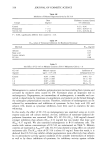
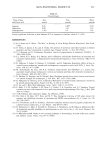
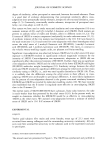
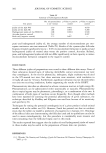
382 JOURNAL OF COSMETIC SCIENCE Table IV Summary of Comedogenicity Results Test article No. microcomedones p-Value vs positive p-Value vs negative 2 cm 2 (mean) control control Jojoba oil (lot AJA-PN) 2.40 Jojoba oil (lot AJA-SR) 1.84 Hydrogenated jojoba oil (lot FEED25) 2.08 Acetulan (positive control) 5.32 Patch only (negative control) 2.72 0.0O2 0.640 0.005 0.280 0.0001 0.300 0.007 0.007 -- pure) and hydrogenated jojoba oil, the average number of microcomedones per two- square-centimeter area was measured (Table IV). Results of the cyanoacrylate follicular biopsies revealed significantly less (p 0.05) microcomedone formation in jojoba oil and hydrogenated jojoba oil treated areas versus the positive control, Acetulan. Refined, pure, and hydrogenated jojoba oils did not differ significantly in their capacity to induce microcomedone formation compared to the negative control. DISCUSSION Three different jojoba oil preparations were tested in three different skin assays. None of these substances showed signs of inducing identifiable contact sensitization nor were they comedogenic. In the test for photoxicity, infrequent, slight erythema was elicited in the UV-treated test sites, but these reactions were transient, with resolution in virtually all cases by 72 hours. Furthermore, significant irritation was not elicited within test sites not receiving irradiation, further supporting the results of the HRIPT. Photosensitivity describes an abnormal or adverse cutaneous reaction to light energy (8). Photosensitizers can be administered either systemically or topically. Photosensitivity due to topical agents may be phototoxic, photoallergic, or a combination of the two. A combination of both types of reactions occurs frequently. Even though other methods have been reported for assessing the potential phototoxicity of given substances, the technique described by Kaidbey and Kligman was used here because of its sensitivity and specificity (9). Techniques for testing the potential comedogenicity of a given product include animal models such as the rabbit ear (10). However, Frank has pointed out that no evidence exists that the rabbit ear model is predictive of acnegenicity in humans (11). Histology of the affected skin area demonstrating the follicular canal and its epithelium can also be used to assess comedogenicity, but this procedure is considerably more invasive and time-consuming than the follicular biopsy used in this study. The results reported here suggest that the jojoba oils and hydrogenated jojoba oil tested in these studies may be useful in the preparation of future skin care products. REFERENCES (1) J. Wisniak, The Chemistry and Technology of Jojoba Oil (American Oil Chemists' Society, Champaign, IL, 1987), p. 43.

PROPERTIES OF JOJOBA OIL 383 (2) A. Shanl, The struggles of jojoba, Chemtech (May 1995). (3) J. H. Draize, G. Woodard, and H. O. Galvey, Methods for the study of irritation and toxicity of substances applied topically to the skin and mucous membranes. J. Pharmacol. Exp. Ther., 82,377-390 (1944). (4) F.N. Marzuli, and H. I. Maibach, The use of graded concentrations in studying skin sensitizers: Experimental contact sensitization in man, Food Cosmet. Toxicol., 12, 219-227 (1974). (5) O. H. Mills, and A.M. Kligman, A human model for assessing comedogenic substances, Arch. Der- matol., 118, 903 (1982). (6) W.L. Billhimer, Phototoxicity and Photoallergy in Clinical Safety and Efficacy Testing of Cosmetics, W.C. Waggoner Ed. (Marcel Dekker, New York, 1990) pp. 43-74. (7) K. H. Kaidbey and A.M. Kligman, Phototoxicity to a sunscreen ingredient, Arch. Dermatol., 114, 547-549 (1978). (8) J.P. Nater and A. C. DeGroot, Unwanted Efj½cts of Cosmetics and Drugs Used in Dermatology (Elsevier, New York, 1985), pp. 109-110. (9) K. H. Kaidbey, "Assessment of Topical Photosensitizers in Humans," in Say•ty and Efficacy of Topical Drugs and Cosmetics, A.M. Kligman and J. J. Leyden, Eds. (Grune & Stratton, New York, 1982), pp. 213-219. (10) W. E. Morris and S.C. Dwan, Use of the rabbit ear model in evaluating the comedogenic potential of cosmetic ingredients, J. Soc. Cosmet. Chem. 34, 215 (1970). (11) S.B. Frank, Is the rabbit ear model, in its present state, prophetic of acnegenicity?, J. Am. Acad. Dermatol., 6, 3-373 (1982).
Purchased for the exclusive use of nofirst nolast (unknown)
From: SCC Media Library & Resource Center (library.scconline.org)