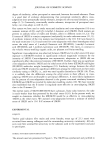
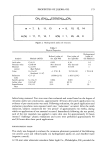
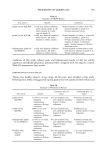
380 JOURNAL OF COSMETIC SCIENCE ultraviolet radiation source in this study. The l-ram WG-320 and l-ram UG-11 was used to provide a basic solar-like spectrum (UVB: 290-320 nanometers UVA: 320-400 nanometers). For pure UVA exposures, the UVB was removed with a 2-ram WG-345 filter allowing only solar-like UVA radiation exposures. Only subjects with Fitzpatrick skin types I, II, and III were impaneled (6,7). Each subject's minimal erythema dose (MED) was estimated prior to patch applications. This was done by exposing five paraspinal test sites to UVB irradiation such that each test site received approximately 25% more total irradiation than the previous site. Visual evalu- ation approximately 24 hours later revealed the actual MED. Subjects' reactions were then allowed to resolve for at least 96 hours prior to continuing with the study. Each subject received one set of the four test articles, by patch application, to each of two paraspinal regions. Approximately 24 hours after the patch applications, patches within the left paraspinal region were removed. These test sites were exposed to 16 joules/cm 2 of UVA irradiation and approximately 0.75 MED of UVB irradiation, for a total ad- ministration of approximately one MED. Patches on the right paraspinal region were also removed at this time but were not irradiated. Visual evaluations were performed approximately 1, 24, 48, and 72 hours after removal of the patches. COMEDOGENICITY STUDY At the initial visit, one follicular biopsy was taken to assess each candidate's potential for comedone production. This method is a variation of the procedure published by Mills and Kligman (5). This procedure involves pressing a glass slide coated with two drops of methyl cyanoacrylate glue against the upper back to create an even layer of polymer. The glass slide is then gently peeled away, bringing with it any microcomedones. Study subjects must exhibit at least one microcomedone per 2-cm i area when viewed under a stereomicroscope to qualify as a panelist for the test. Test articles and controls were administered to the suprascapular regions under occluded patch conditions. As a positive control, Acetulan was used a blank patch served as the negative control. The patches were replaced with identical patches three times per week (Monday, Wednesday, and Friday) until a continuous exposure of 28 days was achieved. With each patch replacement, the test sites were cleansed with sterile water and allowed to air dry prior to application of the next patches. At the conclusion of the study, test sites (2 cm 2) were evaluated for microcomedones with one follicular biopsy at each test site. RESULTS HUMAN REPEAT INSULT PATCH TEST RESULTS Healthy subjects, of age range 18-65 years, were impaneled in this study. Refined, pure, and hydrogenated jojoba oil provided no identifiable clinical evidence (e.g., erythema, edema) of contact sensitization. These results are summarized in Table II. PHOTOTOXICITY STUDY RESULTS Seventeen healthy subjects, of age range 23-60 years, completed the study. Under the

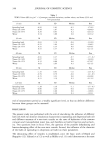
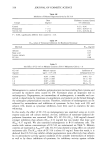
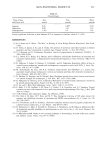
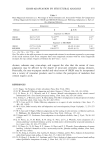
PROPERTIES OF JOJOBA OIL 381 Table II Summary of HRIPT Results Test article Results Comments Jojoba oil (lot AJA-PN) Jojoba oil (lot AJA-SR) Hydrogenated jojoba oil (lot FEED25) 1.01% (one subject) exhibited mild reaction (grade 1). All others showed no visible reaction (grade 0). 2.04% (two subjects) exhibited mild reaction. All others showed no visible reaction. 2.04% (two subjects) exhibited mild reaction. All others showed no visible reaction. Dermal response of subject with mild reaction subsided to grade 0 at 96-hour assessment point. Dermal response of subject 1 with mild reaction subsided to grade 0 at 96-hour assessment point. Dermal response of subject 2 exhibited a grade 1 dermal response at 96-hour assessment point. Dermal response of both subjects with mild reaction subsided to grade 0 at 96-hour assessment point. conditions of this study, refined, pure, and hydrogenated jojoba oil did not exhibit significant identifiable phototoxic potential when compared with the negative control. Table III summarizes these results. COMEDOGENICITY STUDY RESULTS Twenty five healthy subjects, of age range 18-60 years, were enrolled in this study. Following four weeks of exaggerated topical application with jojoba oil (both refined and Table III Summary of Phototoxicity Results Comments after 24 Comments after 72 Test article Results hours hours Jojoba oil (lot 11.76% (2 test sites) 0% non-irradiated test Erythema of both sites AJA-PN) exhibited sites exhibited erythema resolved before 72-hour erythematous beyond 24-hour evaluation. reaction at 48-hour evaluation. evaluation. Jojoba oil (lot 5.88% (1 test site) 0% non-irradiated test Erythema of site AJA-SR) exhibited sites exhibited erythema resolved before 72-hour erythematous beyond 24-hour evaluation. reaction at 48-hour evaluation. evaluation. Hydrogenated jojoba 11.76% (2 test sites) 0% non-irradiated test Erythema of both sites oil (lot FEED25) exhibited sites exhibited erythema resolved before 72-hour erythematous beyond 24-hour evaluation. reaction at 48-hour evaluation. evaluation. Distilled water 5.88% (1 test site) 0% non-irradiated test 1 test site inadvertently (negative exhibited sites exhibited erythema overexposed. control) erythematous beyond 24-hour reaction at 48-hour evaluation. evaluation.
Purchased for the exclusive use of nofirst nolast (unknown)
From: SCC Media Library & Resource Center (library.scconline.org)