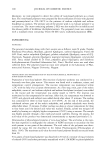
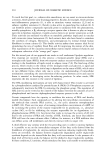
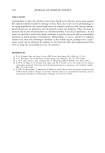
214 JOURNAL OF COSMETIC SCIENCE •-- 25o0 ,• 20oo z lOOO Control SLC 0.1% SLC 1% SLC 2.5% SLC 5% Figure 1. Effect of SLC on the concentration of NEFA present in the human adipocyte incubation medium. ***p 0.001 vs control value. under the same experimental conditions the intracellular cAMP content of adipocytes. As shown in Figure 2, SLC increased the cAMP content of adipocytes in a dose- dependent manner. The SLC effect regarding this endpoint was detectable for a con- centration as low as 0.1% (v/v) and reached a maximum at 5% (v/v). It should be noted here that the rate of NEFA appearance increased in parallel with the increase in intracellular cAMP content. This result strongly suggests that these two phenomena are causally interrelated. Therefore, at concentrations over 1%, although SLC continued to induce higher intracellular cAMP levels, the rate of lipolysis did not further Control SLC 0.1% SLC 1% SLC 2.5% SLC 5% Figure 2. Effect of SLC on the intracellular cAMP concentration of human adipocytes. **p 0.01 and ***p 0.001 vs control value.

LIPOLYTIC EFFECT OF SLIMMING LIPOSOMES 215 increase. This is a common pattern in pharmacology and shows that SLC can increase the rate of lipolysis only to a certain extent. This cAMP-modulating activity of SLC could prove to be very useful in pathological conditions in which intra-adipocyte cAMP baseline levels are abnormally low. Moreover, we can note that 5% of SLC is able to induce a 20-fold increase in intracellular cAMP content. As the only component of SLC that is able to directly increase the intracellular cAMP levels is the caffeine, and since the caffeine effect in this regard cannot reach this magnitude, we conducted further experiments aimed to clarify this point. Lipolysis is mainly regulated by three types of receptors that are positively ([33- adrenergic receptor) (19) or negatively (o•2-adrenergic and PYY receptors) (20) coupled to the enzyme responsible for the cAMP synthesis, the adenylate cyclase (AC). In other words, the binding of certain effector molecules to their specific receptors results in an increase in intracellular cAMP concentration and the level of lipolysis, whereas activation of some other receptors has the opposite effect. The key molecules in this case are the G-proteins, which are closely associated with the relevant transmembrane re- ceptors. Briefly, the G-proteins, which are a family of heterotrimeric proteins (consisting of or, [3, and •/subunits), can be broken down into two main subfamilies on the basis of their ot subunit: one subfamily tends to have a stimulatory effect (G-proteins are then called PGs), and the other tends to have an inhibitory effect (G-proteins are then called PGi). This is true for the AC system in which certain G-proteins tend to stimulate the enzyme and some others tend to inhibit it (21,22), which reflects the fact that different receptors have the capability of either stimulating or inhibiting AC and, in turn, lipolysis. We have thus examined through radioactive binding experiments whether SLC can bind to the [33- or to the ot 2- or to the PYY receptors, and we have also checked if it could present some agonistic action on the first one or some antagonistic action on the latter two. As shown in Figure 3, SLC was able to bind the ot2-adrenergic receptor 1% of SLC inhibited 21% of the radioactive ligand binding. In order to demonstrate that this binding activity was partially responsible for the dramatic increase in the intra-adipocyte cAMP levels observed in the in vitro study, we performed some ex vivo experiments aimed to confirm the antagonistic effect of SLC on ot2-adrenergic receptors. As shown in Figure 4, SLC dose-dependently antagonizes ot2-adrenergic receptors. The SLC effect regarding this point was detectable for a concentration as low as 0.1% (v/v) and reached a maximum at 5 % (v/v). At concentrations of 0.1%, 1% and 5 % (v/v), SLC inhibited the activation of o•2-adrenergic receptors by factors of 35, 74, and 99%, respectively. The dramatic increase in the intra-adipocyte cAMP levels observed in the presence of SLC was thus the result of the caffeine effect and this surprising ot2-adrenergic antago- nism. As far as we can know, none of the SLC components was shown to antagonize this receptor. The capacity of SLC to dramatically increase intracellular cAMP levels, combined with the well known effects of L-carnitine, esculoside, and Centella asiatica triterpenes, should
Purchased for the exclusive use of nofirst nolast (unknown)
From: SCC Media Library & Resource Center (library.scconline.org)